
Grey prom dresses
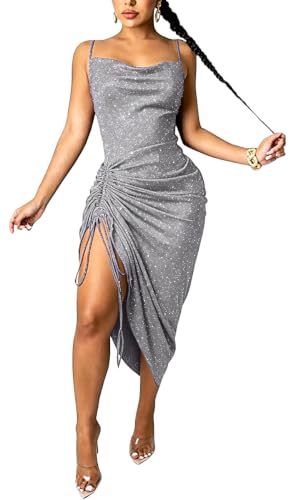
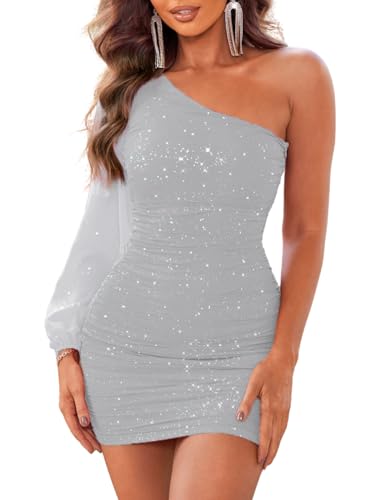
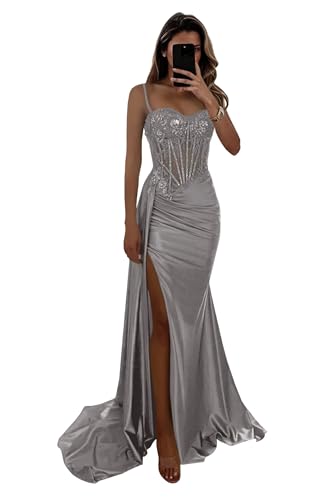
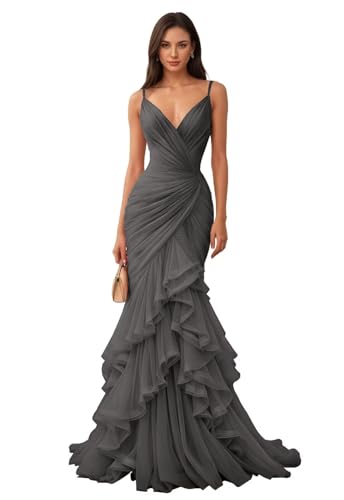
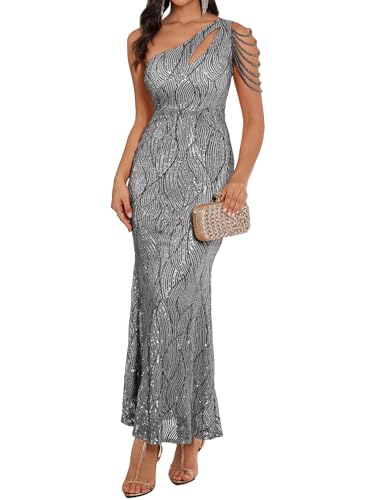
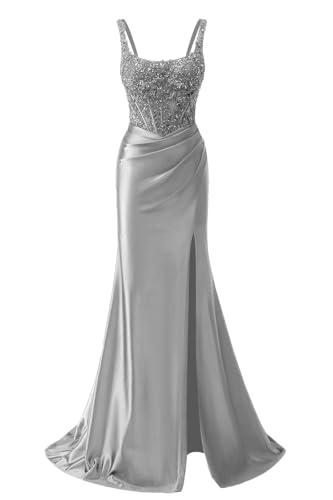
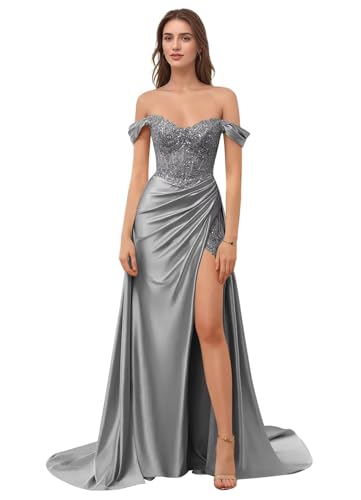
Grey is the quiet choice at an event where most people go bright, and that contrast is most of its appeal. Around seven in ten listings here name grey, with prom styles at just over seven in ten and evening wear at just under half.Just over six in ten are floor length. Sequin, mermaid cuts and slits each appear in around a third of listings, which tells you this collection sits at the structured end of prom rather than the casual one.Corset backs appear in around one dress in six. For the metallic version of the same idea, see silver formal dresses.



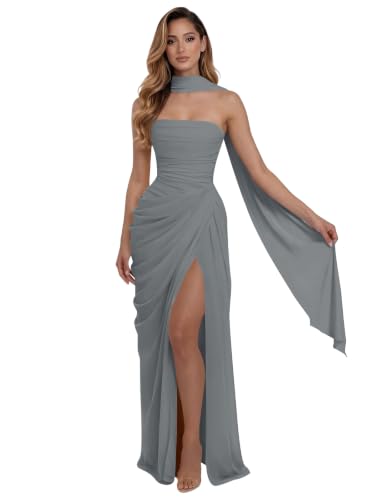
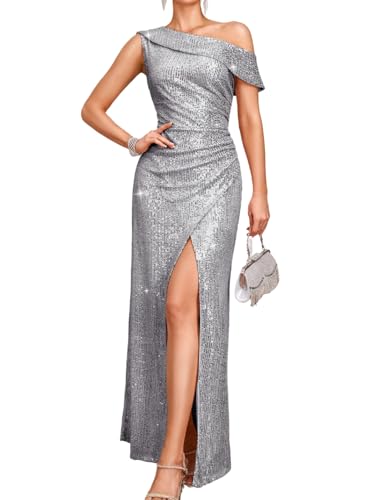
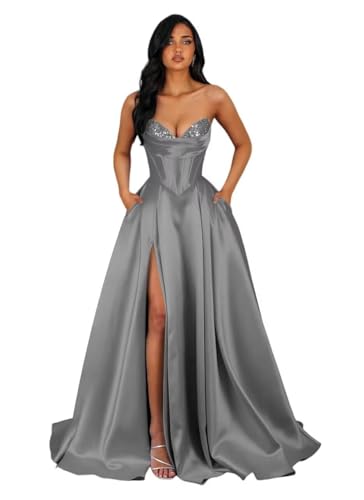




Grey Prom Dresses: Frequently Asked Questions
What is the difference between grey and silver?
Silver is metallic: it reflects light, changes under different light sources and flares under flash. Grey is matte: it absorbs light and photographs consistently across stage lighting, flash and daylight.
How do I tell warm grey from cool grey?
Look at the shadows in the fabric folds in a product photograph. Blue-grey shadows mean a cool grey; brown-grey shadows mean a warm or greige grey.
Why does that matter?
Because a cool grey dress with gold jewelry, or a warm grey with silver, reads slightly off without anyone being able to say why. Match the metal to the undertone.
Will grey stand out at prom?
By contrast rather than by volume. In a room of saturated reds and blues, grey reads as a deliberate choice and lets the cut, beading or texture become what people notice instead of the color.
Which fabric suits grey best?
Satin lifts it with a sheen and reads most formal. Sequin turns it toward pewter and is the most eye-catching. Lace adds texture and stops grey reading flat, which is the main risk with any neutral.
Which accessories work?
Silver and white with a cool grey, gold with a warm one. A single strong accent, a red lip or a jewel-toned clutch, reads deliberate against grey in a way it would not against another strong color.
Can I wear black shoes?
With charcoal and mid grey, yes. With a pale grey they cut the leg line sharply, so nude or metallic is the safer choice.
Will it pass a school dress code?
The features most often checked are slit height, back exposure and cut-out panels. With slits at around a third of this collection and corset backs at one in six, read the published code before ordering.
Does the sizing run small?
Prom labels generally run smaller than standard womenswear, frequently by a size or more, and this collection mixes several. Order to your largest measurement and have the rest taken in.
Grey Is Not Silver
These get treated as the same thing in search and they behave completely differently.
Silver is metallic. It reflects light, changes appearance under different light sources, and flares under a camera flash.
Grey is matte. It absorbs light, holds the same appearance across lighting conditions, and photographs consistently.
That consistency is grey's practical advantage at an event photographed under colored stage lighting, flash and daylight in the same evening. A silver dress looks different in each; a grey one does not.
Around a third of this collection uses sequin, which brings some reflectivity back. A sequined grey dress sits between the two and behaves more like silver than like matte grey.
Warm Grey and Cool Grey
Grey is a neutral, which means it takes a cast from whatever is near it, and the underlying temperature decides which cast it takes.
Cool grey leans blue. It reads crisp and modern, works with silver accessories, and suits cool complexions.
Warm grey, sometimes called greige or taupe-grey, leans brown. Softer, closer to a neutral, and works with gold accessories.
Charcoal is dark enough to behave like black, and carries the same evening formality.
Most listings do not say which. The comparison test in a photograph: look at the shadows in the fabric folds. Blue-grey shadows mean cool; brown-grey shadows mean warm.
This matters because a cool grey dress with gold jewelry, or a warm grey dress with silver, reads slightly off without anyone being able to say why.
Standing Out by Not Standing Out
At a prom where most dresses are red, royal blue, emerald and hot pink, grey does something the bright colors cannot.
It reads as a deliberate choice rather than a default, particularly in a room of saturated shades.
It photographs without competing, so in a group shot the eye goes to the face rather than to the dress.
It lets the detail carry the dress. On a bright dress the color is the headline; on grey, the beading, the cut or the fabric texture becomes what people notice.
The trade-off is honest: grey does not announce itself, so if you want the dress to be the thing people remember, a saturated color does that more easily.
Fabric Changes Grey More Than Most Colors
Because grey has no strong hue of its own, the fabric surface does most of the work.
Satin, at just over a fifth here, gives grey a sheen that lifts it considerably. This is the version that reads most formal.
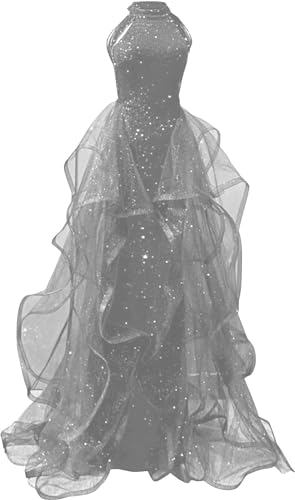
Sequin, at around a third, turns grey into something closer to pewter or gunmetal. The most eye-catching option in this collection.
Lace, at around a fifth, adds texture and stops grey reading as flat, which is the main risk with any neutral.
Chiffon and tulle, each at around one in nine, soften grey toward smoke and read lighter.
Plain matte crepe in grey is the least common and the most understated, and it lives or dies entirely on the cut.
Silhouettes Here
Mermaid accounts for around a third of this collection, which is high, and just over six in ten are floor length.
Slits appear in around a third. On a dark neutral a slit does the same job it does on any saturated color: it breaks up what would otherwise be a large uninterrupted area of a single shade.
One shoulder appears in around one dress in six and off-shoulder in around one in eight.
Corset backs, at around one in six, are worth noting as a fit point. They accommodate a wider size range than a fixed zip, which helps if you are ordering online without trying on.
Accessories With a Neutral
Grey gives more freedom than a strong color does, which is part of the appeal.
Silver and white keep the palette cool and clean, and suit a cool grey.
Gold warms grey noticeably and works best with a warm or greige grey.
A single strong accent color, a red lip, a jewel-toned clutch, a colored shoe, reads deliberate against grey in a way it would not against another strong color.
Black shoes work with charcoal and mid grey. With a pale grey they cut the leg line sharply, so nude or metallic is safer.
Dress Code and Practicalities
School rules are enforced inconsistently, but the features most often checked are slit height, back exposure and cut-out panels.
With slits at around a third of this collection and corset backs at one in six, it is worth reading the school's published code before ordering rather than after.
On the practical side: grey shows marks less than pale colors and more than black. A drink spill on grey is visible but not catastrophic.
Sequin grey, like any sequin, sheds and can scratch against bare arms over a long evening. A lined dress is more comfortable.
Sizing
Prom labels run smaller than standard womenswear sizing, frequently by a size or more, and this collection mixes several.
Take bust, underbust, waist and hip, and for mermaid cuts at around a third of listings here, add thigh measured at the widest point with legs together.
Order to your largest measurement and have the rest taken in. Sequin and beaded fabrics have minimal seam allowance and alterations through decoration are visible.
Read each listing's own chart. Regular, plus and junior numbering all line up on the US size chart.
Related Collections
For the metallic version, see silver formal dresses. For the fitted silhouette, browse prom mermaid dresses. For the full range, see prom dresses.