
V-Neck Dresses
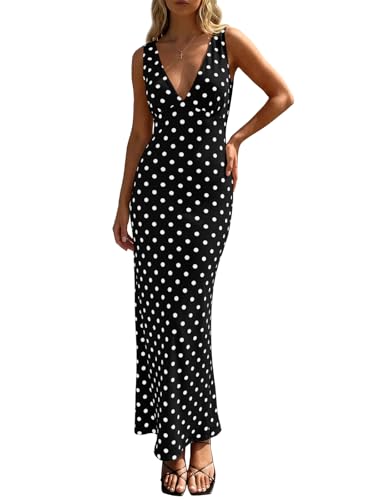
V-Neck Dresses cover dresses whose front opening descends to a point, including shallow V, wrap, split-neck, surplice, deep-V, plunge, illusion, button-front, casual, work, cocktail, wedding guest, prom, and formal designs. The product grid may contain V-neck wrap dresses, satin slips, chiffon A-lines, tailored sheaths, floral maxis, beaded gowns, long sleeves, high slits, plus-size styles, and nursing-friendly options. Filter first by the actual invitation or use case, wearer and garment type, required hem or coverage, and exact measurements; then compare the selected seller, fabric, lining, closure, current delivery estimate, and return eligibility.This page is neckline-led and separates fixed V-necks, wrap overlaps, split necks, and plunging illusion designs by actual depth, stability, and use. Retailers frequently combine casual, cocktail, wedding guest, homecoming, prom, work, and formal products inside the same navigation path. This guide separates those intents using construction, length, exposure, venue, and wearer role so the page remains a useful commercial comparison category.Related paths include scoop neck dresses, sweetheart dresses, high neck dresses, and dress necklines. Each link answers a different shopping question: scoop neck dresses addresses a rounded center opening; sweetheart dresses addresses a curved center dip; high neck dresses addresses greater upper-chest coverage; dress necklines addresses the full neckline comparison hub.
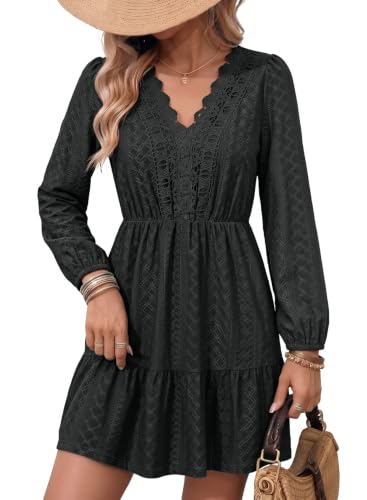
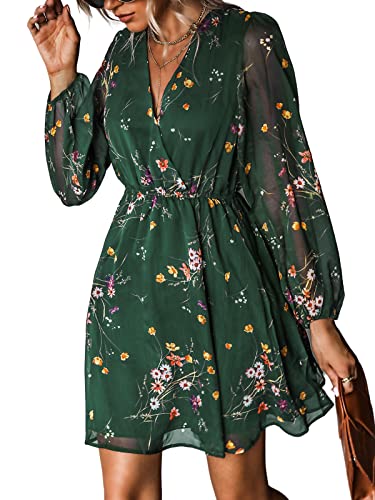
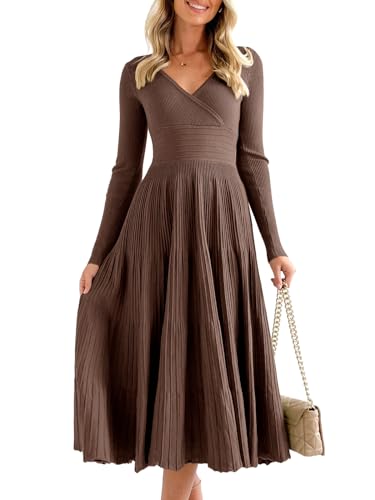
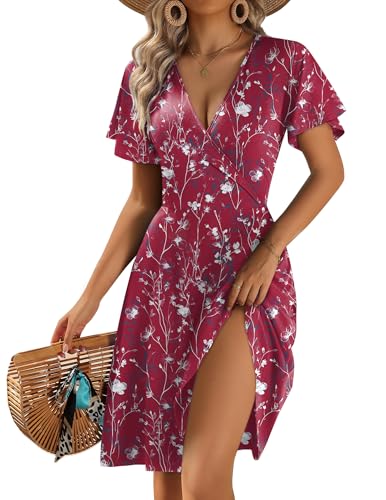
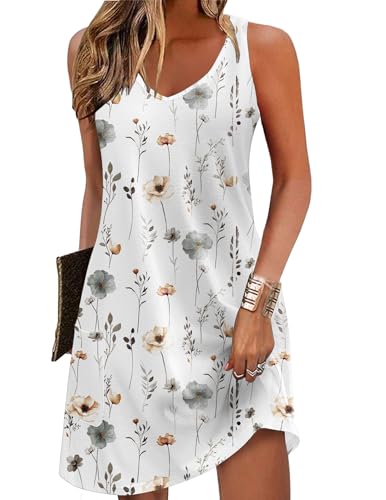
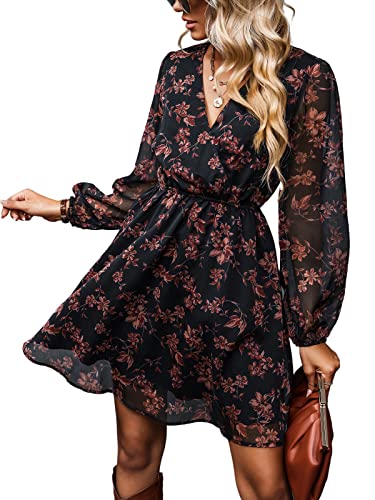
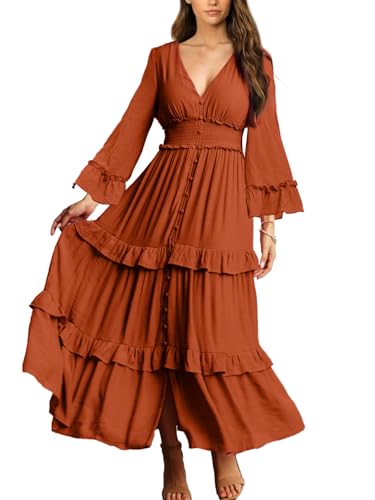
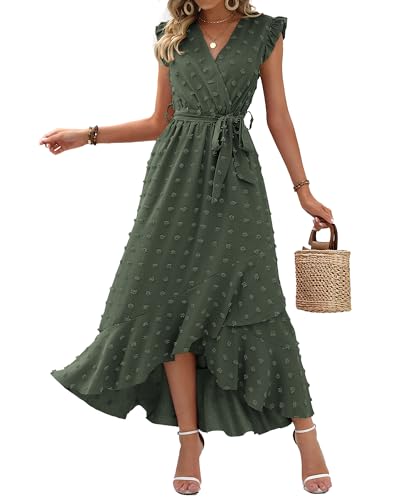
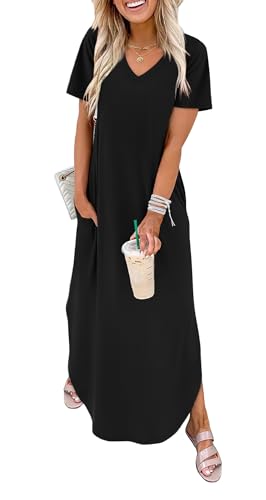

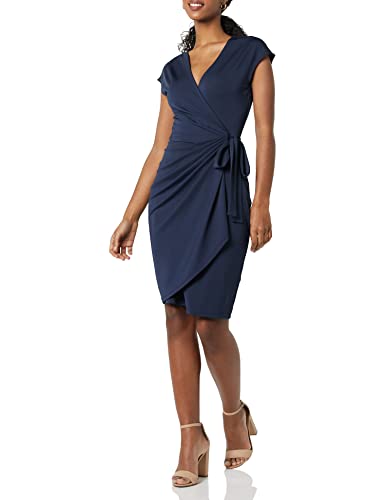
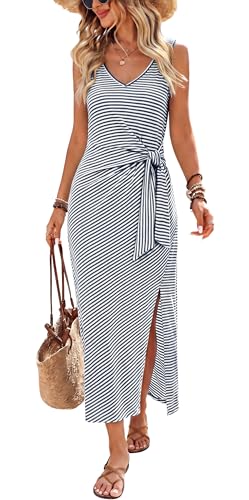
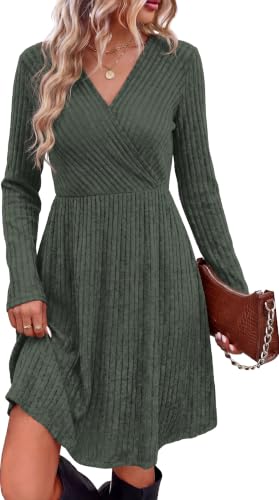





Frequently Asked Questions About V-Neck Dresses
What is a V-neck dress?
It has two edges that angle toward a point at the center front.
Is a wrap dress always a V-neck?
Many wrap dresses form a V, but some use different neck shapes, and some V-neck dresses are not functional wraps.
What is the difference between a V-neck and a plunge neckline?
A plunge is a much deeper V that usually requires additional support and coverage planning.
Which bra works with a V-neck dress?
A standard, plunge, low-front, adhesive, or sewn-cup option may work depending on depth, back, straps, and fabric.
How can I stop a wrap V-neck from gaping?
Choose adequate bust overlap and correct shoulder fit; a hidden snap or tape can refine a correct fit but should not replace it.
Can V-neck dresses be worn to work?
Shallow, stable V-necks can work when the complete dress meets workplace hem, fabric, and coverage expectations.
What necklace works with a V-neck dress?
A pendant can echo the angle, while earrings alone may suit deep or embellished V-necks.
Can a deep V-neck be altered higher?
Sometimes with straps, a snap, mesh, or a modesty panel, but beads, lace, cups, and bodice seams can limit the change.
What should I verify before ordering?
Check V depth, wrap overlap, shoulders, bust, torso, fabric, lining, support, seller, delivery, and returns.
What Counts as a V-Neck Dress
A V-neck dress has edges that angle toward a point at center front. The point can sit high on the chest or extend into a deep plunge, and the shape may be fixed, wrapped, buttoned, or supported by illusion mesh. The actual depth and overlap determine coverage.
Treat the neckline as a construction feature rather than a universal body-shape rule. The useful evidence is where the edge sits on the wearer, how it connects to straps or sleeves, whether the lining follows the same shape, and whether the opening remains controlled while sitting, reaching, and walking.
V-Neck Versus Wrap, Split, Plunge, and Scoop Necklines
A wrap or surplice neckline forms a V through overlapping panels, a split neck opens from a higher band without a full V frame, a plunge is a very deep V, and a scoop uses a rounded edge. Retail labels often combine these terms, so inspect the construction.
Use the actual garment rather than the retailer label. Product grids can place several neck shapes under the same filter, and photographs may be pinned or styled to reduce gaping. Compare the front edge, shoulder placement, side coverage, back height, and support plan before deciding which category best describes the dress.
V-Neck Dresses by Occasion
Shallow and tailored V-necks can work for offices, graduations, and daytime events, while deeper satin, beaded, or illusion styles appear at cocktail parties, weddings, prom, and formal evenings. Ceremony and school settings may require controlled depth or a layer.
Start with the invitation, workplace, school, ceremony, or venue requirements. Remove dresses that fail a non-negotiable coverage or dress-code rule before comparing color and decoration. A neckline that works at dinner may need a layer for a religious ceremony, while a workplace event may require more stability during speaking and seated networking.
Wrap, A-Line, Sheath, Slip, and Empire V-Neck Styles
V-necks can lengthen the visual center of wrap, A-line, sheath, slip, empire, and column dresses, but silhouette balance depends on shoulder width, waist placement, overlap, and skirt volume. A wrap must remain closed while seated and moving.
Check the dress from front, side, and back after sitting for ten minutes. Pulling at the zipper, a waist seam that climbs, an opening that spreads, or a skirt that twists indicates a pattern mismatch. The neckline should remain part of a balanced silhouette rather than becoming a continuous adjustment task.
Mini, Midi, Maxi, and Long V-Neck Dresses
V-necks appear at every hem length. A short deep-V dress combines two exposure points and may face school or venue restrictions, while a long V-neck gown can still require a modesty panel, secure cups, and controlled slit and train placement.
Use exact garment measurements instead of relying on mini, knee, midi, tea, or maxi labels. Repeat the hem check while seated and walking, account for slits and wrap fronts, and select shoes before alterations. Neckline and hem exposure should be evaluated together for the specific event.
Jersey, Satin, Chiffon, Lace, and Crepe V-Necks
Jersey wrap fronts can stretch or open, satin exposes edge tension, chiffon may need hidden snaps, lace can provide partial coverage, and crepe can hold a clean tailored V. Illusion mesh should match the wearer and remain comfortable under flash and heat.
Inspect daylight and flash photographs for transparency, shine, cling, seam strain, static, and color shift. Confirm the material, lining, stretch direction, care instructions, and exact selected variation on the final seller page. A structured neckline in a woven fabric behaves differently from the same outline in a soft knit or bias satin.
Wrap Ties, Hidden Snaps, Facings, and Illusion Panels
V-neck stability can depend on a wrap tie, waist seam, hidden snap, hook, button, facing, binding, lining, boning, or mesh panel. Inspect whether the point lies flat and whether both sides remain symmetrical without rolling or exposing the lining.
Test every zipper, button, tie, snap, hook, and strap before removing tags. Check whether the lining is tighter than the outer layer and whether boning, cups, lace, beads, or piping cross likely alteration points. Decorative detail cannot compensate for an unstable edge or weak closure.
Bra and Bust Support for V-Neck Dresses
A shallow V may work with a standard or plunge bra, while deep, open-back, or illusion styles can require low-front support, sewn cups, adhesive options, or no separate bra. Bust depth and overlap control are especially important in wrap dresses.
Fit the dress with the intended bra, cups, tape, or base layer. Inspect cup placement, side coverage, back height, armhole exposure, shoulder pressure, and whether the neckline stays in place during a hug and with both arms raised. Fashion tape should refine a correct fit, not hold the garment together.
Sleeves, Straps, and Shoulder Balance
Sleeveless V-necks depend on strap and armhole placement, while sleeves can stabilize or distort the angled edge. A tight shoulder or sleeve may pull the V outward, and a heavy long sleeve in stretch fabric can deepen the opening during wear.
Measure shoulders and upper arms and test reaching, sitting, and coat compatibility. Tight outerwear can move a neckline, crush a sleeve, or pull a strap outward. Return a dress with restricted movement rather than assuming the fabric will loosen safely during the event.
Measuring V-Neck Depth and Wrap Coverage
Record high bust, full bust, shoulder width, torso length, and preferred center-front depth. For wrap dresses, evaluate overlap at the bust and skirt while seated. The same listed V-neck can land very differently across torso lengths and bust proportions.
Compare current body measurements with the exact seller chart and choose from the least flexible area, such as a woven bodice, fixed waistband, lined sleeve, fitted hip, or structured cup. Reviews are most useful when they include height, measurements, purchased size, and the exact product variation.
Color, Prints, and Illusion Visibility
High-contrast prints can emphasize a crooked V, while pale fabrics and illusion panels may reveal bras, cups, tape, or lining under flash. Check pattern matching at the center point and confirm that mesh color and edge finishing work with the selected shade.
Review the selected color in daylight, warm indoor light, and flash after delivery. Surface shine and camera processing can change both the shade and the apparent depth of the neckline. For weddings, school events, uniforms, or coordinated groups, confirm restricted colors before alterations.
V-Neck Dresses Across Seasons
Lightweight wrap and slip dresses suit warm weather, while velvet, ponte, sweater knit, and long sleeves support cooler events. Scarves, coats, and camisoles should layer without forcing the V open, bunching at the point, or shifting the shoulder line.
Plan the complete route from transportation to venue. Heat, air conditioning, wind, rain, grass, coat storage, and long seated periods affect fabric, straps, sleeves, and layering. Outerwear should fit over the dress without shifting the neckline or crushing texture.
Movement, Gaping, and Wrap Security
Bending, sitting, hugging, and dancing can expose a deep V or separate a wrap overlap. Raise both arms and turn side to side to test whether the point remains centered. A hidden snap can refine a correct fit but should not carry all the tension.
Complete a fifteen-minute rehearsal in the planned shoes and base layers. Sit, bend, step up, turn, raise both arms, walk at event pace, and practice restroom access. Reject repeated adjustment, restricted breathing, exposed lining, or a neckline and hem that cannot remain controlled.
Plunge Bras, Camisoles, Panels, and Tape
Options include standard, plunge, low-front, adhesive, sewn-cup, camisole, or modesty-panel solutions depending on depth and back. A visible camisole should look intentional, and tape should not be used to close a wrap dress that lacks adequate overlap.
Test the complete outfit in daylight and flash, then remain seated long enough to see whether straps, bands, or seams become visible. Do not size down to force compression or depend on shapewear and tape to correct an incorrectly fitted bodice, waist, or hip.
Necklaces and Accessories for V-Neck Dresses
A pendant can echo the V, but its point should not collide with a deep neckline or dense beadwork. Earrings alone may be stronger for plunging, ruffled, collared, or embellished designs. Keep bag hardware away from lace and wrap ties.
Accessories should support the strongest feature of the dress rather than compete with it. Match metal finishes to visible hardware or beadwork, select heel width for the venue surface, and keep bags away from lace, sequins, fringe, or delicate neckline edges.
Petite, Tall, Plus-Size, Nursing, and Full-Bust Fit
Torso length and bust depth change V placement and wrap overlap. Petite shoppers may find standard depths lower, while fuller busts may need more panel width. Functional wrap dresses can support nursing access, but decorative surplice fronts may be sewn closed.
Look for size-specific photographs and garment measurements when available. A design scaled only in width can misplace the neckline, bust, waist, pockets, sleeves, or embellishment. Start with the pattern block closest to the wearer instead of budgeting to reconstruct several landmarks.
Altering a V-Neckline
A tailor may add a snap or modesty panel, shorten straps, or adjust a plain wrap edge. Changing a deep point, beaded border, lace appliqué, illusion mesh, collar, fixed cups, or shoulder width can affect the entire bodice and may not be cost-effective.
Get a tailoring estimate before the return deadline and bring the final bra, base layers, and shoes to every fitting. Return a dress that misses several structural measurements; rebuilding the neckline, moving the waist, changing sleeves, and shortening a decorated hem can exceed the value of choosing a better starting garment.
Buying V-Neck Dresses Online
Verify center-front depth, wrap type, functional versus faux closure, stretch, lining, cups, mesh, and back height. Look for side photographs and customer measurements because front-only images can hide gaping or insufficient overlap.
Save screenshots of the selected seller, color, size chart, delivery estimate, and return policy at checkout. Order early enough for inspection, exchange, steaming, and alterations. Compare total cost, including shipping, tax, return fees, tailoring, support pieces, shoes, cleaning, and replacement risk.
Functional Wrap Versus Faux-Wrap Construction
A functional wrap opens and adjusts with ties or fasteners, while a faux wrap is sewn closed and uses the appearance of overlap. Functional wraps offer adjustability but can open in movement; faux wraps can be more stable but less flexible across bust sizes.
Read the closure details and inspect the inside after delivery. Confirm that ties anchor securely, the overlap reaches beyond center front, and the skirt remains covered while seated. Do not assume every surplice bodice provides nursing access or adjustable fit.
Choosing a V Depth for the Wearer Role
A presenter, wedding reader, teacher, student, guest, bridesmaid, or prom attendee may need different depth and stability even at the same event level. Consider photographs from above, seated conversations, microphones, name badges, and required layers.
Select the shallowest or deepest V that works comfortably for the actual role rather than following a universal modesty rule. The correct choice remains secure without constant monitoring and supports the wearer’s preferred level of coverage.
Final V-Neck Dress Checklist
Before ordering, confirm the occasion, V depth, wrap or fixed construction, bust and torso measurements, fabric, lining, support, sleeves, seller, delivery, returns, and likely alteration work.
After delivery, inspect the dress in daylight and flash, test every closure, and rehearse sitting, walking, stairs, reaching, transportation, and outerwear. Keep it only when the neckline remains secure without repeated adjustment and the complete garment satisfies the intended occasion.