
Maxi Dresses for Women
This is an everyday maxi collection rather than a formal one. Around a quarter of the listings are explicitly described as casual, and the labels that appear most often here, including Nemidor, Amazon Essentials and AUSELILY, are everyday brands rather than occasion-wear specialists.Just over half the styles have sleeves of some kind, with long sleeves accounting for around one in seven and sleeveless around one in six. V-neck is the most common neckline, and roughly one dress in seven has a slit. Only about one in ten is plus size.If you are looking for a formal floor-length dress rather than an everyday maxi, long formal dresses is the better starting point.



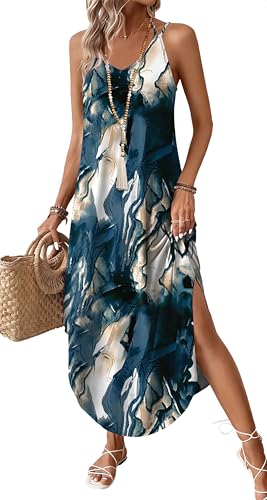
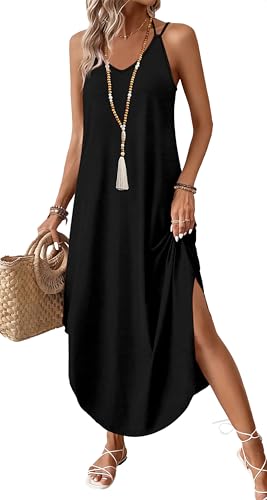


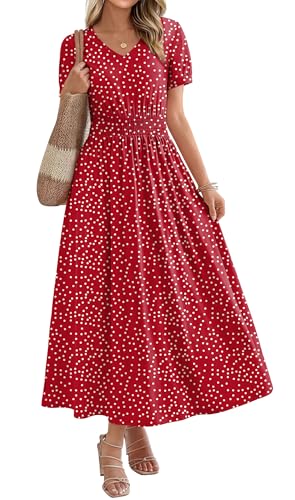


Long Sleeve Sequin Prom Dresses Long Slit Sequin Detachable Train Evening Gown Black Formal Evening Gowns Ball with Pockets for Women US6
Original price was: $89.99.$79.99Current price is: $79.99.

Maxi Dresses: Frequently Asked Questions
What is the difference between a maxi and a long formal dress?
A maxi is usually unstructured: a single layer, soft fabric, often an elasticated waist, with no boning or corsetry. A long formal dress or gown is constructed, lined and shaped. That difference is why maxi collections read casual.
How do I know if a maxi will be too long?
Compare the total dress length on the listing against your height. Roughly, 55 inches suits someone around 5'8", while someone 5'2" generally needs around 50 inches or less. Maxi length is cut for a model between 5'8" and 5'10".
Can a maxi dress be shortened?
Yes, if the hem is plain. A border print, ruffle or handkerchief edge changes the design when shortened, so check the hem finish before ordering with alterations in mind.
Are these suitable for winter?
Yes. Just over half these listings have sleeves and around one in seven has long sleeves, which in jersey or knit fabrics makes a maxi a year-round dress rather than a summer one.
Is a slit worth looking for?
On an everyday maxi a slit is practical rather than decorative. It allows a normal stride and makes stairs and getting into cars easier. Around one dress in seven here has one.
Which fabrics are most practical?
Jersey and knit blends hold shape, wash well and resist creasing. Cotton and linen breathe in heat but crease. Rayon and viscose drape well but shrink if washed warm. For everyday wear, washability matters more than it seems at purchase.
Are maxi dresses ever sheer?
Light colors and thin jersey can be, and it is a common complaint. Customer photographs show opacity more reliably than studio images.
Are plus sizes available?
Around one listing in ten, which is modest coverage. The formal and mother-of-the-bride collections carry considerably more extended sizing.
Can I wear a maxi dress to work?
Depending on the workplace. Choose a darker solid color, a defined waist, a sleeve and a fabric that holds shape. Maxi length reads more casual than a midi in some offices, so check the dress code.
What Makes a Maxi Different From a Long Dress
Both reach the ankle or the floor, but the two words signal different things. A maxi is usually unstructured: a single layer, a soft fabric, an elasticated or drawstring waist, and no internal boning or corsetry. A long formal dress or gown is constructed, lined and shaped.
That difference explains why this collection reads casual. It is not that the dresses are less well made; it is that a maxi is designed to be pulled on and worn, while a gown is designed to hold a shape.
Around one in nine listings here does use the word gown, and those are the styles that sit closest to occasion wear. The rest are everyday.
Length Is Relative to Your Height
This is the single most common source of disappointment with maxi dresses, and it is entirely avoidable.
Maxi length is cut to a standard height, usually based on a model between 5'8" and 5'10". On someone 5'2", the same dress does not simply sit lower; it pools on the floor, catches underfoot on stairs, and loses the vertical line that makes the style work.
Before ordering, find the total dress length on the listing and compare it against your own height. As a rough guide, a dress length of about 55 inches suits someone around 5'8", while someone 5'2" generally needs around 50 inches or less. If the listing does not state a length, look for reviews that mention the reviewer's height.
Hemming a maxi is straightforward if the hem is plain. If it has a border print, a ruffle or a handkerchief edge, shortening it changes the design.
Sleeves
Just over half of these listings have sleeves, which is a high proportion and makes this a practical collection for year-round wear rather than summer only.
Long sleeves, at around one in seven, turn a maxi into an autumn and winter dress, particularly in jersey or knit fabrics. Short and cap sleeves are the most common option overall. Sleeveless styles, at roughly one in six, are the summer core of the collection and layer easily under a cardigan or denim jacket.
Check the upper arm measurement where the listing provides one. Sleeves rarely have enough seam allowance to be let out, so a sleeve that binds cannot be fixed.
Necklines and Cut
V-neck is the most common neckline here, followed by off-shoulder styles. Wrap and faux-wrap cuts appear in a smaller number of listings and are worth seeking out if your size fluctuates, since a wrap adjusts across a wider range than a fixed waist.
Around one dress in seven has a slit. On an everyday maxi a slit is practical rather than decorative: it allows a normal stride and makes stairs and getting into cars easier. If you walk a lot in the dress, a slit is worth prioritizing.
Fabric and Care
Because these are everyday dresses, care requirements matter more than they would for occasion wear. A dress that needs hand washing will be worn less often than one that does not, regardless of how much you like it.
Jersey and knit blends hold shape, wash well and resist creasing, which makes them the most practical everyday choice. Cotton and linen blends breathe best in heat but crease visibly. Rayon and viscose fall softly but lose length if washed above cold. Chiffon and lace appear in only a small share of listings here and usually as an overlay.
Check opacity, particularly in light colors and thin jersey. A maxi that is slightly sheer in daylight is a common complaint and is visible in customer photographs more reliably than in studio images.
Casual, Work and Occasion Use
Everyday. Jersey or cotton, short sleeve or sleeveless, a solid color or small print. This is the bulk of the collection.
Work. A darker solid color, a defined waist, a sleeve, and a fabric that holds its shape through a full day. Check the workplace dress code, since maxi length reads more casual than a midi in some offices.
Beach and vacation. Lightweight, loose, easy to pull on over swimwear. Opacity matters most here.
Semi-formal occasions. The gown-adjacent styles in this collection, in a structured fabric with a defined waist. For anything more formal, the dedicated formal collections carry more suitable options.
Sizing
Around one listing in ten is plus size, which is modest coverage. For a wider extended-size range, the formal and mother-of-the-bride collections carry considerably more.
Take bust, waist and hip, and always compare against the specific listing's chart. Sizing across the smaller labels here varies more than in department-store brands, and several use conventions that run smaller than US equivalents. The US size chart covers conversions.
For an elasticated or drawstring waist, the waist measurement matters less and the bust and hip more, since the waist will adjust.
Related Collections
For formal floor-length styles, see long formal dresses. For shorter everyday options, browse casual dresses. For sleeve-led browsing, see three-quarter sleeve dresses.