
White and Gold Prom Dresses
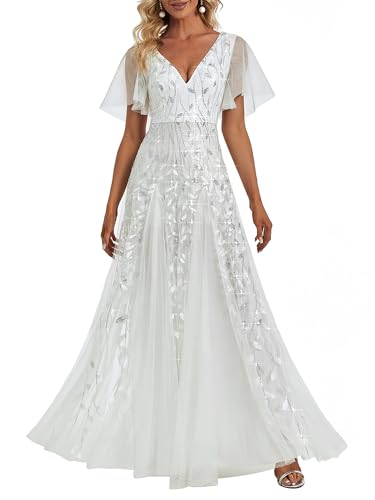
White and Gold Prom Dresses combine a white or ivory base with visible gold detail such as sequins, beadwork, embroidery, metallic trim, lace, or patterned embellishment. Because both colors react strongly to light, the exact balance between the pale base and reflective gold often looks different in daylight, warm indoor lighting, and flash.
For US shoppers, this is a narrow color-combination intent—not a general white-dress page. Confirm that the selected variation actually contains both colors and that gold is part of the garment rather than only the styling accessories in the product photo. Also inspect lining and bodice structure because bright white fabric can reveal cups, seams, or mesh more clearly under flash.
Compare adjacent color options through white prom dresses, gold prom dresses, black and gold prom dresses, and the full prom dresses collection.





Frequently Asked Questions About White and Gold Prom Dresses
What counts as a white and gold prom dress?
The dress should visibly combine white or ivory with gold through fabric, embroidery, sequins, beading, trim, print, or another intentional design element.
Is ivory and gold included?
It can be when the product is clearly marketed within the white/ivory family and the gold detail is visible. State the actual seller color because white and ivory are not identical.
What jewelry works with white and gold?
Gold-tone or crystal jewelry usually coordinates easily, but match the dress hardware and embellishment tone before adding another metal.
Will white and gold photograph differently with flash?
Yes. White fabric can become brighter while gold sequins or beads create hotspots. Test the dress in daylight, warm indoor light, and flash.
Can a white and gold dress be altered?
Often, but gold beadwork, sequin patterns, embroidered borders, and appliques can make seams and hems more labor-intensive.
How do I avoid a bridal look?
Choose prom-specific styling, accessories, silhouettes, and statement details that match the event, while checking whether your school has any traditions or expectations around white.
What should I verify before ordering?
Confirm that the selected variation actually includes both white and gold, plus the size chart, lining, support, seller, delivery, and return terms.
What Belongs in a White and Gold Prom Category
The garment itself should visibly combine the two colors. White dresses styled with a gold clutch or earrings should remain in the white category unless the dress has gold fabric, embroidery, sequins, beads, trim, print, or another built-in detail.
White, Ivory, Cream, and Gold Undertones
Pure white, ivory, and cream can look very different beside yellow gold, champagne gold, antique gold, or rose-gold-toned embellishment. Use the seller’s exact variation name and received garment rather than assuming every pale neutral coordinates the same way.
Gold Sequins, Beading, and Embroidery
Gold can appear as all-over sequins, sunburst patterns, waist embellishment, lace appliques, metallic thread, or scattered stones. The placement changes whether the dress reads primarily white, primarily gold, or evenly two-tone.
Photography and Flash
White can reflect strongly while gold creates bright points and directional sparkle. Test front, side, and seated photos with flash so the decorative pattern remains visible and the lining, cups, or mesh do not become distracting.
Styling Without Overloading Metallic Detail
When the dress already carries strong gold decoration, simple jewelry and a clean bag often create better balance than additional heavy sparkle. Let the garment’s dominant metal tone guide earrings, bracelet, and shoe hardware.
Alterations Around Gold Detail
Beaded seams, sequin patterns, embroidered borders, and metallic appliques can increase tailoring labor. If decoration crosses the side seams or hem, ask whether it must be removed and reapplied.
Inventory Accuracy Matters on a Narrow Color Page
A thin category can become misleading quickly if products are only white, only gold, or unrelated formalwear. Keep this page focused on true two-color inventory and consolidate or noindex it if the product set cannot support the specific intent.
Choosing White and Gold Prom Dresses
Compare the exact shade pairing, embellishment density, support, lining, fit, photography, and alteration risk. The strongest option should clearly read as white-and-gold on the actual selected garment.
White and Gold Prom Dresses With Beading, Sequins, and Metallic Fabric
White and gold prom dresses can create the two-color effect in several ways: gold beading over a white bodice, sequin motifs on ivory mesh, metallic gold thread, gold lace appliqué, foil-like fabric, or a white-and-gold woven pattern. These constructions differ in weight, reflection, and alteration difficulty, so the product description should identify how the gold is actually built into the dress.
A fitted white-and-gold jersey gown behaves differently from a tulle ball gown with gold embroidery. If the gold detail is only shown in styled jewelry or a belt sold separately, the garment itself does not belong in a true two-color category.
White vs Ivory With Yellow Gold, Champagne Gold, and Rose Gold
Bright white creates the strongest contrast with yellow gold, while ivory or cream softens the palette and can make champagne gold feel more integrated. Rose-gold embellishment introduces a pink undertone that may not coordinate with yellow-gold shoes or jewelry. Retail color names are not standardized, so compare close-up photos and the received dress under daylight.
If you want a pale neutral without metallic contrast, browse white prom dresses. For a stronger metallic-first look, compare gold prom dresses.
White and Gold Mermaid, Fitted, A-Line, and Ball Gown Styles
A white-and-gold mermaid or fitted gown emphasizes how the embellishment follows the body, so inspect whether beadwork becomes sparse or distorted at stretched seams. A-line and ball gown styles can place the gold pattern across a larger skirt area, making motif placement and symmetry more important. Corset bodices may use gold embroidery to define cups, waist panels, or boning lines.
Choose silhouette first for movement, then evaluate how the metallic detail supports it. A heavy beaded skirt can pull at the waist, while a lightly embellished satin gown may need less structural support. The two-color effect should enhance the cut rather than hide poor fit.
Gold Jewelry, Shoes, and Clutches With a White-and-Gold Dress
When the gown already contains gold, matching the visible metallic tone usually creates the most cohesive result. Yellow-gold earrings with champagne-gold beadwork can look mismatched even though both are described as gold. Crystal jewelry can work as a neutral when the dress has mixed metallic detail, while nude or clear shoes keep attention on the gown.
Avoid adding gold to every accessory automatically. If the dress has dense gold beading, a simple white, nude, or metallic clutch and smaller earrings may be enough. For a darker contrast palette, black and gold prom dresses provide a distinctly different look.
Flash Photography, White Fabric, and Gold Reflection
White fabric can expose cup edges, lining transitions, and seam tension under flash, while gold sequins or metallic surfaces can create bright hotspots. Take test photos from the front, side, and back before removing tags. If the bodice uses nude or illusion mesh, check whether the mesh disappears naturally or becomes visibly darker than the white fabric.
Video can make gold fringe or sequins appear more dynamic than still photos, but it can also reveal loose strands or uneven decoration. Evaluate both movement and static images so the dress works across prom photos, social video, and normal indoor lighting.
Alterations on White-and-Gold Beaded Prom Dresses
Beading and sequins often cross side seams, waist seams, and hems, which can increase tailoring time. Taking in a beaded bodice may require removing gold elements before sewing and reattaching them afterward. Hemming a patterned skirt can also disturb motif placement if the border is decorative.
Ask for an alteration estimate before ordering a size that needs major changes. Replacement fabric is difficult to match when both the white base and gold embellishment must coordinate. Keep any spare beads, sequins, or thread supplied with the dress because they can be useful for repairs.
Illusion Mesh and Lining in White-and-Gold Prom Dresses
Many white-and-gold gowns use sheer corset panels or illusion mesh beneath gold beading. The mesh tone should be checked against the wearer’s skin and under flash because a mismatch can become more obvious next to bright white fabric. Lining should also extend far enough to provide the intended coverage through the bust, hips, and slit.
Gold appliqué can visually hide cup edges in studio photos, but the structure may still show in person. Examine close-up and side images for boning channels, bust cups, and seam transitions. If the gold pattern stops abruptly at a lining edge, confirm that the effect looks deliberate before keeping the dress.