
Yellow Prom Dresses
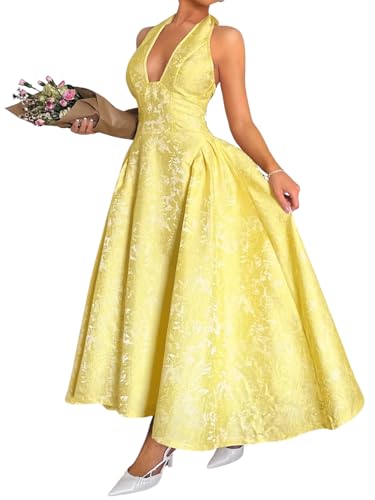
Yellow Prom Dresses can range from pale butter and soft lemon to canary, marigold, mustard, sunflower, and golden-yellow formal gowns. For US prom shoppers, the color is only the first filter: the real decision comes from shade depth, fabric, silhouette, bodice support, school dress code, hem length, and how the exact yellow looks in daylight, warm ballroom lighting, and flash photography. A satin mermaid in bright canary behaves very differently from a layered lemon tulle ball gown or a chiffon A-line in muted mustard.
Use this collection to compare yellow prom gowns by construction rather than treating every yellow dress as interchangeable. Before ordering, check the exact seller, selected shade, bust-waist-hip measurements, lining, cups or boning, closure, slit or train, delivery window, return eligibility, and alteration time. Related paths include gold prom dresses, orange prom dresses, pastel prom dresses, and the full prom dresses collection.





Frequently Asked Questions About Yellow Prom Dresses
What shades count as yellow prom dresses?
The category can include butter, lemon, canary, sunflower, mustard, marigold, and golden-yellow shades, but seller color names are not standardized. Use the exact selected variation and received fabric as the authority.
Does yellow look different in flash photos?
Yes. Satin, sequins, tulle, lining color, and camera processing can make yellow appear lighter, warmer, more golden, or more saturated under flash.
What jewelry works with a yellow prom dress?
Coordinate jewelry with the actual undertone and visible dress hardware. Gold, silver, crystal, bronze, pearl, or tonal accessories can all work depending on the gown.
How do I choose the right size?
Compare bust, waist, hip, torso, and length measurements with the seller-specific chart for the exact dress rather than relying on your usual US size.
Are pale yellow prom dresses see-through?
They can be. Check lining, cups, seams, mesh, and underlayers in daylight and flash before removing tags.
Can a yellow prom dress be altered easily?
It depends on construction. Plain hems and straps are simpler than sequins, corsetry, horsehair, lace borders, layered tulle, or matching-fabric additions.
What should I verify before ordering?
Confirm the exact yellow shade, seller, size chart, fabric, lining, support, school rules, delivery timing, return eligibility, and alteration window.
Yellow Shade Families: Lemon, Butter, Canary, Mustard, and Golden
Retail color names are not standardized, so “yellow” may cover a wide range of undertones and saturation. Lemon and canary usually read brighter and cleaner, butter yellow is softer, mustard has more brown or ochre influence, and golden yellow can move visually toward warm gold. Product photography can exaggerate or mute those differences. Compare the selected swatch, customer photos when available, and the received gown near a neutral window before choosing jewelry, shoes, flowers, or a date’s coordinating color.
A useful yellow prom dress page should also separate true yellow from chartreuse, lime, champagne, orange-gold, and beige-gold. Those neighboring colors can appear similar under warm lights but create a different look in daylight. If a shade is central to group photos or a themed event, save a screenshot of the exact selected variation at checkout and compare the delivered fabric before the return deadline.
How Fabric Changes a Yellow Prom Dress
Satin produces directional shine, so folds may appear pale gold in one area and deeper yellow in another. Chiffon diffuses light and often makes saturated yellow look softer. Tulle can become lighter as layers stack over a pale lining, while sequins, glitter mesh, metallic threads, or rhinestones may push the color toward gold. Velvet creates a deeper, shadowed yellow and is less common for spring prom but can work for cooler-weather formal events.
Check whether the lining matches the outer fabric. A nude, white, or contrasting lining can change the perceived shade through chiffon, mesh, lace, or tulle. Also check for cup outlines and seam allowances under flash, because pale yellow fabrics may become more transparent than they appear in studio images.
Silhouettes From Yellow Ball Gowns to Fitted Prom Dresses
Yellow works across ball gowns, A-lines, mermaids, fit-and-flare dresses, columns, sheath gowns, high-low hems, and short prom styles. The silhouette should be selected for movement and support, not for color alone. A full ball gown creates maximum color impact but adds skirt volume and stair management; a fitted satin or jersey style makes the color feel sleeker but demands accurate hip, waist, and torso measurements.
For mermaid and trumpet dresses, confirm the flare point and knee ease. For A-lines, check where the waist seam sits. For ball gowns, inspect petticoat or crinoline volume, layer count, and whether the skirt can fit comfortably in a car seat, restaurant chair, restroom stall, and crowded dance floor.
Corsets, Cups, Straps, and Neckline Security
A bold color does not compensate for a bodice that shifts. Strapless and corset yellow prom dresses should have enough internal structure to support the gown without constant pulling. Check boning placement, cup depth, side coverage, back closure, and whether a lace-up panel has enough modesty coverage at the wearer’s actual measurements. Spaghetti straps should lie flat without carrying the entire weight of a heavy skirt.
Raise both arms, sit, bend, turn, and simulate dancing in the intended underlayers. If the neckline gaps, cups collapse, side seams twist, or the back closure is under visible strain, the issue is fit or pattern proportion rather than styling.
Sequins, Glitter, Beading, and Floral Details
Yellow prom gowns often use reflective detail because yellow already reads as a high-energy color. Sequins can create a more metallic effect, glitter tulle can brighten a soft shade, and floral appliqué can introduce tonal or contrasting texture. Inspect close-up images to distinguish attached sequins, glued stones, woven metallic yarn, glitter coating, embroidery, and 3D flowers because each has different weight, snagging, shedding, and alteration implications.
At home, check the underarm, waist, and side seams for abrasion. A heavily embellished dress may also require a smooth clutch, snag-safe jewelry, and outerwear that will not catch surface decoration.
Prom Photography and Venue Lighting
Yellow can shift dramatically between daylight, warm hotel lighting, LED dance-floor lighting, and phone flash. Bright lemon may photograph almost neon, while butter yellow may become creamier. Satin may create hot spots and sequins can reflect white or gold points. Test the exact dress with front and rear phone cameras, flash, and the makeup planned for prom before removing tags.
If group photos matter, compare the dress beside common prom colors such as black, navy, red, royal blue, and white. Yellow usually creates strong contrast, which is useful when that is intentional but can dominate a coordinated palette.
Shoes, Jewelry, and Accessory Metals
Accessory choices should follow the actual undertone and surface details of the gown. Warm yellow can coordinate with gold, bronze, nude, or tonal accessories, while cooler lemon shades may work with silver, crystal, white, or clear accents. If the dress already has silver rhinestones, gold embroidery, pearl trim, or colored stones, use that hardware as a stronger guide than generic “yellow dress” styling rules.
Choose shoes for hem length and venue stability before final alterations. For long gowns, footwear changes floor clearance; for high-low or slit styles, the shoe becomes part of the visible outfit.
School Dress Codes, Slits, Cutouts, and Sheer Panels
Prom rules vary by school, district, and venue. A yellow gown can still have a plunging neckline, open back, thigh slit, sheer side panel, corset transparency, or midriff cutout that conflicts with written requirements. Review the current policy before alterations, because adding fabric later can be difficult when the original dress has matching lace, boning channels, beadwork, or a specific dye lot.
Test coverage while seated and moving. Slits rise, mesh stretches, and necklines can open more during movement than they appear in a standing product photo.
Measuring for a Yellow Prom Gown
Record bust, waist, high hip, full hip, shoulder width, torso length, and preferred shoulder-to-hem length while wearing the planned underlayers. Use the seller-specific size chart for the exact product; do not assume one US numerical size will match another brand. Structured satin, corsetry, nonstretch lace, and fitted mermaids require more precise measurements than stretch jersey or forgiving A-line skirts.
When measurements span multiple sizes, prioritize the least alterable area. A tailor can often take in a waist, but adding width through a beaded bodice or fitted hip may be difficult or impossible.
Alterations, Hem Work, and Matching Yellow Fabric
Plain chiffon or satin hems may be relatively straightforward, but horsehair braid, tiered tulle, scalloped lace, sequins, embroidery, and trains add labor. Yellow fabric matching is also difficult when an alteration requires extra material because dye lots and undertones vary. Ask a tailor about the exact hem and bodice construction before the return window closes.
Bring final shoes and underlayers to fittings. For full skirts, check every lining and tulle layer after hemming so a hidden layer does not hang below the finished edge.
Stain Visibility and Event-Day Practicality
Pale yellow can show makeup, self-tanner, food, drink, dust, or floor marks more readily than dark colors. Deep mustard and saturated yellow may disguise some marks but can still show water spots on satin. Follow the care label and avoid experimental stain treatments on formal fabrics shortly before the event.
If the gown has a train or floor-length skirt, plan how it will be carried outdoors, through parking areas, and on stairs. A small emergency kit can include fashion-safe stain wipes recommended for the fabric, a lint-free cloth, and spare closure hardware.
Online Ordering and Seller Verification
This is an affiliate category, so visible cards may represent different sellers, charts, return rules, and shipping estimates. Verify that the selected product is actually available in yellow, not merely shown in a yellow thumbnail while the default purchasable variation is another color. Save the exact seller, size, color name, expected delivery date, and return terms at checkout.
Order early enough for a failed first option, exchange, tailoring, steaming, and a full movement test. Prom-season stock can change quickly, so a replacement in the same yellow shade may not remain available.
How to Shortlist Yellow Prom Dresses
Start with the shade family and school rules, then narrow by silhouette, fabric, support, length, and budget. Next compare the dress in real lighting, check the fit with planned underlayers and shoes, and estimate alteration difficulty. The strongest choice is not simply the brightest yellow gown; it is the dress whose exact color, structure, seller terms, and movement all work for the full event.
If you are deciding between neighboring color intents, compare yellow with gold prom dresses for metallic warmth, orange prom dresses for deeper citrus tones, and pastel prom dresses for softer low-saturation options.