
Plus Size Mother of the Bride Pant Suits
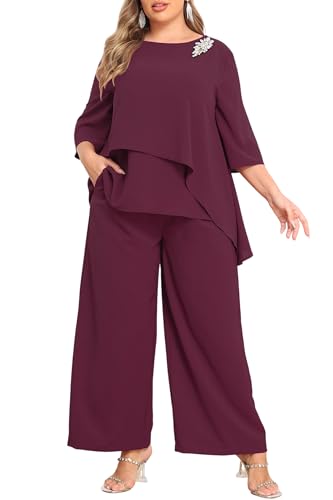
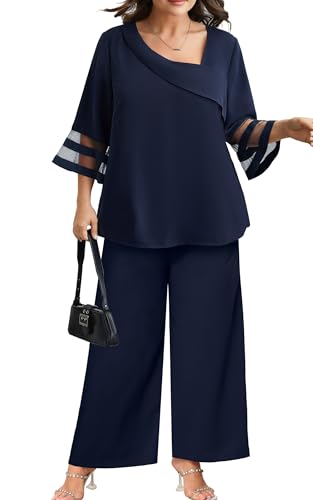
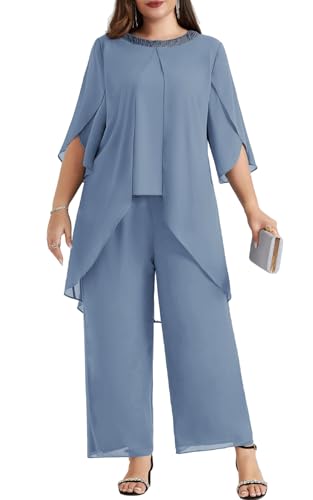
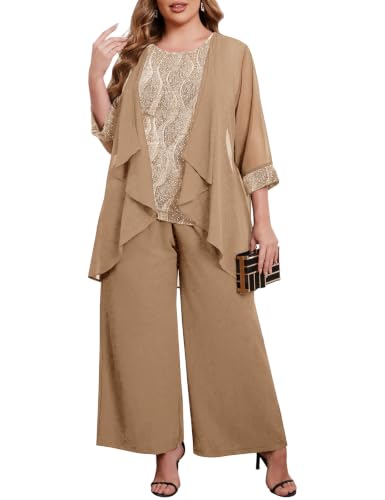
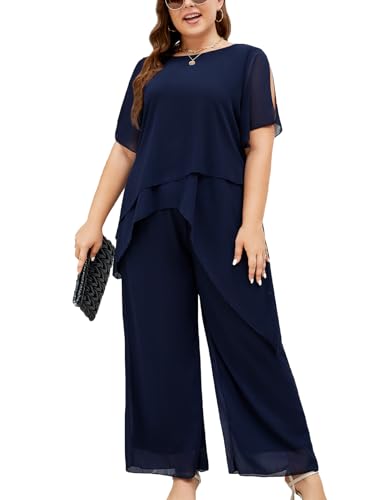
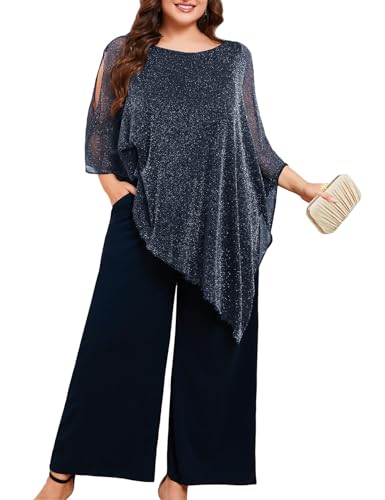
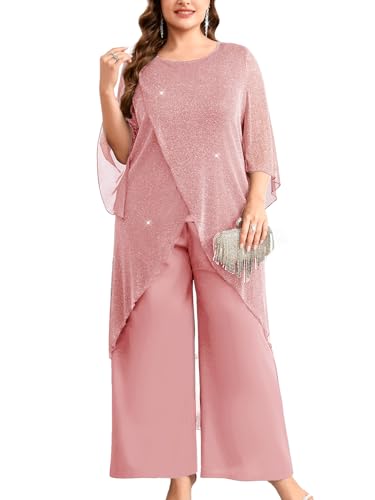
Around seven in ten styles on this page are cut specifically for plus sizes rather than graded up from a straight-size block, which is the difference between a suit that fits and one that merely covers. This is the largest plus-size pant suit collection on the site, and the proportion matters: on most formalwear pages, extended sizing is an afterthought.Chiffon is the dominant fabric here, appearing in roughly four in ten styles, and about a quarter of the collection includes a jacket, duster or bolero. Le Bos and R&M Richards supply the largest share between them, both labels with long experience cutting for size 14 and above.New styles are added weekly, so the mix shifts over time. For the full range including straight sizes, see mother of the bride pant suits.






Plus Size Mother of the Bride Pant Suits: Frequently Asked Questions
What makes a plus size pant suit different from a graded-up one?
A true plus-size garment is drafted from a plus-size block, so shoulder width, armhole depth and waist position are calculated for that body. A graded-up pattern scales every measurement by the same percentage, which usually leaves shoulders too wide and the waist seam in the wrong place. Around seven in ten styles here are drafted rather than scaled.
Where should the jacket hem fall?
Not at the fullest part of the hip, since that draws the eye to that line. Ending at the natural waist, above the hip, or well below the widest point all read better. You can judge this from the product photograph.
Is chiffon a good choice in plus sizes?
Yes, and it is the most common fabric here at roughly four in ten styles. It moves independently of the body rather than mapping contours, and stays cooler than lined crepe. Check whether the listing specifies double-layer or lined chiffon, as very thin chiffon can look insubstantial.
Should I avoid elasticated waistbands?
No. A partly elasticated waistband handles the difference between standing and sitting comfortably, and it is invisible under a jacket or duster. Several Le Bos and R&M Richards sets in this collection use one.
How do I measure for plus size trousers?
Measure your natural waist, fullest hip, and rise, which is the distance from your natural waist to the chair when seated. Compare all three against the specific listing's chart rather than your usual size, since the smaller Amazon labels differ considerably.
Are there petite plus size options?
Only a very small number. If you are under about 5'4", assume trousers will need hemming and check jacket length carefully, since shortening a duster changes its proportions rather than just its length.
What colours work best?
Deep jewel tones, dusty blue, sage, mauve and charcoal all photograph well beside a white gown. Avoid white, ivory and champagne unless the couple approves, and avoid matching the bridesmaids exactly. Because a suit shows one colour over a large area, shades read more emphatically than on a swatch.
When should I order?
Around three months ahead. Plus-size formalwear sells through faster in the middle of the range and may not restock, and you need room for one return and replacement plus alterations.
Which alterations are worth doing?
Trouser hems and trouser waist adjustments are straightforward and expected. Jacket shoulders are not; a jacket that does not sit correctly at the shoulder should be exchanged rather than altered.
Why Cut Matters More Than Size Number at This End of the Range
A size 20 garment can be produced two ways. It can be drafted from a size 20 block, with dart placement, armhole depth and waist position calculated for that body. Or it can be a size 8 pattern scaled up mathematically, which stretches every measurement by the same percentage regardless of whether bodies actually change that way.
They do not. Between a size 8 and a size 20, the bust and hip grow considerably more than the shoulder and the neck. A graded-up pattern therefore produces a jacket with shoulders too wide, an armhole too deep, and a waist seam sitting in the wrong place. The garment is technically the right size and still looks wrong.
This is why the proportion on this page is worth stating plainly: roughly seven in ten of these listings are drafted as plus-size garments rather than scaled. When you are comparing two suits that look similar in photographs, this is usually what separates them.
Reading the Silhouette Before You Read the Size
Three shapes recur through this collection, and they behave differently.
The column. A straight jacket or duster over straight trousers, with no waist definition. This reads as clean and modern, and works well on a fuller bust when the fabric has enough weight to hang rather than cling.
The defined waist. A jacket that nips in, or a shell with a seamed or gathered waist under an open duster. This creates shape without requiring the body underneath to provide it, and is the most photographed silhouette for good reason.
The soft overlay. A sheer chiffon layer over a fitted shell and trousers. The overlay does the covering while the layer beneath does the shaping. This is the most forgiving of the three across a long day, because nothing has to be held in place.
The Jacket Question
About a quarter of styles here include a jacket, duster or bolero, and for many mothers that piece is the reason for choosing a pant suit at all. Two measurements decide whether it works.
The first is where the hem falls. A jacket ending exactly at the fullest part of the hip draws the eye to that line. Ending above the hip, at the natural waist, or well below it, past the widest point, both read better. This is a matter of proportion rather than size, and it is entirely visible in the product photograph if you look for it.
The second is the armhole. A shallow armhole restricts movement, which matters when the day involves hours of hugging, gesturing and raising a glass. If a jacket feels tight when you lift both arms in front of a mirror, no alteration will fix it comfortably.
Chiffon, Lace and What Each Does at This Scale
Chiffon appears in roughly four in ten styles here and is the most reliable fabric for a longer day. It moves independently of the body, so it does not map every contour, and it stays cooler than lined crepe under summer conditions. The trade-off is that thin chiffon can look insubstantial in photographs, so check whether the listing describes it as double-layer or lined.
Lace features in roughly one style in five, usually on the jacket rather than throughout. On a larger frame, lace with a defined motif and clear spacing reads more expensive than dense all-over lace, which can flatten into a single texture at a distance.
Beaded and sequin details appear in only a small number of listings here. Where they do, they tend to sit at the neckline or cuff rather than covering the garment, which is the more wearable placement.
Trousers: The Part Most Size Charts Handle Badly
Plus-size trouser sizing is where listings vary most, because two bodies with the same hip measurement can need very different rises depending on where the weight sits.
Measure your natural waist, your fullest hip, and your rise, which is the distance from your natural waist to the chair when seated. Compare all three against the listing chart, not against the size you usually buy. If the listing gives only a waist and hip, look for reviews that mention a measured rise; the smaller Amazon labels in this collection differ considerably here.
An elasticated or partly elasticated waistband is worth seeking out rather than avoiding. It handles the difference between standing and sitting comfortably, and under a jacket or duster it is invisible. Several Le Bos and R&M Richards sets here use one.
Colour on a Larger Canvas
A pant suit presents one colour over a bigger uninterrupted area than a dress with a contrasting jacket, so colour choices read more emphatically here than a swatch suggests. That works in both directions: a rich navy or plum has real presence, while a bright pastel can dominate a group photograph.
Avoid white, ivory and champagne unless the couple has said otherwise, and avoid matching the bridesmaids exactly. Beyond that, deep jewel tones, dusty blue, sage, mauve and charcoal all appear regularly in this collection and photograph well beside a white gown.
If you are choosing between a solid and a print, note that a print with a small repeating motif reads as texture from a distance, while a large-scale print stays legible as a pattern. Neither is better; they simply photograph differently in group shots.
Petite and Plus Together
Only a very small number of styles here are labelled both petite and plus. If you are under about 5'4" and shopping in this range, assume the trousers will need hemming and check the jacket length carefully, since a duster designed for a 5'8" frame will sit very differently on a shorter one. Shortening a duster changes its proportions rather than simply its length.
Ordering, Returning and Altering
Plus-size formalwear sells through faster in the middle of the range, so the size you want may not restock. Order earlier than you think necessary, and order the size your measurements indicate rather than the size you hope to be by the wedding.
Budget for a trouser hem as standard. Waist adjustments on trousers are straightforward. Jacket shoulders are not, and a jacket that does not sit right at the shoulder should be exchanged rather than altered. Allow around three months from first order to final fitting so there is room for one return and replacement.
Checking the Listing Itself
Confirm how many pieces are included, since photographs sometimes show a three-piece look on a two-piece listing. Check whether the trousers are lined, particularly with chiffon. Read the fabric composition rather than trusting the fabric name. Most usefully, look for reviews that state the reviewer's height, measurements and the size ordered, because those tell you how the garment behaves on a real body rather than a studio mannequin.
Prices and stock on Amazon change frequently, so treat what you see as current at that moment.
Related Collections
For the complete pant suit range across all sizes, see mother of the bride pant suits. If you are attending rather than hosting, dressy pant suits for wedding guests covers a slightly less formal range with more jumpsuit options. For gowns and dresses in extended sizing, browse mother of the bride dresses, and check the US size chart for plus and petite conversions.