
Corset Prom Dress
Corset Prom Dress covers prom dresses built around a structured corset or bustier-style bodice, including lace-up backs, boning, molded or seamed cups, basque waists, sheer panels, strapless designs, and corset-inspired A-line, ball-gown, fitted, and mermaid silhouettes. Prioritize the exact bodice construction, cup fit, torso length, and movement before styling details.A corset look is not always a functional corset. Some dresses use decorative seam lines or a lace-up back without meaningful boning, while others use rigid boning and shaped cups that allow little sizing tolerance. Product copy should identify what is actually constructed into the dress.Related paths include strapless prom dresses, sweetheart neckline prom dresses, fitted prom dress, ball gown prom dresses. Keep the page focused on bodice construction and support rather than treating every fitted, strapless, or lace-up dress as a corset.
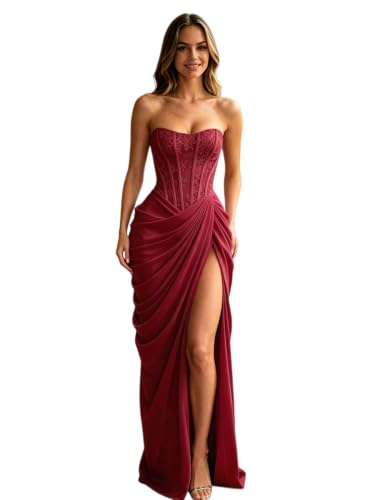
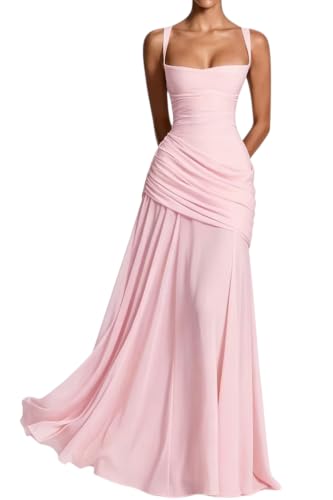
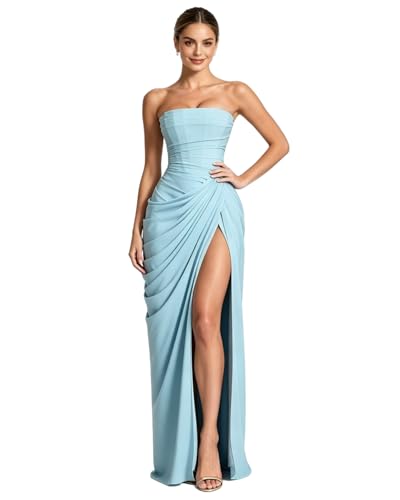




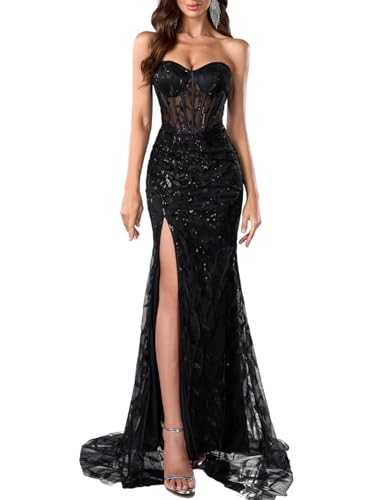


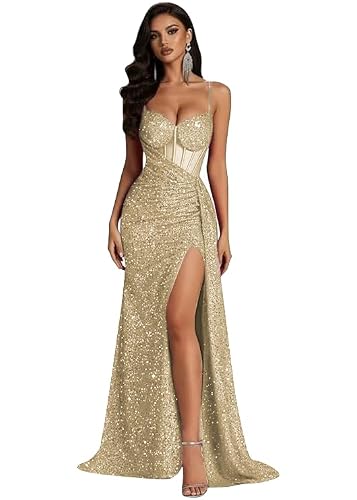


Dress the Population Women’s Ruby Strapless Fit & Flare Sequin Midi Dress
Original price was: $288.00.$255.77Current price is: $255.77.

Frequently Asked Questions About Corset Prom Dress
What makes a prom dress a corset dress?
A corset prom dress usually has a structured bodice with boning, shaped seams or cups, and sometimes a lace-up back or bustier construction.
Is a lace-up back always a corset?
No. A lace-up closure can add adjustability without the dress having full corset-style boning or shaped cups.
Do corset prom dresses replace a bra?
Some provide built-in support, but support depends on cup fit, boning, neckline, and the wearer; not every corset dress replaces a bra.
Should a corset prom dress feel tight?
It should feel secure, not painful. The wearer should be able to breathe, sit, eat, bend, and dance normally.
Which measurements matter most?
Bust, waist, torso length, hips, and garment length matter, and shaped cups may require attention to cup width and placement.
Can corset dresses be altered?
Yes, but changing boning, cups, basque waists, lace-up panels, or appliqué can require specialist work.
Are corset prom dresses school appropriate?
They can be, but the full neckline, back, transparency, cutouts, slit, and hem must comply with the school’s written rules.
What fabrics are common in corset prom dresses?
Satin, tulle, lace, mesh, mikado, crepe, velvet, sequins, and glitter fabrics are common.
What should I verify before ordering?
Check actual corset construction, cup fit, boning, closure, measurements, lining, seller, delivery, returns, and alteration feasibility.
What Counts as Corset Prom Dress
“Corset Prom Dress” is a construction-led category for prom dresses with a visibly structured bodice, usually using boning, shaped seams, cups, busk-like lines, a lace-up closure, or a bustier-inspired frame. The structure can appear on satin, tulle, lace, sequin, mesh, ball-gown, mermaid, A-line, and fitted dresses.
A fitted bodice, princess seams, or decorative topstitching alone does not prove corset construction. The category should distinguish functional support features from corset-look styling and should not imply that every corset dress cinches the waist or replaces a bra.
Corset Prom Dress Versus Related Prom Categories
This page overlaps strapless, sweetheart, fitted, ball-gown, lace-up, and bustier-style prom intent. It remains distinct when the structured bodice materially changes fit, support, alteration, and sizing decisions.
Use the narrowest category that reflects an actual product attribute or buying decision. Related paths include strapless prom dresses, sweetheart neckline prom dresses, fitted prom dress, ball gown prom dresses. Internal links should help shoppers move between broader and narrower intent rather than create multiple pages for the same garment set.
Prom Dress Code, Venue, and Event Planning
Before choosing from this collection, check the school’s current written policy for neckline depth, backs, cutouts, transparency, slits, midriff exposure, and hem length. A dress that works in a standing catalog image can change once the wearer sits, raises both arms, or moves quickly.
Plan for transportation, photographs, dinner, stairs, crowded walking, dancing, restroom access, coat storage, and the venue surface. The final choice should satisfy the most restrictive part of the night rather than only the photo or entrance moment.
Silhouette and Proportion
Corset bodices can sit above A-line, ball-gown, mermaid, trumpet, fit-and-flare, column, and high-slit skirts. The skirt silhouette does not determine corset fit; cup spacing, waist seam, boning length, and torso proportion must align before the skirt shape is evaluated.
Judge the fit from front, side, and back views after several minutes of sitting and walking. Pulling, twisting, a rising waist, unstable cups, compressed hips, or a skirt that blocks the stride usually indicates a pattern or size mismatch rather than a styling problem.
Fabric, Lining, and Surface Finish
Common materials include satin, mikado, tulle, lace, mesh, velvet, crepe, sequins, glitter tulle, and embroidered overlays. Rigid fashion fabric may amplify a structured shape, while stretch mesh can improve movement but may not reduce pressure from non-stretch boning or cups.
Check the exact variation for lining, stretch, fabric density, care instructions, and surface treatment. Daylight and flash photography can reveal transparency, seam strain, texture changes, loose embellishment, lining edges, and color shifts that are difficult to judge from a retailer’s studio image.
Neckline, Bodice, Closures, and Support
Check whether the dress uses flexible or rigid boning, molded cups, underwire, a lace-up back, zipper, hooks, or a combination. The bodice should stay secure without painful compression, cup overflow, gaping, collapsed boning, zipper strain, or a back opening that exceeds the intended lacing range.
Try the dress with the planned bra, cups, tape, or base layer. Test every zipper, hook, button, tie, lace-up point, and strap before removing tags, then raise both arms, bend, sit, and hug to confirm that the neckline stays secure without repeated adjustment.
Length, Slits, Trains, and Movement
Corset prom dresses can be mini, midi, high-low, floor-length, or trained. The structured top should remain stable while the wearer sits and dances; a heavy skirt can pull downward on a strapless corset, while a very fitted mermaid can transfer movement stress into the bodice.
Wear the final shoes during the movement test. Walk quickly, climb a step, sit, turn, and simulate dancing; slits can rise, trains can catch, fitted knees can restrict stride, and layered linings can behave differently from the outer skirt once the fabric warms and settles.
Measurements and Size Selection
Measure bust, underbust when useful, waist, hips, shoulder-to-waist or torso length, and garment length. For shaped cups, compare cup height and spacing as well as circumference; a bodice can close at the waist while still fitting the bust incorrectly.
Numerical, junior, misses, petite, tall, plus, and brand-specific sizes can use different pattern blocks. Choose from the least flexible body area and rely on reviews only when the reviewer gives measurements, purchased size, and the exact color or construction variation.
Photography, Color, and Undertone
Structured panels, boning channels, sheer mesh, and lining create contrast that can change how a color reads. Pale corsets may expose cup edges and boning under flash, while black or dark colors can hide construction details in product photography.
Compare the delivered dress in daylight, warm indoor light, and flash before coordinating shoes, jewelry, or makeup. Retail color names are not standardized, and satin shine, velvet pile, sequins, mesh, lining, and camera processing can make the same shade look substantially different.
Petite, Tall, Plus, Junior, and Adaptive Fit
Corset sizing should not be reduced to a waist measurement. Large-bust, small-bust, long-torso, short-torso, plus, petite, tall, junior, and adaptive shoppers may need different cup spacing, boning length, side height, and closure access even when the nominal dress size is the same.
Look for size-specific photographs and garment measurements where available. Designs graded mainly in width can misplace cups, waistlines, motifs, pockets, slits, sleeves, and hems, so the best starting size is the pattern block that is closest to the wearer vertically as well as horizontally.
Alterations and Construction Limits
Corset alterations can be complex because cups, boning channels, waist seams, appliqué, and lace-up panels are structural. Shortening straps or hems may be straightforward, but rebuilding cups, changing torso length, or moving boning can cost more than replacing a poorly matched dress.
Get an alteration estimate before the return deadline and bring the final shoes and underlayers to fittings. Straight hems and simple straps are usually easier than corsetry, sleeves, beading, lace borders, sequins, bias cuts, layered skirts, or motif-heavy seams.
Seller, Delivery, Returns, and Total Cost
Verify whether “corset” means functional boning, a lace-up back, bustier cups, or only visual seaming. Save close-up images, the seller, exact size chart, closure description, lining, delivery estimate, and return terms because marketplace titles often overuse corset language.
Save the selected seller, color, size, size chart, delivery estimate, included items, and return policy at checkout. Order early enough for inspection, one failed option, exchange, alterations, steaming, accessories, and a complete movement rehearsal; final-sale purchases require verified measurements and accepted risk.
Functional Corset Versus Corset-Look Bodice
A functional corset-style bodice uses structure that materially affects support and shape; a corset-look bodice may only imitate boning channels or use decorative seams. Lace-up backs can provide adjustment without making the front of the dress structurally corseted.
For SEO and merchandising, describe the real feature: boned bodice, lace-up back, underwire cups, bustier top, basque waist, or corset-inspired seaming. Precise attributes are more useful than a broad label when shoppers are trying to solve a fit problem.
Lace-Up Range, Compression, and Breathing
A lace-up back can provide limited fit adjustment, but it should not be used to force a too-small bodice closed. The wearer should be able to breathe normally, sit, eat, bend, and dance without numbness, pain, or constant retightening.
Check the intended back gap shown by the manufacturer and confirm that the modesty panel, if included, remains positioned correctly. Excessive tightening can distort cups, push boning, strain eyelets, and change the waistline.
Cup Placement and Strapless Stability
Built-in cups are only helpful when their width, depth, and position match the wearer. A cup that sits too high, too low, too narrow, or too far apart can create gaping or pressure even when the waist fits.
For strapless corset dresses, test stability without relying on fashion tape as the primary support. The top edge should remain controlled during arm movement and sitting, and the skirt weight should not drag the bodice downward.
Final Corset Prom Dress Checklist
Before ordering, verify the exact corset construction, boning, cup shape, closure, torso length, bust and waist measurements, school policy, fabric, seller, delivery, returns, and likely alteration work.
After delivery, lace or close the dress according to its design and rehearse breathing, sitting, raising both arms, hugging, stairs, walking, and dancing. Keep it only if the bodice remains supportive and comfortable without painful compression or structural distortion.