
Flower prom dresses
Flower here means three different things worn on the same dress, and knowing which you are looking at changes how the dress wears and photographs. Prom accounts for just under eight in ten listings and formal wear for just over half.Tulle leads the fabric mix at just over half, and floral or flower detailing appears in around seven in ten listings, with 3D floral applications specifically at around three in ten. Gowns account for just over half.Corset backs appear in around one in six. For fabric printed with a flower pattern rather than applied flowers, browse the wider prom dresses collection.
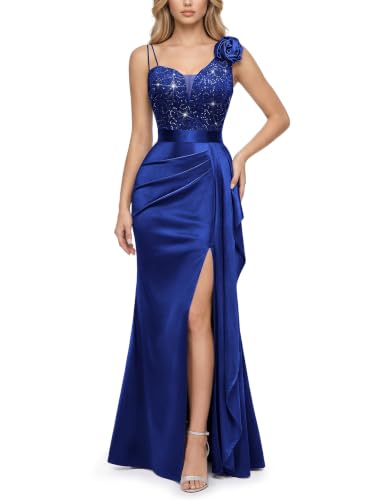
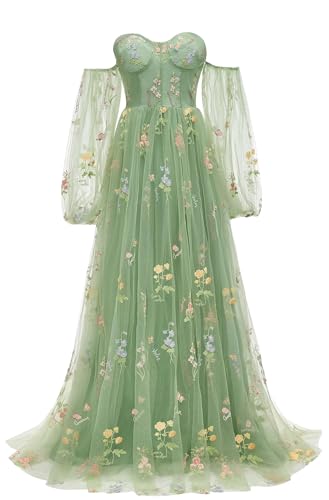


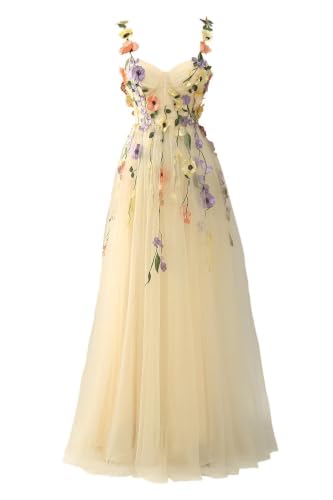
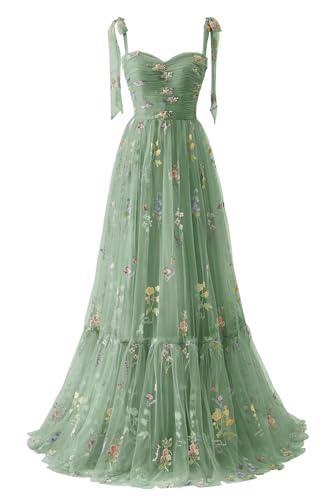
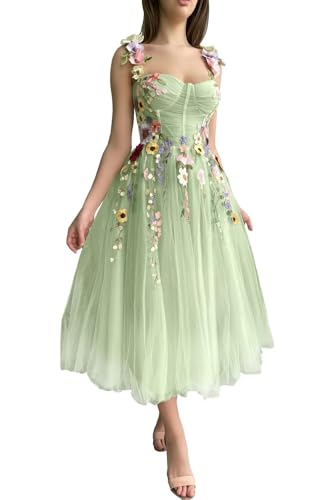
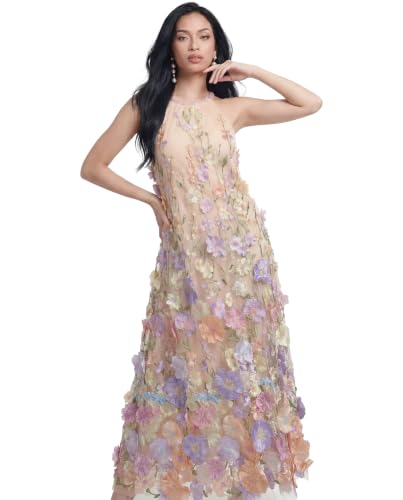



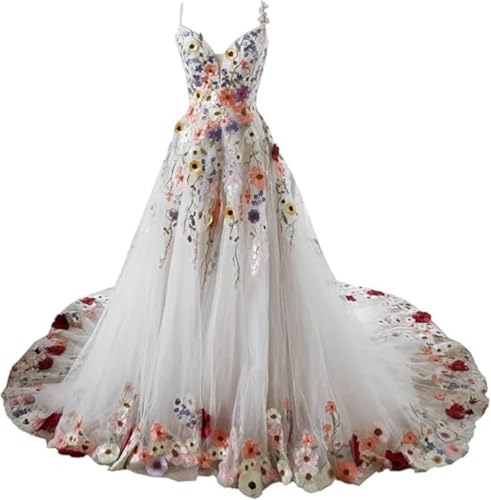


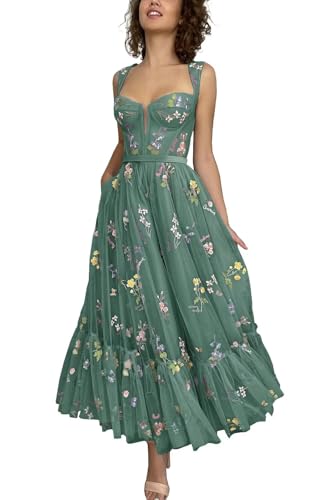

Flower Prom Dresses: Frequently Asked Questions
What does floral mean on a prom dress?
Three different things: a flat printed pattern, floral appliqué worked into lace with some texture, or 3D floral where fabric flowers are built up in layers and sewn on as a raised feature. Around three in ten listings here use the 3D version.
How can I tell which type a listing has?
Look at the shadow the flowers cast in the photograph. Flat print has none, appliqué has a slight edge, and 3D floral casts a visible shadow across the fabric beneath it.
Does 3D floral change how the dress feels?
Yes. It adds weight concentrated at specific points and bulk that can catch on other clothing or furniture. Flowers at the natural seat line flatten over a long evening; flowers placed at the bodice or shoulder avoid this.
Does 3D floral photograph differently?
Considerably. Side or directional lighting, common at an evening dance, throws shadows across raised petals and gives real depth. Flat, even lighting reduces that effect, so it reads closer to flat print in overcast daylight.
Will the flowers stay attached?
Usually, if well made. Check the stitching in product photographs; machine-attached flowers with visible thread at the base hold better than glued or minimally tacked ones over a night of dancing.
How should I store the dress?
Hung, never folded. Folding crushes raised petals in a way flat fabric recovers from and 3D texture does not. Avoid packing anything directly against the floral areas.
Which silhouette suits floral detail best?
A-line, at around one in five listings, gives floral the most surface area. Ball gown cuts carry the most volume for 3D floral specifically and are the most dramatic, most photographed version.
Should the floral match the dress color?
Either works. Monochrome floral, close to the base fabric tone, reads subtle and formal. Multi-color clusters read younger and more decorative, suited to a less formal event.
Can a 3D floral dress be altered?
With care. Flower placement is fixed to the pattern the dress was cut for, so altering the fit at the waist or bust can shift flowers away from their designed position. Order close to your measurements.
Three Things Called Floral
The word covers construction as much as pattern, and the differences are considerable once you know to look for them.
Floral print is a flower pattern woven or printed into the fabric itself. Flat, lightweight, and the least expensive way to introduce florals to a dress.
Floral appliqué or lace has flower-shaped motifs sewn onto or worked into lace, giving texture and depth without full three-dimensional structure.
3D floral, at around three in ten listings here, uses fabric flowers built up in layers and sewn onto the dress as a raised, sculptural feature rather than a flat pattern. This is the version that reads most dramatically in photographs and carries real weight and bulk where the flowers sit.
A listing photograph usually makes this clear if you look closely at the shadow the flowers cast. Flat print has no shadow; appliqué has a slight edge; 3D floral casts a visible shadow across the fabric beneath it.
What 3D Flowers Change About Wearing the Dress
This is worth knowing before ordering, since it is rarely mentioned in listings.
Raised flowers add weight concentrated at specific points on the dress rather than distributed evenly, which can pull the fabric slightly out of shape at rest and needs a properly fitted bodice underneath to carry it.
They also add bulk. A cluster of 3D flowers at the waist or hip is visible under a fitted overlay like a coat, and can catch on other people's clothing or on furniture in a way a flat pattern never does.
Where they sit matters for sitting down. Flowers placed at the natural seat line will be sat on directly, which flattens raised petals over a long evening. Flowers placed higher, at the bodice or shoulder, avoid this entirely.
Photographing Dimensional Detail
Flat floral print photographs the same in any light. 3D floral does not, and that is largely why people choose it.
Side lighting, common at an evening dance with directional stage lighting, throws shadows across raised petals and gives the dress visible depth and texture that a flat pattern cannot produce.
Flat, even lighting, such as an overcast outdoor photo session, reduces that effect considerably, and 3D floral can read closer to flat print under those conditions.
If dramatic photographs matter to you specifically, 3D floral rewards venues and events with more varied, directional lighting. In flat, even light, the investment shows less.
Care and Durability
Applied and 3D florals are attached rather than woven in, and that attachment can work loose over a long night of dancing.
Check the stitching at a few flowers in the product photographs if you can, since machine-attached flowers with visible thread at the base tend to hold better than glued or minimally tacked ones.
For storage and transport, hang the dress rather than folding it, since folding crushes raised petals in a way that does not recover the way flat fabric does.
Avoid packing anything directly against the floral areas in a garment bag, since pressure held for hours flattens 3D texture permanently.
Silhouettes Here
Gowns account for just over half this collection, and A-line appears in around one in five, which is where floral detail, flat or dimensional, has the most surface area to sit on.
Sweetheart necklines appear in around one in six and suit a bodice with floral appliqué particularly well, since the curved neckline echoes the rounded flower shapes.
Ball gown cuts, at around one in eleven, carry the most volume for 3D floral to be scattered across, which is the most dramatic and most photographed version of this style.
Corset backs, at around one in six, are common alongside floral bodices and let the dress be tightened without disturbing floral detail placed elsewhere.
Color
Floral detail usually appears in a contrasting or tonal shade against the dress base, and blue appears specifically in around one in eleven listings here as a common floral-on-solid combination.
Monochrome floral, where the flowers match the base fabric tone closely, reads more subtle and formal than a strongly contrasting arrangement.
Multi-color floral clusters read younger and more decorative, and suit a less formal prom over a more traditional formal event.
Sizing
Around one in eleven listings mentions plus sizing, which is on the thin side for a collection this size.
3D floral placement is fixed to the pattern the dress was cut for, so alterations that change the fit at the waist or bust can shift flowers away from where they were designed to sit. Order as close to your measurements as possible rather than planning significant alteration.
Take bust, waist and hip as standard. The US size chart covers conversions.
Related Collections
For lace-led prom styles, see prom mermaid dresses. The complete range of styles sits in prom dresses. For a fitted alternative, see tight prom dresses.