
Short White Formal Dresses for Women
The short white dress has become a category of its own, driven by a specific set of occasions: bridal showers, rehearsal dinners, bachelorette parties, courthouse ceremonies and graduations. Around two thirds of this collection is short, and a quarter mentions weddings.Prom accounts for over a third and cocktail styles for a quarter. Lace leads the fabrics at just over a quarter, followed by tulle and sequin. Around a third have sleeves and just over one in eight is a bodycon cut.Plus size coverage is around one listing in six. For floor-length white, see long white formal dresses.
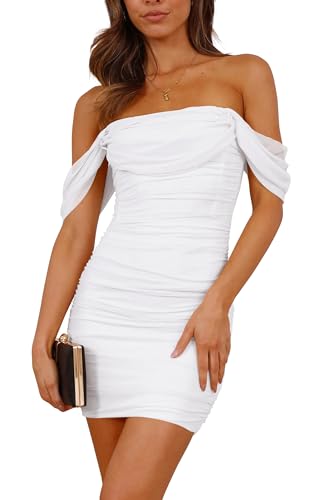
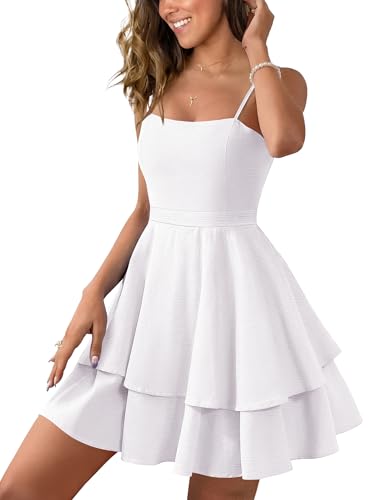
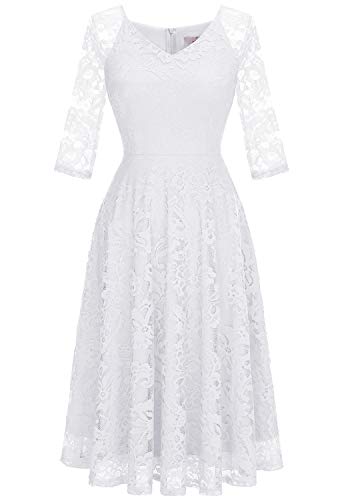



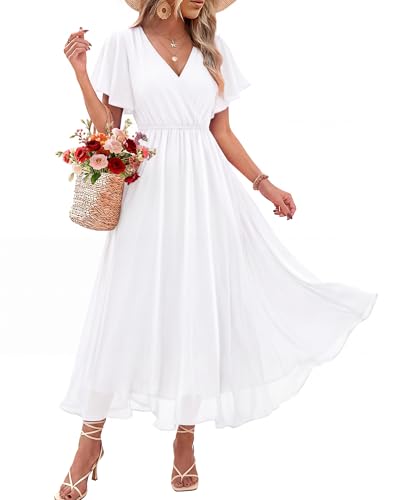


Nmoder Plus Size Dresses for Women Short Sleeve A-Line Summer Dress Pleated V Neck Semi Formal Church Fit and Flare Midi Dress White 4XL
Original price was: $25.59.$19.99Current price is: $19.99.


Short White Formal Dresses: Frequently Asked Questions
What occasions is a short white dress for?
Bridal showers, rehearsal dinners, bachelorette parties, courthouse ceremonies and reception changes for brides, plus prom and graduation, which together account for over a third of this collection.
How do I stop it looking like a wedding dress?
Avoid combining all-over lace, any form of train, and a full skirt with a fitted bodice. One of those alone is fine, two starts to read bridal, three reads as a short wedding dress. A colored accessory reframes it fastest.
How short should it be?
White reflects light upward, so a very short hem draws more attention to the leg than the same hem in a dark color. A hem at or just above the knee reads elegant more reliably than a mini.
What should I wear underneath?
Undergarments matched to your own skin tone, not to the dress. White underwear under white fabric is more visible, not less. For a fitted style, seamless shapewear shorts remove visible lines and stop the dress riding up when seated.
Is white lace always bridal?
Not necessarily. Lace in a bright white rather than an ivory tone reads less bridal and more contemporary. It is the combination of lace with other bridal markers that creates the effect.
Which fabric is least forgiving?
Satin, and bodycon cuts generally. A pale, close-fitting fabric shows every line beneath, which is why fit accuracy matters more in white than in dark colors.
What marks a white dress most easily?
Sunscreen, which people forget. It transfers readily and many formulations leave a mark that does not wash out fully. Apply well before dressing and let it absorb completely.
Is white acceptable for prom and graduation?
Yes, without restriction. White is a standard prom color and is conventional at graduations, sometimes specified by the school.
What is junior sizing?
Around one listing in ten here uses it, and it runs smaller than standard women's sizing. Check the specific chart on any listing that mentions it rather than assuming your usual size.
The Bride's Second Dress
A large part of why short white dresses sell in volume has nothing to do with formal events generally. It is the set of occasions surrounding a wedding where the bride is expected to wear white but a gown would be wrong.
Bridal shower. Traditionally white or pale, usually daytime, usually short. The most common single use for a dress in this collection.
Rehearsal dinner. White marks the bride without repeating the ceremony gown.
Bachelorette party. Almost universally white for the bride, and this is where the shorter and more contemporary cuts in this collection sit.
Courthouse or civil ceremony. A short white dress is often more appropriate than a full gown, particularly for a small ceremony followed by a meal.
Reception change. Brides changing out of a long gown for dancing frequently choose a short white dress rather than a different color.
Because these events cluster together, many people buy two or three from this collection at once, which is worth knowing when comparing prices across listings.
The Other Half
Over a third of this collection is prom wear and a quarter is cocktail dressing, neither of which has anything to do with weddings.
White is a standard prom color and carries no restrictions there. Graduation is the other major use, where white is conventional and sometimes specified by the school.
If you are shopping for prom or graduation rather than a bridal event, the styles to look for are different: more structured bodices, bolder cuts, and none of the traditional bridal markers described below.
Keeping It Out of Bridal Territory
For anyone buying short white for a non-wedding occasion, three features together read as bridal and are worth avoiding in combination.
All-over lace, particularly ivory-toned lace over a nude lining. Any form of train or extended back hem. And a full skirt with a fitted bodice, which is the classic bridal proportion at any length.
Any one of these alone is fine. Two starts to read bridal. Three reads as a short wedding dress.
The fastest correction is color at the accessories: a bright shoe, a colored bag or a statement necklace immediately reframes a white dress as evening or party wear.
Hem Length and What Shows
Around two thirds of this collection is short, but short covers a wide range and in white the hem position does more work than usual.
White reflects light back upward, which means a very short hem draws more attention to the leg than the same hem in a dark color would. If you want a short dress that reads elegant rather than party, a hem at or just above the knee is more reliable than a mini.
Around one dress in twelve here is tea length and a similar share is knee length, which sit at the more formal end of the collection.
Bodycon cuts account for just over one in eight. In white these are the least forgiving combination available, since a pale, close-fitting fabric shows every line beneath.
Opacity and What Goes Underneath
Short white dresses raise the same visibility issues as long ones and add one more: what happens when you sit.
Check for a lining in the listing. Where a dress is unlined, a nude slip solves the problem, and a slip is easier to add to a short dress than a long one because the length is easier to match.
Undergarments must match your own skin tone rather than the dress. White underwear under white fabric is more visible, not less, which surprises people consistently.
For a fitted short white dress, seamless shapewear shorts serve two purposes at once: they remove visible lines and they solve the riding-up problem when seated.
Fabric
Lace, at just over a quarter of the collection, is the most common and the most likely to read bridal. Lace in a bright white rather than an ivory tone reads less bridal and more contemporary.
Tulle, at around a fifth, adds volume and appears mostly in the prom portion.
Sequin, at a similar share, is the clearest signal that a dress is party rather than bridal wear, and is worth seeking out for exactly that reason if the occasion calls for it.
Satin appears in around one dress in twelve. At short lengths satin white is the least forgiving fabric and shows every seam.
Marks and Practicality
A short white dress at a summer event faces a specific set of hazards: sunscreen transfer, makeup at the neckline, drinks, and seating that is not always clean.
Sunscreen is the one people forget. It transfers readily onto white fabric and many formulations leave a mark that does not wash out fully. Apply well before dressing and let it absorb completely.
Carrying a stain pen is a small precaution that pays off more with white than with any other color.
Sizing
Around one listing in six is plus size and petite listings are rare. Around one in ten is described as junior sizing, which runs smaller than standard women's sizing and is worth checking on any listing that mentions it.
Take bust, waist, hip and height. Height determines hem placement, which matters more here than in most collections because the range from mini to tea length is wide.
Fit accuracy matters more in white than in dark colors, since there is nothing to disguise a pulling seam. Our US size chart covers regular, plus and junior conversions.
Related Collections
For floor length, see long white formal dresses. For bridal gowns, browse bridal dresses. For other short formal options, see cocktail dresses.