
Black Formal Dresses for Women
black formal dresses for women include occasion wear for black-tie events, weddings, galas, funerals, proms, formal dinners, ceremonies, and cocktail receptions. The product grid below contains 93 current category products and may include long gowns, midi dresses, short styles, A-lines, sheaths, mermaid silhouettes, lace, satin, velvet, chiffon, sequins, sleeves, and plus-size options. Compare silhouette, fabric, length, neckline, sleeves, closure, and event suitability before opening the final retailer listing.“Formal” can cover several dress-code levels, so shoppers should distinguish a cocktail-length dress, a semi-formal midi, and a floor-length gown before comparing style details. Product names and sizing conventions vary across sellers, so confirm measurements, fabric composition, lining, care, delivery timing, and return terms on the linked retailer page. The dress should remain stable while sitting, walking, reaching, and using stairs in the planned shoes and underlayers.Related shopping paths include formal dresses, black dresses, short black formal dresses, and black formal gowns. These categories separate the main search by color, length, silhouette, and dress-code level.





Women’s Mermaid Satin Prom Dress with Slit Halter Corset Long Black Bridesmaid Dress Formal Corset Party Gown Size 10
Original price was: $79.99.$59.99Current price is: $59.99.

Likedpage Women’s Sweetheart Ball Gown Tulle Quinceanera Dresses Prom Dress (US4, Black) … …
Original price was: $84.99.$79.99Current price is: $79.99.


Bestluckw Long Sleeves Black Bridesmaid Dresses for Womern Chiffon V Neck Pleated Formal Dress with Slit Size 10
Original price was: $59.99.$54.99Current price is: $54.99.

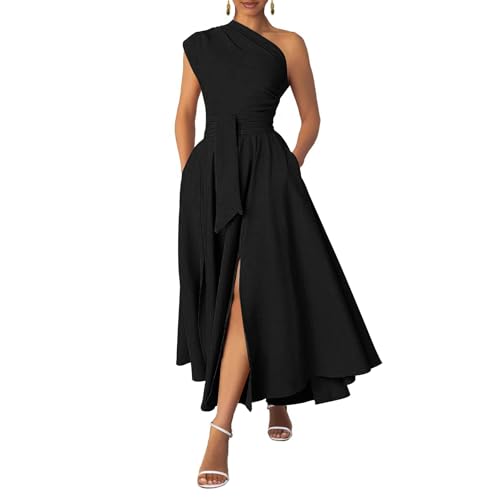
XYAYE One Shoulder Satin Long Prom Dresses with Pockets for Women Maxi Formal Evening Gowns with Slit Black 16 Plus Size
Original price was: $85.98.$81.98Current price is: $81.98.

Frequently Asked Questions About Black Formal Dresses for Women
What events are appropriate for black formal dresses?
They may suit black-tie events, formal weddings, galas, funerals, proms, dinners, ceremonies, and cocktail events when the dress code permits.
Can I wear a black formal dress to a wedding?
Often yes in the United States, but follow the couple’s guidance, culture, venue, and requested dress code.
What makes a black dress formal?
Formal fabric, refined construction, appropriate length, secure fit, lining, and event-level detailing make the difference.
Which black dress fabrics are most common?
Satin, crepe, chiffon, velvet, lace, tulle, jersey, sequins, and beaded mesh are common.
Should a black-tie dress be floor length?
Floor length is the safest interpretation, although some highly refined alternatives may work depending on the invitation and venue.
How do black dresses photograph?
They can lose seam and texture detail in low light, so test daylight, indoor light, and flash photography.
Are black formal dresses available in petite and plus sizes?
Yes, but verify the exact variation’s shoulder, bust, arm, waist, hip, torso, and length measurements.
Can black formal dresses be altered?
Many can, but lace, sequins, boning, velvet, satin, and layered hems may require specialist work.
What should I verify on the retailer page?
Check seller, size chart, fabric, lining, closure, length, support, delivery, returns, and care.
What Belongs in the Black Formal Category
Black formal dresses range from refined cocktail midis to floor-length evening gowns. Silhouette, fabric, length, surface detail, and dress code matter more than the color alone.
This category should serve shoppers who want black as the primary color without limiting the search to one length. Separate short formal dresses, semi-formal dresses, and full gowns before comparing decorative details.
Choosing Black for the Occasion
Invitation wording, local custom, cultural expectations, venue, and time of day determine suitability. Check whether the event requests festive color, mourning restraint, white tie, black tie, or cocktail attire.
Black is accepted at many US weddings, galas, funerals, formal dinners, proms, and evening events, but context still matters. A versatile color does not eliminate the need to follow the host’s dress code.
Black-Tie and Formal Gowns
Compare this collection with black formal gowns when full length is a fixed requirement. Black-tie events generally call for floor-length or highly refined formal construction.
Satin, crepe, chiffon, velvet, tulle, sequins, and beaded mesh can all work when the gown has appropriate structure. Confirm floor clearance, train length, internal support, and transportation before choosing a dramatic skirt.
Cocktail and Short Black Formal Dresses
Short and midi black dresses can serve cocktail, semi-formal, business-formal, and selected wedding settings. Do not assume every little black dress has enough structure or coverage for a formal invitation.
Hem position, seated coverage, neckline, sleeves, and fabric finish determine whether the dress remains polished. Use short black formal dresses for a length-focused search.
A-Line and Fit-and-Flare Black Dresses
A-lines release more gradually, whereas fit-and-flare dresses often remain closer through the upper hip. Select the cut that fits the bodice and upper hip without pulling the skirt off grain.
A-line and fit-and-flare silhouettes provide skirt movement while defining the waist differently. Check waist placement, torso length, skirt panels, and lining rather than relying on silhouette labels.
Sheath, Column, and Mermaid Styles
Close-cut black formal dresses reveal seam balance and lining tension clearly in movement. Sheath and column dresses require sitting ease, while mermaid skirts need adequate knee and stride room.
Inspect drag lines, twisted side seams, vent or slit construction, and hem rise when walking. A smooth standing photograph cannot prove that a fitted dress will function through a full event.
Lace and Illusion Black Dresses
Black lace can appear romantic, conservative, or dramatic depending on backing, motif, and transparency. Confirm mesh tone, bra coverage, seam placement, and underarm comfort.
Illusion necklines and sleeves may use nude, beige, brown, or black mesh that is not visible in the title. Lace borders and appliqué should be reviewed before planning sleeve, bodice, or hem alterations.
Sequins, Beads, and Metallic Detail
Decoration increases weight, changes flash response, and can irritate the underarm or inner arm. Reflective black dresses range from subtle beadwork to fully sequined gowns.
Test the exact garment under flash and during repeated arm movement. Use smooth accessories and request specialist alteration advice when embellishment crosses seams.
Satin, Crepe, Velvet, and Chiffon
Black fabric changes significantly by texture and light response. Satin reflects seams and wrinkles, crepe absorbs more light, velvet changes with pile direction, and chiffon depends on lining.
Choose fabric according to season, venue temperature, travel needs, and care capacity. Compare close-up images and inspect the received dress in daylight and warm indoor light.
Necklines and Support
Boning, cups, grip tape, straps, back height, and torso length determine whether the neckline remains stable. Use the planned bra or support solution during measurement and fitting.
Black makes the outline of a neckline visually clear, especially in strapless, one-shoulder, halter, and deep-V styles. If the wearer must repeatedly pull the dress upward or close the neckline, select another construction.
Sleeves, Jackets, and Coverage
Raise the arms, reach forward, and sit while wearing all layers. Sleeves and coordinating jackets can add coverage for ceremonies, religious venues, professional events, or cooler weather.
Upper-arm ease, shoulder movement, lining, cuff width, and jacket armholes need separate measurements. An outer layer should complement a correctly fitting dress rather than conceal a tight bodice or gaping armhole.
Black Formal Dresses for Weddings
A black wedding-guest dress can be appropriate when it matches the couple’s guidance and the event’s level of formality. Check photographs under the venue lighting because all-black construction can lose texture in low light.
Avoid white-dominant panels, bridal trains, or mourning-like styling when the setting calls for celebration. Use fabric, accessories, and occasion-specific details to keep the outfit intentional.
Plus-Size, Petite, and Tall Options
Bust depth, shoulder width, upper arm, waist placement, rise, and garment length may change across plus, petite, regular, and tall versions. Prioritize the least flexible part of the garment, such as a woven sleeve, fitted lining, or boned bodice.
Size-range labels do not guarantee consistent pattern proportions. Compare exact measurements and reviews from the same variation.
Accessories and Black Fabric
Black supports many accessory colors, but fabric finish and dress detail should guide the choice. Pearls, silver, gold, crystal, color accents, textured bags, and black accessories create different levels of contrast.
Test accessories beside the actual dress rather than a screen image. Avoid rough bags, bracelets, or wraps against lace, satin, sequins, and delicate mesh.
Alterations, Care, and Value
Black can hide minor repairs but does not simplify every alteration. Calculate the dress, shipping, exchanges, alterations, steaming, and specialist care as one total.
Lace, beading, boning, velvet pile, satin seams, and layered chiffon can raise tailoring and cleaning costs. Keep the garment returnable until a tailor confirms that the required work is feasible.
Black Formal Dress-Code Guide by Event
For cocktail attire, a refined knee or midi black dress is usually appropriate; formal and black-tie optional events may support an elevated midi or floor-length gown; black tie most safely points to a formal gown. White-tie events require the highest evening formality and should be confirmed with the host or venue guidance.
Funerals, award dinners, religious ceremonies, military events, and weddings each add their own expectations. Use the invitation language first, then consider time, location, culture, and the wearer’s role. A black dress that works for a cocktail reception may be too revealing for a memorial or too simple for a gala.
Simple Black Formal Dresses and Minimalist Evening Wear
Simple black formal dresses rely on cut, fabric, and fit rather than sequins or heavy decoration. Bias-cut satin, structured crepe, clean A-lines, draped columns, and long-sleeve jersey gowns can look highly polished when seams hang correctly and the fabric has enough weight. Minimal does not mean casual or poorly lined.
Inspect neckline finishing, zipper installation, darts, hem depth, and lining because there is little embellishment to distract from construction flaws. A minimalist black evening dress also benefits from planned jewelry and shoes, but accessories should not be used to rescue a garment that is underdressed for the invitation.
Long-Sleeve Black Formal Dresses
Long-sleeve black formal dresses suit winter weddings, religious ceremonies, formal work events, memorial services, and evening galas. Sleeve types include fitted crepe, velvet, lace, illusion mesh, bishop, cape, and off-shoulder constructions. Each requires accurate shoulder, upper-arm, elbow, and wrist measurements.
Raise the arms and reach forward while checking whether the bodice lifts or the sleeve pulls across the back. Lace and mesh can look transparent under flash even when they seem dark indoors. Pair the dress with the intended coat to make sure the sleeves do not bunch or crush embellishment.
Modest Black Formal Dresses
Modest black formal dresses may include high necklines, opaque backs, elbow or long sleeves, controlled slits, and midi or floor lengths. “Modest” is context-dependent, so verify the specific requirements of a church, synagogue, mosque, school, military function, or family event rather than relying on a retailer tag.
Check coverage while seated, bending, and raising the arms. An illusion neckline may reveal more skin than product thumbnails suggest, and a high slit can open substantially in motion. A removable wrap can add ceremonial coverage, but the base dress should still fit securely and appropriately.
Black Formal Dresses With Slits
Slits provide stride room and visual movement in column, sheath, and mermaid dresses, but placement and height determine practicality. Front, side, and back slits behave differently when sitting or climbing stairs. Measure the top of the slit from the floor or hem rather than judging it only on a tall model.
Check whether the slit is reinforced, overlapped, lined, or designed to fall open. A tailor may lower a slit when sufficient seam allowance exists, but adding fabric can be visible. For weddings, work galas, and military balls, confirm that the opening remains controlled during photographs and dancing.
Black Formal Dresses for Older Women and Mature Guests
Shoppers seeking black formal dresses for older women often prioritize sleeve coverage, supportive necklines, jacket options, easy closures, and comfortable seated fit without giving up modern design. A-line midis, lace-sleeve columns, draped crepe gowns, portrait necklines, and coordinated jackets provide several levels of formality.
Age does not dictate hem or silhouette, but event duration and mobility deserve attention. Check zipper reach, shoe stability, stair use, garment weight, and whether beadwork irritates the arms. A flattering dress should remain comfortable through travel, dinner, speeches, and dancing rather than only during photographs.
Judging Quality in a Black Formal Dress
Black fabric can conceal some construction details online, so enlarge photographs and inspect the received dress under strong light. Look for puckered zippers, uneven hems, twisted side seams, thin lining, loose beads, visible glue, and mismatched velvet pile. Rub the fabric lightly over a white cloth only when safe to check color transfer.
Turn the garment inside out to examine seam finishing, boning ends, lining attachment, and spare buttons. Quality is not determined by weight alone; a lightweight chiffon gown may be well made, while a heavy dress can still have unstable embellishment. Keep tags attached until the dress passes a complete inspection.
Black Maternity Formal Dresses
Black maternity formal dresses may use empire seams, wrap fronts, stretch jersey, side ruching, pleated skirts, or adjustable waists. A standard loose dress is not automatically maternity-friendly. Check bust growth allowance, front length, underbust placement, lining stretch, and the stage of pregnancy expected on the event date.
The front hem should remain balanced as the abdomen changes, and waist seams should not press across the body. Choose comfortable closures and plan bathroom access beneath long skirts or shapewear. Return timing matters when the dress is ordered months before a wedding, gala, or maternity photo event.
Black Formal Dresses for Cruises, Theater, and Charity Events
Cruise formal nights, theater openings, charity dinners, and awards events may use formal language without following identical rules. A refined black midi, tea-length dress, or gown can work depending on venue, host, and local custom. Review photographs from previous events when official guidance is vague.
For cruises, consider packing, ship stairs, deck wind, and limited pressing facilities. For theater and seated dinners, prioritize chair comfort and a manageable skirt. Charity galas may support stronger embellishment, but the outfit should not interfere with dining, auctions, or crowded reception areas.
Opacity, Dye Transfer, and Black Fabric Care
Black does not guarantee opacity. Stretch jersey, mesh, lace, chiffon, and thin crepe can become sheer over the bust, seat, or thighs under bright light. Wear the planned undergarments and inspect the dress in daylight and flash, especially where the fabric stretches.
Before pairing the dress with a pale coat, bag, or upholstery, check the care information for dye-transfer warnings. New black fabric can release color when wet or exposed to friction. Avoid unapproved spot cleaners, and store the garment away from white or blush dresses when humidity is possible.
Broad searches for elegant black formal dresses can mix funeral wear, cocktail dresses, prom gowns, wedding guest outfits, and black-tie evening gowns. Narrow the results with the event, length, sleeve, and fabric that actually matter, such as long-sleeve black formal dress, black satin gown, modest black midi, or plus-size black evening dress. This reduces comparisons between garments built for unrelated occasions.
Final Black Formal Dress Check
Wear the intended shoes, undergarments, jewelry, bag, and outer layer during a full movement test. The final choice should satisfy the dress code and remain functional for the complete event.
Check neckline stability, seated hem, sleeve motion, zipper strain, fabric transparency, and photographs. Retain tags and packaging until the dress performs correctly in every planned condition.