
Pink Formal Dresses for Women
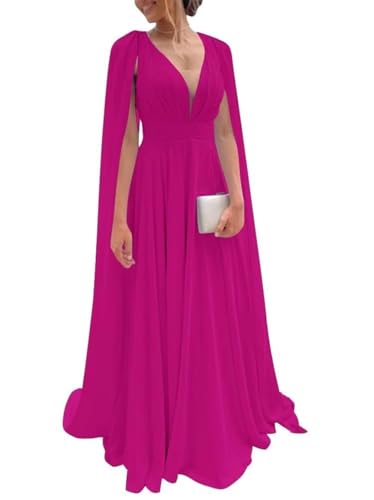
Pink covers a wider range than almost any other formal color, from a blush that behaves like a neutral to a fuchsia that dominates a room. Which end you choose decides more about how the dress reads than the cut does.Just over four in ten listings here are bridesmaid styles, which is the largest single group, followed by evening wear at close to four in ten and prom at a quarter. Around half are floor length and just over half are described as gowns. Chiffon leads the fabrics at roughly a quarter, with satin and sequin close behind, and around three in ten have a slit.Just over one in eight is plus size. For other bridal party colors, see coral bridesmaid dresses.
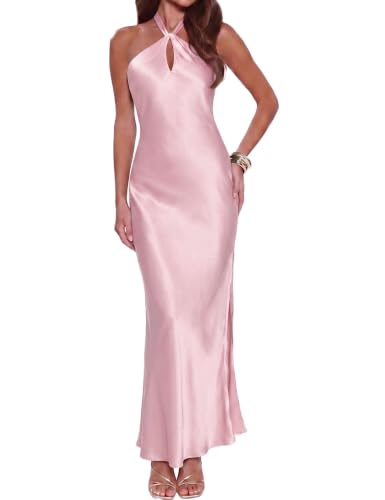



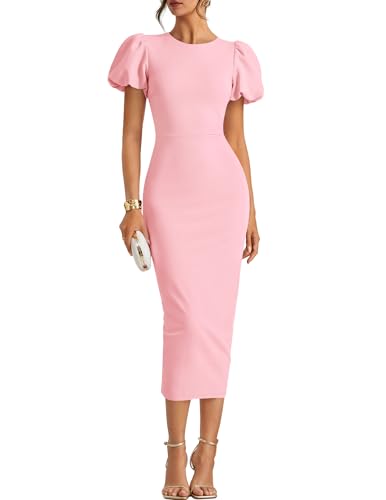

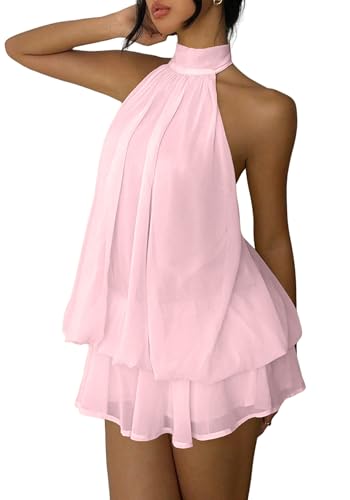




YOFF Lace Applique Tulle Prom Dresses for Women Elegant Long Dusty Pink Spaghetti Straps Long Formal Party Dresses with Slit 4
Original price was: $79.99.$74.99Current price is: $74.99.
Pink Formal Dresses: Frequently Asked Questions
Does pink look too young for a formal event?
It depends on the shade and finish rather than the color. Bright bubblegum tones, high-shine satin in pale pink, tulle and bows read young. Dusty rose, mauve-leaning pinks, deep raspberry and matte fabrics read mature.
What is the difference between blush, dusty rose and fuchsia?
Blush is palest with almost no saturation and behaves as a neutral. Dusty rose is muted and slightly gray, which is why it dominates bridal parties. Fuchsia is the most saturated, pushes toward purple, and holds up under artificial light where pale pinks wash out.
Can a guest wear pink to a wedding?
Yes, with one caution. At its palest, blush photographs close enough to ivory that it can read as white in some lighting. Choose a pink with visible saturation, or confirm with the couple. Other pinks are unrestricted.
Which pink suits my skin tone?
Cooler pinks leaning blue or purple suit cool undertones; warmer pinks leaning peach suit warm ones. Avoid a pale pink that nearly matches your own skin tone, since a near-match washes out where a clearly lighter or darker shade creates definition.
Chiffon or satin in pink?
Chiffon diffuses the saturation and reads light and summery. Satin concentrates it and adds shine, which in pale pink is the combination most likely to read young, and in deeper pinks reads rich and evening-appropriate.
What silhouette works with a pale pink?
A structured or fitted cut, which counteracts the softness of the color and produces a more grown-up result. With a deep pink or fuchsia the color already does that work, so a softer cut balances it.
Gold or silver with pink?
Gold and rose gold warm pink and are the natural pairings. Silver reads cooler and works better with fuchsia and mauve-leaning shades than with warm pinks.
Which colors go with pink?
Navy, gray, gold, cream and deeper burgundy all sit well beside it. Red and orange compete, since they are close enough in the warm range to read as a near-miss rather than a pairing.
Are plus sizes available?
Just over one in eight listings, and petite is rare. If you are between sizes in a pale pink, the larger size taken in will look better than the smaller worn tight, since pale colors show fit issues more than dark ones.
The Age Question
Pink carries an association with youth that no other formal color does, and it is the reason many women rule it out before looking properly. That association is real, but it attaches to specific shades and finishes rather than to pink itself.
What reads young: bright bubblegum and candy pinks, high-shine satin in a pale tone, tulle skirts, bows, and pastel pink combined with a full skirt.
What reads mature: dusty rose, mauve-leaning pinks, deep raspberry and wine-adjacent pinks, matte fabrics, and any pink in a clean column or sheath cut.
The single change that shifts a pink dress from young to sophisticated is usually the fabric finish rather than the shade. The same dusty rose in matte crepe and in high-shine satin read as two different levels of formality and two different age brackets.
The Range Within Pink
Blush is the palest, with almost no saturation. It functions as a neutral and photographs close to champagne in some lighting, which is why it needs care around weddings.
Dusty rose is muted and slightly gray. It is the most widely used pink in bridal parties because it holds its character without brightness.
Rose and true pink sit in the middle, clearly pink without leaning red or purple.
Fuchsia and magenta push toward purple and are the most saturated. These read as evening and hold up well under artificial light where paler pinks wash out.
Coral and salmon lean orange and belong to a warm family that behaves differently. The coral collection covers those separately.
Pink at a Wedding
The one caution is blush. At its palest, blush pink photographs close enough to ivory and champagne that a guest wearing it can read as being in white in some lighting, which is exactly the situation the convention exists to avoid.
If you are attending as a guest and drawn to pale pink, choose one with visible saturation rather than the palest available, or confirm with the couple. As mother of the bride or groom, the same applies with more weight.
Beyond blush, pink is unrestricted. Dusty rose, rose and fuchsia all work at weddings without any of the questions that attach to white, red or black.
Skin Tone and Undertone
Pink interacts with skin more visibly than most colors because it sits in the same tonal family as skin itself.
Cooler pinks, those leaning blue or purple such as fuchsia and mauve, generally suit cool undertones. Warmer pinks, those leaning peach or coral, suit warm undertones.
Pale pink close to your own skin tone is the combination to check most carefully, since a shade that nearly matches can wash out rather than complement. A dress that is either clearly lighter or clearly darker than your skin creates definition; one that sits in between often does not.
This matters most at the neckline, where the fabric is nearest the face. A pale pink gown with an open neckline reduces the effect considerably.
Fabric
Chiffon accounts for around a quarter of this collection and produces the softest version of any pink shade, diffusing saturation slightly and reading as light and summery.
Satin, at roughly one dress in six, concentrates the color and adds shine. In pale pink this is the combination most likely to read young; in deeper pinks it reads rich and evening-appropriate.
Sequin styles, at around one in seven, sit firmly in evening and prom territory. Lace, at roughly one in eight, softens whatever shade sits underneath it.
Tulle appears in a small number of listings and is the most youthful-reading fabric in this collection.
Silhouettes
A-line is the most common cut at around one dress in seven, followed by mermaid at roughly one in eight. Ball gown skirts are less common, at roughly one dress in twelve.
V-neck leads the necklines, with one-shoulder styles at around one in eleven.
For a pale pink, a structured or fitted silhouette counteracts the softness of the color and produces a more grown-up result. For a deep pink or fuchsia, the color is already doing that work and a softer cut balances it.
Accessories
Gold and rose gold warm pink and are the natural pairings. Silver reads cooler and works better with fuchsia and mauve-leaning shades than with warm pinks.
For shoes, nude or metallic extends the leg line without introducing a competing color. Black shoes with a pale pink dress create a sharp contrast that can read as deliberate and modern or as mismatched, depending on the rest of the outfit; with a deep pink they work more reliably.
Pink sits well beside navy, gray, gold, cream and deeper burgundy. It competes with red and orange, which sit close enough in the warm range to read as a near-miss.
Sizing
Just over one in eight listings here is plus size, and petite listings are rare.
Pale colors show fit issues more than dark ones, since there is less shadow to disguise a pulling seam or a gaping bodice. If you are between sizes in a pale pink, the larger size taken in will look better than the smaller size worn tight.
Around a quarter of listings have sleeves. Our US size chart covers conversions.
Related Collections
For warm-toned alternatives, see coral bridesmaid dresses. For bridal party shopping, browse bridesmaid dresses. For other formal colors, see formal dresses.