
One Shoulder Formal Dresses for Women
A one-shoulder dress is an engineering decision as much as a style one. All the weight of the bodice hangs from a single strap, which changes what undergarments work, how the dress behaves through a long evening, and what can be altered afterward.Around two in three listings here are explicitly one-shoulder, with a further one in eight being off-shoulder cuts. Half the collection is floor length, four in ten are evening styles, and roughly one in five has a slit. Sequin and mermaid styles each account for around one listing in six.Roughly one in four listings is a prom style, and plus size coverage is thin at under one in ten. For other necklines at the same formality, see dresses by neckline.
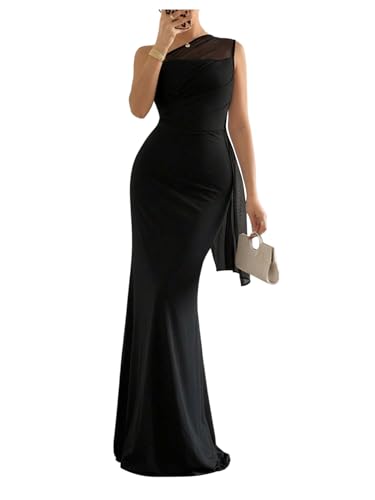



REORIA Women’s Sexy One Shoulder Formal Long Dress Elegant Wedding Guest Sleeveless Ribbed Bodycon Maxi Dresses Black XS
Original price was: $50.97.$29.99Current price is: $29.99.


Tvuyet HOCO Dresses One Shoulder Homecoming Dresses Sequin Short Prom Dresses Pretty Formal Dress Light Blue 2
Original price was: $49.97.$33.97Current price is: $33.97.


PLKF Mermaid Prom Dresses for Women Burnt Orange Ball Gown Satin One Shoulder Formal Dresses for Women Wedding Burnt Orange 08
Original price was: $59.99.$55.99Current price is: $55.99.


YOFF Dusty Blue One Shoulder Chiffon Bridesmaid Dress with Slit Cold Shoulder Long A-Line Empire Waist Formal Party Dresses for Women 10
Original price was: $79.69.$74.69Current price is: $74.69.


OFEECHUN Pink One Shoulder Sequin Homecoming Dresses Short Layered Long Sleeve Sparkly Formal Dress Size 8
Original price was: $69.99.$64.99Current price is: $64.99.



One Shoulder Formal Dresses: Frequently Asked Questions
What bra do I wear with a one-shoulder dress?
A one-shoulder or convertible bra with a single strap, an adhesive bra, or a strapless bra worn under the dress strap. The simplest solution is a dress with built-in cups or boning, which is worth filtering for since it removes the problem entirely.
Will the strap stay in place?
It depends on the strap width and the weight of the skirt. All the bodice weight hangs from one point, so a narrow strap on a heavy floor-length skirt shifts more. A wide band distributes the load better.
Can a one-shoulder dress be altered?
Only partially. Side seams can be taken in and hems shortened, but the strap position and bodice angle cannot be meaningfully changed, because shortening the single strap pulls one side up and drops the other. The bodice needs to fit close to correctly on arrival.
Does it matter which shoulder the strap is on?
Yes, and it is usually not reversible. It conflicts with a shoulder bag on the same side, and in photographs taken predominantly from one angle a strap on the near side defines the look while one on the far side is barely visible. Check the photographs, since the side is often not stated in text.
Which measurement matters most?
Underbust. It determines whether the bodice grips closely enough to stay level without a second strap. A one-shoulder dress that is slightly loose at the ribs will not sit where it should.
Is one-shoulder appropriate for a daytime ceremony?
It offers limited coverage for daytime religious ceremonies. A single-sleeve or cape version gives the same asymmetric line with more coverage and reads more formal.
What styles are in this collection?
Around two in three listings are explicitly one-shoulder, with a further one in eight being off-shoulder. Half are floor length, four in ten are evening styles, and sequin and mermaid designs each account for roughly one in six.
Why do sequins appear so often here?
The single strap creates a strong diagonal line that a sequin surface follows and emphasizes, which is why the two are frequently paired. Sequin styles account for around one listing in six.
Are plus sizes available?
Coverage is thin at under one listing in ten, so the selection is limited compared with symmetric formal collections.
What the Single Strap Changes
In a two-strap or sleeved dress, the weight of the bodice and skirt is shared. In a one-shoulder dress it is not. Everything hangs from one point, which produces three effects worth understanding before ordering.
The strap carries more load, so it sits deeper into the shoulder and is more likely to shift during the evening. Heavier skirts amplify this considerably.
The bodice must grip elsewhere to stay level, usually through boning, silicone strips or a close fit at the ribcage. A one-shoulder dress that is slightly loose at the ribs will not stay where it should.
The asymmetry is visible in every photograph from every angle, so where the strap sits matters more than it would on a symmetric design.
Undergarments
This is the question most often asked and the one most likely to cause a return.
A standard bra will not work. The options are a one-shoulder or convertible bra with a single strap, an adhesive or stick-on bra, a strapless bra worn with the dress strap over it, or a dress with a built-in bra or cups.
Built-in support is the simplest solution and worth filtering for, particularly for anyone who is not comfortable in strapless or adhesive options. Check whether the listing mentions built-in cups, boning or a lined bodice, since a one-shoulder dress without internal structure relies entirely on fit.
Adhesive bras vary considerably in how long they hold, and heat and movement both reduce it. If the event is long or warm, internal support in the dress is more reliable.
Which Strap Style You Are Choosing
Narrow strap. The most minimal and the most likely to shift. Best on lighter fabrics and shorter lengths.
Wide band. Distributes weight better and stays in place. Suits heavier skirts and floor-length designs.
Draped or ruffled. A decorative treatment across the shoulder. Adds visual weight to one side, which balances a fuller skirt.
Sleeve or cape. A single sleeve or a draped panel. The most formal reading and the most coverage.
Asymmetric neckline without a strap. A diagonal neckline with no shoulder coverage at all. This relies entirely on the bodice fit and is the least secure of the five.
The Alteration Limit
This is the practical constraint that separates one-shoulder dresses from most other formal wear.
A two-strap dress can have both straps shortened evenly. A one-shoulder dress cannot be adjusted the same way, because shortening the single strap pulls the whole bodice up on that side and drops the opposite side. The asymmetry that makes the design work is also what makes it difficult to alter.
Practically, this means the bodice needs to fit close to correctly out of the box. Side seams can be taken in, and hems can be shortened. The strap position and bodice angle cannot be meaningfully changed. If the bodice sits wrong on arrival, exchange rather than plan to alter.
Which Shoulder and Why It Matters
Most listings show the strap over one specific shoulder, and it is usually not adjustable or reversible.
This matters more than it sounds for two reasons. If you carry a bag on one shoulder, the strap on that side will conflict. And if there is a formal photograph where you will predominantly be seen from one side, a strap on the far side is barely visible while a strap on the near side defines the whole look.
Check the product photographs rather than the description, since the side is often not stated in text.
Fabric and Structure
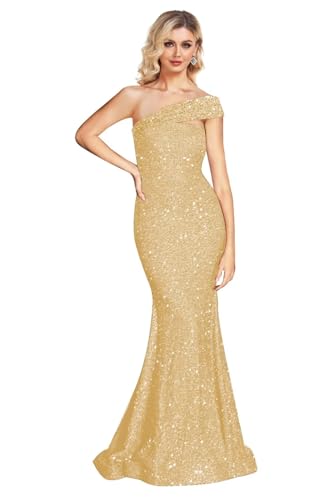
Sequin fabric appears in roughly one listing in six here, more than in most collections, and works well with asymmetry because the single strap creates a strong diagonal line that the surface texture follows.
Chiffon, at around one in seven, is the lightest option and puts least strain on the strap. Satin at roughly one in nine gives more structure. Lace appears less often here than in symmetric formal collections.
Whatever the outer fabric, the internal construction matters more in a one-shoulder design than anywhere else. A lined, boned bodice will hold; an unlined single layer will not.
Occasions
Around four in ten listings are evening styles and roughly a quarter are prom designs, so the collection is weighted toward evening and younger formal wear.
One-shoulder reads as contemporary rather than traditional, which suits evening receptions, galas and cocktail events. For daytime religious ceremonies it offers limited coverage, and a cape or single-sleeve version is the better choice there. Only a very small number of listings here are described in mother-of-the-bride terms.
Sizing
Plus size coverage is thin at under one listing in ten, which is worth knowing before browsing.
Take bust, underbust and waist. Underbust matters more here than in most dresses, because it determines whether the bodice grips well enough to stay level without two straps. For mermaid styles, take your thigh measurement too. Our US size chart covers conversions.
Related Collections
For other formal necklines, browse dresses by neckline. For colors in the same formality band, see emerald green formal dresses or long black formal dresses.