
Coral Bridesmaid Dresses
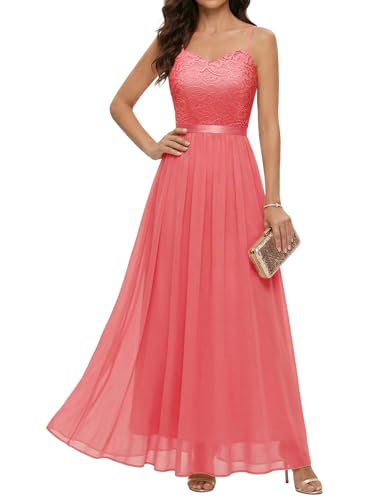
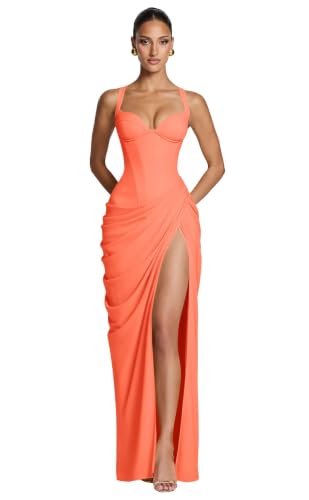
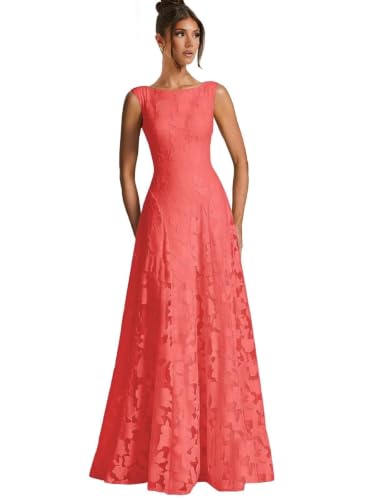
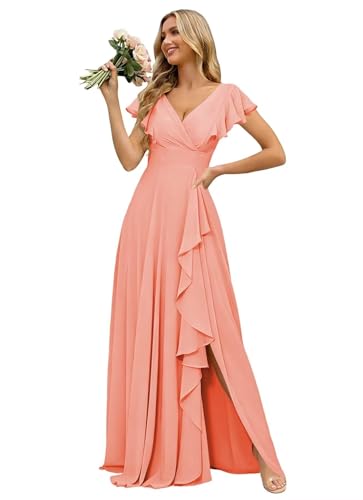
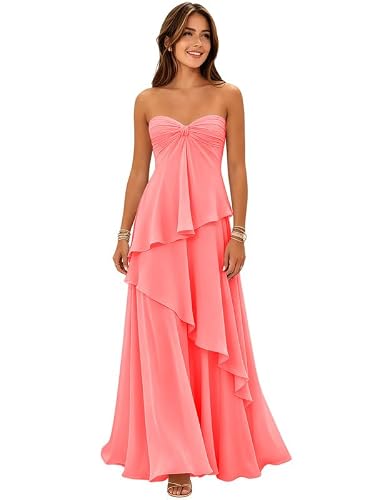
Coral is a warm pink-orange, and that warmth is what separates it from the pastel bridesmaid palette it is often grouped with. It carries more energy than blush and reads as summer rather than spring.Chiffon dominates this collection at over half the listings, which suits the outdoor and warm-weather weddings coral is usually chosen for. Around six in ten are floor length, just over a third are described as gowns, and a quarter have a slit. Lace features in around one dress in five.Plus size coverage is limited at under one listing in fourteen, which is worth knowing before committing to a single style for a whole party. For cooler tones, see turquoise bridesmaid dresses or the full bridesmaid dresses range.







Coral Bridesmaid Dresses: Frequently Asked Questions
What is the difference between coral, peach, salmon and blush?
Coral is the most saturated, with clear orange alongside the pink. Peach is lighter with more orange and less pink. Salmon sits between the two and reads dustier. Blush is palest and contains no orange at all, behaving almost like a neutral.
Can I mix coral and blush in one party?
Not successfully. One is a saturated color and the other is nearly a neutral, so the combination reads as a mismatch. Coral, peach and salmon can be mixed, since they share the same warm base.
Does coral photograph well next to a white gown?
Yes. A saturated warm color contrasts with white without competing, since white reads as cool, so the bride stays the brightest point while the party provides color. Coral also warms surrounding skin tones across a group.
Does coral suit everyone?
Broadly yes, though on very pale or pink-toned skin a strongly saturated coral can emphasize redness. A slightly muted salmon achieves the same palette with less intensity if someone in the party raises this.
Why does availability change through the year?
Coral is highly seasonal. Stock is widest from spring to midsummer and narrows from autumn, when retailers move to jewel tones. A style available in May may not have the same size range by September.
Chiffon or satin?
Chiffon, at over half this collection, diffuses light and softens coral's saturation, producing its characteristic glow. Satin concentrates the color into a more intense, slightly more orange result. The same dye looks like two different shades in the two fabrics.
What colors go with coral?
Navy is the strongest partner and a standard summer palette. Gold accessories warm it further; silver can read cold. Turquoise and coral works well for coastal weddings. Avoid pairing with red, burgundy or true pink, which sit too close in the warm range.
Are plus size coral bridesmaid dresses available?
Coverage is limited at under one listing in fourteen. Check the full size range before showing a style to the party rather than after, and consider choosing coral as a palette with different cuts if the range does not cover everyone.
How far ahead should I order?
Three to four months, and earlier than that for a spring or summer wedding ordered in autumn or winter, given how much the seasonal stock range narrows.
Coral, Peach, Salmon and Blush
These four names cover a narrow band of warm pinks, and sellers apply them loosely.
Coral is the most saturated of the group, with a clear orange presence alongside the pink. It is a color, not a pastel.
Peach is lighter and softer, with more orange and less pink, and lower saturation throughout.
Salmon sits between coral and peach, slightly muted and often reading as dustier.
Blush is the palest and has no orange in it at all. It is a pink, and it behaves like a neutral in a way coral does not.
The practical consequence: coral and blush cannot be mixed in one bridal party and read as intentional, because one is a saturated color and the other is nearly a neutral. Coral, peach and salmon can be mixed successfully, since they share the same warm base.
Coral Against a White Gown
Warm colors behave differently beside white than cool ones do, and this is the practical reason coral works well in wedding photographs.
A saturated warm color creates contrast with white without competing for attention, because white reads as cool. The bride stays the brightest point in the frame while the party provides color. Cool colors of similar saturation compete more directly.
Coral also warms surrounding skin tones in photographs, which is generally flattering across a group. The exception is very pale or pink-toned skin, where a strongly saturated coral can emphasize redness. If someone in the party has raised this concern, a slightly muted salmon achieves the same palette with less intensity.
Seasonality Affects Availability
Coral is one of the most seasonal colors in bridesmaid wear, and this affects planning more than it affects style.
Stock is widest between spring and midsummer and narrows considerably from autumn onward, when retailers move toward jewel tones and deep neutrals. A style available in coral in May may not be available in the same size range by September.
If your wedding is in spring or summer and you are ordering the previous autumn or winter, order earlier than the timeline suggests, or accept that the specific style you want may need to be substituted.
Fabric and How It Changes the Shade
Chiffon accounts for over half this collection and is the reason coral bridesmaid dresses photograph the way they do. Chiffon diffuses light through its layers, which softens coral's saturation slightly and produces the glowing quality associated with the color.
Satin, at around one dress in ten, does the opposite. It concentrates the color and creates sharp highlights, producing a coral that reads considerably more intense and slightly more orange. A satin coral and a chiffon coral from the same dye lot look like different shades.
Lace, at roughly one in five, sits between them. Coral lace over a matching lining produces depth and reads more formal than plain chiffon.
If any part of the party is in a different fabric to the rest, expect that difference to be more visible than any variation between listings.
Length and Silhouette
Around six in ten dresses here are floor length, with short styles at roughly one in seven. A-line is the most common silhouette at just under a fifth, followed by mermaid at around one in eleven.
A quarter of the listings have a slit. On a warm, light-toned color, a slit reads more prominently than it does on a dark one, because the contrast between fabric and skin is lower and the opening is more visible in motion. Check the height against the ceremony venue.
One-shoulder and halter necklines each appear in around one dress in nine, with V-necks the most common. For a whole party, a V-neck with straps accommodates the widest range of people without requiring specific foundation garments.
What Coral Pairs With
Navy is the strongest partner, creating a high-contrast combination that has become a standard summer wedding palette. Gold accessories warm coral further and suit beach and garden settings. Ivory and cream sit comfortably beside it without competing.
Turquoise and coral is a well-established pairing for coastal weddings, since the two sit opposite each other in the color range and reinforce rather than clash.
Where coral struggles is beside red, burgundy and true pink, all of which are close enough in the warm range to look like a mismatch rather than a deliberate choice. Silver accessories can also read cold against coral; gold is the safer default.
The Size Range Constraint
Under one listing in fourteen here is plus size, which is limited coverage for a bridal party where sizes usually vary.
The practical response is to check the full size range of a listing before showing it to the party, rather than after. If the range does not cover everyone, deciding early avoids the awkwardness of withdrawing a style people have already agreed on.
Where the range is genuinely too narrow, choosing coral as a palette rather than a single style, with different people in different cuts of the same shade, solves the problem while keeping the party coordinated.
Ordering for a Party
Allow three to four months. Given the seasonal availability described above, ordering early matters more with coral than with year-round colors.
Check the closure type on each listing. Corset-back and lace-up styles accommodate a wider size range than fixed zips, which is useful when ordering for several people at once.
Alteration appointments for a party need booking in advance, since one fitter handling several dresses requires scheduling rather than walk-in availability.
Related Collections
For cooler shades, see turquoise bridesmaid dresses or royal blue bridesmaid dresses. Since chiffon dominates here, the chiffon bridesmaid dresses page covers that fabric across every shade. For outdoor ceremonies, beach bridesmaid dresses covers lighter styles.