
Short lace wedding dress
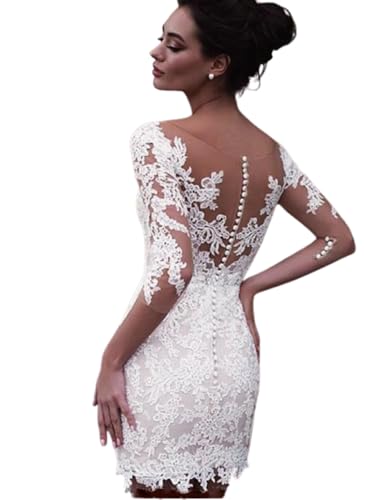
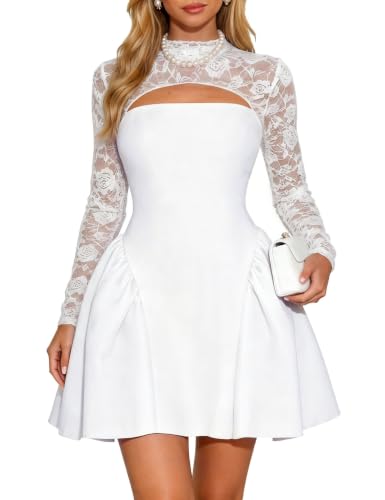
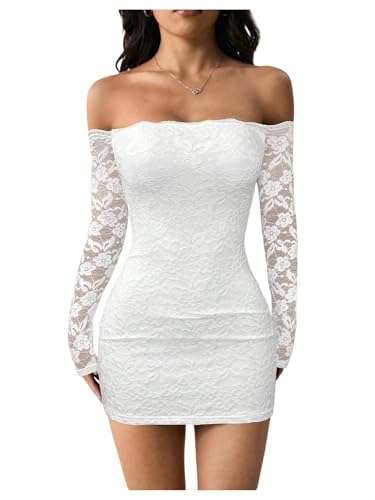
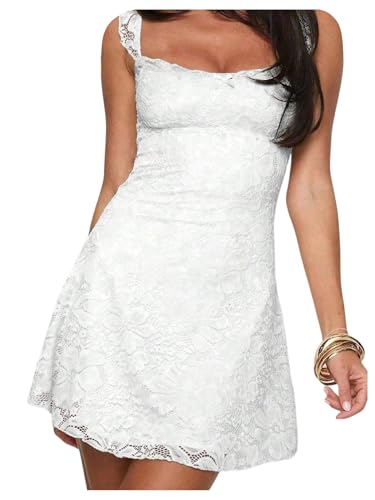
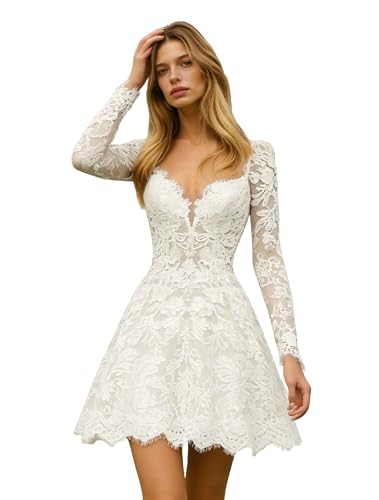
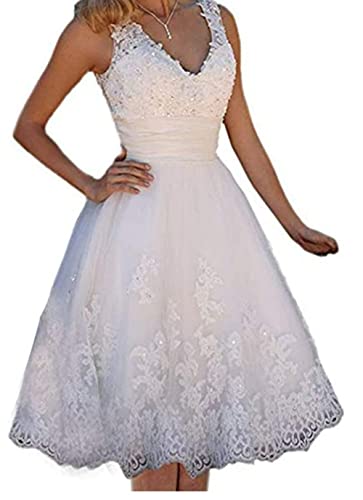
Almost every listing here is lace and eight in ten are short, which makes this one of the most focused bridal collections on the site. Lace is what keeps a short white dress reading as bridal rather than as any white dress.Just over half have sleeves and a third have long sleeves, which produces the defining combination here: covered arms above a bare leg. Corset backs appear in a third of listings, which is high for short bridal.Around a quarter mention beach weddings. For lace at floor length, see vintage lace wedding dresses.








Short Lace Wedding Dresses: Frequently Asked Questions
Why do so many have long sleeves?
A third do, and it balances the short hem. A short hem alone reads as party wear; long lace sleeves alone read formal. Together they read deliberate, and they solve the conflict between wanting coverage for a ceremony and ease afterwards.
Can a short lace dress be shortened?
Usually not. Bridal lace has a finished scalloped edge that is used as the hem itself. Cutting it removes the scallop and leaves a raw edge, and a rehemmed lace edge never looks like the original.
What length should I order?
Check shoulder-to-hem against your height, since the hem cannot be adjusted. For a hem just above the knee: roughly 36 to 38 inches at 5'2", 38 to 40 at 5'5", 40 to 42 at 5'8".
Will it be see-through?
Only as opaque as its lining. Check that the lining reaches the hem rather than stopping an inch or two above it, which creates a visible band of sheer lace at the bottom.
Does the lining tone matter?
Considerably. A nude lining under white lace reads as skin through the pattern, which is the intended effect. A white lining reads solid and flattens the lace entirely. Studio photographs rarely make clear which you are getting.
Why are corset backs so common here?
A third of listings have one. It accommodates a range of measurements, lets the bodice be tightened on the day, and adds interest to the back. Look for a modesty panel behind the lacing, since the gap is more visible on a short dress.
Where does this length work best?
Registry offices and civil ceremonies, beach and destination weddings since it packs flat and does not drag through sand, receptions as a second dress, and second weddings or vow renewals.
Which shoes work?
A nude shoe creates the longest unbroken line. Avoid ankle straps, which cut the leg at the narrowest point. Block heels are more stable on the paving, steps and grass that come with civil and outdoor ceremonies.
Which measurement causes most returns?
Upper arm, if the dress has sleeves. Lace has minimal stretch and a sleeve cannot be let out, so measure it before ordering any sleeved style.
Long Sleeves, Short Hem
A third of these dresses have long sleeves and eight in ten are short, and that combination is the signature of this collection rather than a coincidence.
It works because the two halves balance. A short hem alone reads as party wear. Long lace sleeves alone read as formal. Together they read as deliberate: covered where it reads considered, open where it reads light.
It also solves a practical conflict. Many people want the coverage of sleeves for a ceremony and the ease of a short dress for everything after it, and this is the one combination that gives both.
The version to approach carefully is a very short hem with a very high neck and full sleeves, which tips the balance and can read costume rather than bridal.
The Scalloped Edge Is the Hem
This is the single most important practical fact about short lace, and it is easy to miss.
Most bridal lace is made with a finished scalloped edge along one side. On a short dress, that scalloped edge is almost always used as the hem itself, because it is the most attractive finish available and requires no sewing.
Which means the dress cannot be shortened. Cutting the hem removes the scallop and leaves a raw edge that has to be rehemmed, and a rehemmed lace edge never looks like the original.
So the length you order is the length you get. Check the shoulder-to-hem measurement against your height before ordering rather than planning to adjust.
As a rough guide for a hem just above the knee: around 36 to 38 inches at 5'2", 38 to 40 at 5'5", 40 to 42 at 5'8".
Lining and What Shows
Lace is a net, so a lace dress is only as opaque as its lining, and at a short length the lining is what everyone sees when you sit.
Full lining to the hem is what you want. Check that the lining ends where the lace does rather than an inch or two above it, which is common and creates a visible band of sheer lace at the bottom.
Lining tone matters. A nude lining under white lace reads as skin through the pattern, which is the intended effect. A white lining under white lace reads solid and flattens the lace entirely.
Neither is wrong, but they look completely different, and studio photographs often do not make clear which you are getting. Customer photographs do.
Corset Backs
A third of this collection has one, which is notably high for short dresses and worth understanding.
On a short lace dress a corset back does three things: it accommodates a range of measurements rather than one, it lets the bodice be tightened on the day, and it adds a visual element to the back that a plain zip does not.
The trade-off is that a corset back needs someone else to fasten it, and the amount of gap between the panels varies with how tightly it is laced. On a short dress the gap is more visible than on a floor-length one, since there is less dress to distract from it.
A modesty panel behind the lacing solves this and is worth looking for.
Where This Length Belongs
Registry offices, courthouses and civil ceremonies, where a full gown is disproportionate to the setting.
Beach and destination weddings, which around a quarter of this collection mentions, because a short lace dress packs flat, needs no steaming and does not drag through sand.
Rehearsal dinners and receptions, as a second dress after a longer ceremony gown.
Second weddings and vow renewals, where many people prefer something less declarative.
Elopements, for the same reason as destination weddings: it travels.
Lace Snags and Short Hems
A short lace dress is more exposed to snagging than a long one, because the hem sits at the height of chair arms, table edges, handbags and car doors.
The scalloped edge is the most vulnerable part, since the points extend beyond the body of the lace.
A pull at the hem is more visible than one elsewhere, because the scallop shape is regular and a break in it reads immediately.
Practical response: mind the hem when sitting and getting into cars, and accept that this is a fabric that shows a hard day.
Shoes and Legs
At this length the shoe and the leg are both fully visible and become part of the outfit rather than an afterthought.
A nude or skin-tone shoe creates the longest unbroken line, which matters at a length that shortens the leg visually.
Ankle straps cut the leg at the narrowest point and work against the proportion. A plain court or a single vamp strap is safer.
Bare legs read contemporary; sheer tights read traditional. Neither is wrong but they place the dress in different decades.
Block heels are more stable than stilettos on the paving, steps and grass that come with civil and outdoor ceremonies.
Sizing
Take bust, underbust, waist, hip, height and upper arm if the dress has sleeves.
Lace sleeves have minimal stretch and cannot be let out, so upper arm is the measurement most likely to cause a return here.
Lace has almost no seam allowance. Order to your largest measurement and have the dress brought in, and remember the hem cannot move.
A bridal size is typically two numbers smaller than the equivalent in everyday clothing. The US size chart covers conversions.
Related Collections
For lace at floor length, see vintage lace wedding dresses. For short bridal in other fabrics, browse knee length wedding dresses. Non-bridal short white sits in short white formal dresses.