
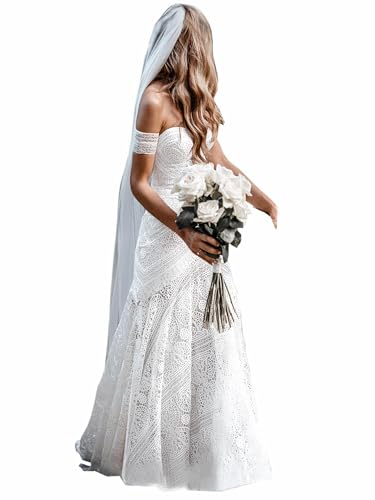
Lace mermaid wedding dress
This is one of the most tightly defined collections on the site: lace appears in nearly every listing and mermaid cut in essentially all of them. Gowns account for seven in ten and bridal for the same share, with wedding mentioned in almost every listing.Trains appear in around four in ten and ivory leads the color mentions at just under half, ahead of white at just over a third. Sleeve details show up in a little over four in ten, with long sleeves specifically at just under a quarter.This is a genuinely bridal-focused collection rather than a crossover one. For the same cut without lace, see mermaid dresses.
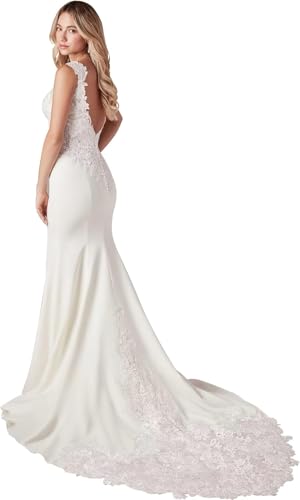
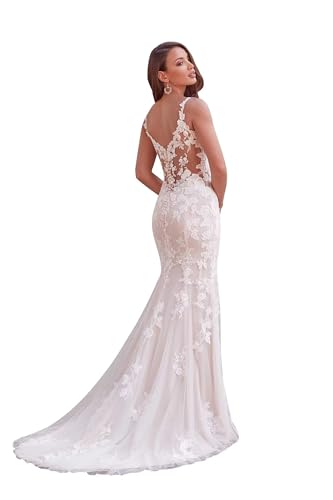
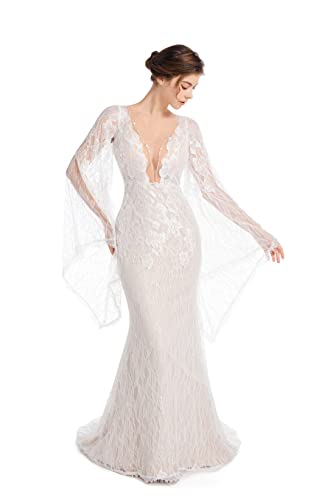
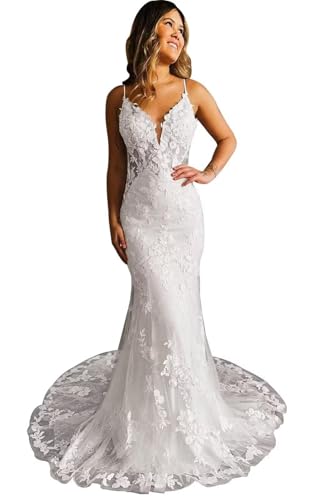










Lace Mermaid Wedding Dresses: Frequently Asked Questions
Why is lace so often paired with a mermaid cut?
A mermaid silhouette needs a fabric that holds close to the body without excess bulk. Lace is thin, has minimal seam allowance, and can be shaped closely with boning and lining while still carrying visible texture.
How much room for error is there in the fit?
Almost none. The mermaid cut fits tightly through the hip and thigh by design, and lace has minimal stretch to begin with, so being even an inch off through the hip can mean the dress will not close or will not hold its shape.
Should I measure sitting as well as standing?
Yes. Hip measurement can differ meaningfully between seated and standing, and given how little ease this silhouette has, that difference matters more here than in almost any other cut.
Can I sit comfortably through a reception?
It can be genuinely uncomfortable, since the fitted section through the hip and thigh does not give the way a fuller skirt does. A detachable overskirt for the ceremony, removed for the reception, is the common solution.
Does the type of lace matter?
Considerably. Stretch lace with a small amount of elastane gives more forgiveness than rigid lace. Rigid lace demands the most precise fit but holds the sculpted shape most cleanly once correctly fitted.
Why do so many have long sleeves?
Just under a quarter do, which is high for this silhouette. Long lace sleeves balance a fitted mermaid skirt by adding coverage and softness at the top, rather than leaving all the visual weight at the hip and hem.
Why is ivory more common than white here?
Ivory lace against an ivory or nude lining has more visual depth than the same lace in stark white, where the pattern can read flatter. Both remain available depending on the shade you want.
What holds the bodice in place?
Boning, a fully lined interior, and an adjustable closure such as a corset back, which gives more room for adjustment on the day than a fixed zip does, given how little tolerance the rest of the silhouette allows.
Can a lace mermaid dress be altered easily?
Not easily. Taking in a fitted lace seam changes the pattern alignment and can be visible afterward. Order as close to correct as your measurements allow rather than planning significant alterations.
Why Lace and Mermaid Are Paired So Often
The combination is not incidental. A mermaid cut is fitted from the bust through the knee before flaring at the hem, which depends entirely on the fabric holding close to the body without excess bulk.
Lace does this well: it is thin, has minimal seam allowance, and can be shaped closely with boning and lining underneath while still carrying visible pattern and texture. A heavier or stiffer fabric in the same fitted silhouette would need more structural intervention to achieve the same close line.
The result is a silhouette where the lace pattern itself becomes the main visual feature, since there is little else competing with it once the shape is this fitted.
Fit Tolerance Is Almost Zero
This is the most important practical fact about this specific combination, and it is worth being direct about before ordering.
A mermaid cut fits closely through the hip and thigh by design, which means there is very little ease built into the pattern. Lace compounds this, since it has minimal stretch and minimal seam allowance to begin with.
Where a looser silhouette in a stretch fabric might accommodate a size being slightly off, a lace mermaid dress that is even an inch too small through the hip will not close, and one that is too large will not hold the shape the cut depends on.
Measure at your largest point, take the measurement seated as well as standing, since the hip measurement can differ meaningfully between the two, and order to the larger figure rather than splitting the difference.
Walking, Sitting and the Fishtail
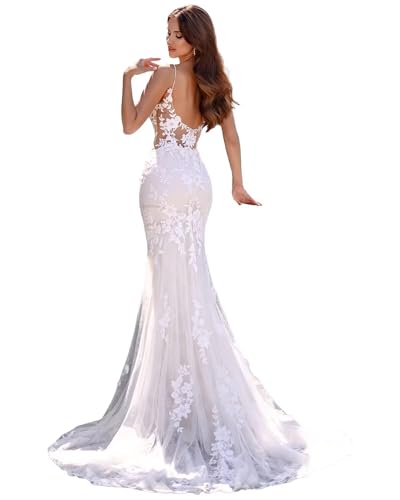
The flare below the knee, sometimes finished as a fishtail with a small train, restricts stride in a way no other silhouette on the site does to the same degree.
Walking requires shorter steps than usual, and stairs need particular care. This is worth practicing in the dress before the day, not discovering during the ceremony.
Sitting is the more commonly underestimated problem. The fitted section through the hip and thigh does not give the way a fuller skirt does, so sitting for an extended reception meal can be genuinely uncomfortable in a dress cut without any ease at all.
A detachable overskirt, worn for the ceremony and removed for the reception, is the most common solution, and around four in ten listings here include a train that can be a candidate for this treatment.
Lace Type Changes the Fit Story
Not all lace behaves the same way in a fitted silhouette, and it is worth checking which type a listing uses.
Stretch lace, with a small percentage of elastane woven through it, gives slightly more forgiveness in a mermaid cut than lace with no stretch at all, and is worth seeking out specifically for this silhouette.
Rigid lace with no give whatsoever demands the most precise fit and the least room for error, but it also holds the sculpted shape most cleanly once correctly fitted.
Appliqué lace, with motifs applied over a separate base fabric, can sometimes be let out slightly more than all-over lace, since the base fabric beneath may carry more seam allowance than the lace itself.
Sleeves on a Mermaid Silhouette
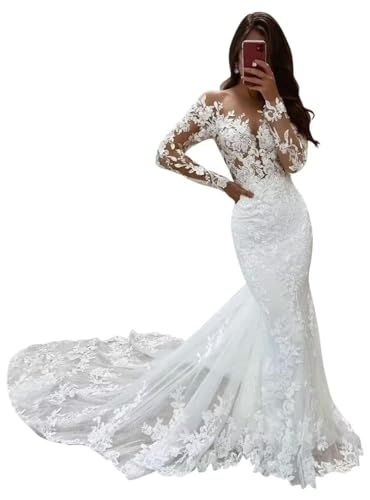
Just over four in ten listings here have sleeves, and long sleeves specifically account for around a quarter, which is high for this silhouette and reflects a real design pairing.
Long lace sleeves balance a fitted mermaid skirt by adding coverage and softness at the top, rather than leaving the entire visual weight of the dress at the hip and hem.
Illusion lace sleeves, sheer with lace applied, give this coverage without adding bulk at the shoulder, which matters in a silhouette where the eye is drawn to a continuous line from shoulder to hem.
Color
Ivory leads at just under half of listings, ahead of pure white at just over a third, and the reason is largely about the lace itself: ivory lace against an ivory or nude lining has more visual depth than the same lace in stark white, where the pattern can read flatter.
White remains common and suits anyone who wants the brightest possible bridal shade rather than the warmer ivory tone.
What Holds the Bodice
Since the whole dress relies on precise fit, the bodice needs proper internal structure to avoid the entire garment shifting.
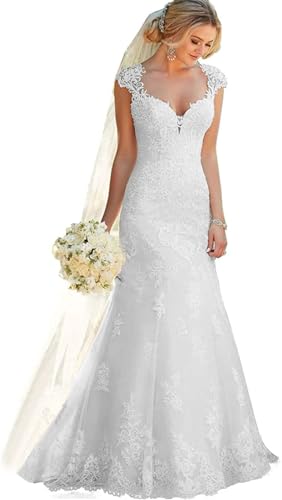
Boning through the bodice, a fully lined interior, and a corset or zip closure that can be adjusted are all worth checking for, particularly with the sleeveless or strapless versions that make up a share of this collection alongside the sleeved ones.
A corset back gives more room for adjustment on the day than a fixed zip does, which matters given how little tolerance the rest of the silhouette allows.
Sizing and Alterations
Take bust, underbust, waist, hip and thigh, measuring hip and thigh both seated and standing given how much this silhouette depends on precise fit through that area.
Alterations to a lace mermaid dress are among the more demanding in bridal, since taking in a fitted lace seam changes the pattern alignment and can be visible afterward. Order as close to correct as the measurements allow rather than planning significant changes.
The US size chart covers conversions.
Related Collections
For the same cut without lace, see mermaid dresses. For lace at other silhouettes, browse vintage lace wedding dresses. For a less fitted alternative, see sheath wedding dresses.