
Strapless wedding dresses
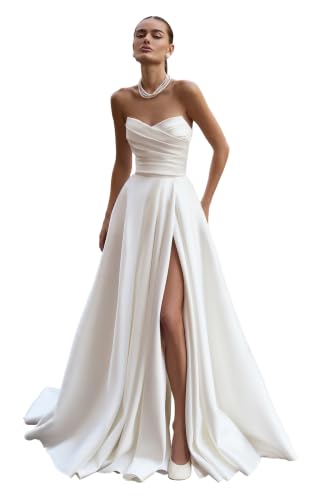
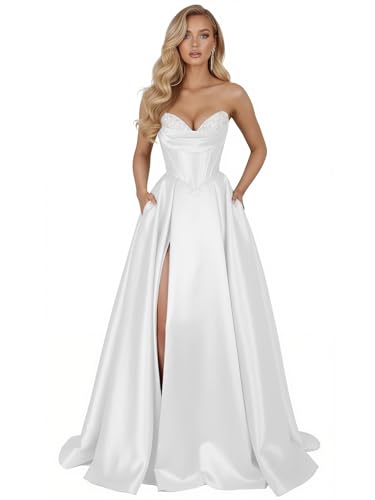
Strapless is the default bridal neckline and the one silhouette you cannot buy to fit. It has to be fitted to you, because nothing holds it up except how precisely the bodice grips your ribcage.Just under seven in ten listings here are strapless and a similar share mention weddings. Around a third are floor length and a quarter are maxi, with slits at around a quarter and mermaid cuts at around one in six.This is a more focused bridal collection. For coverage instead, see illusion neckline wedding dresses.







Strapless Wedding Dresses: Frequently Asked Questions
Why can't I just buy my size?
A strapless bodice stays up through friction against the ribcage, and the margin between gripping and restricting is roughly half an inch. No ready-to-wear chart is that precise, so plan on a tailor taking it in at the side seams.
How do I check the fit?
Slide two fingers flat between the top edge and your chest: two is right, one is too tight, three or more will slide. Then raise both arms above your head. If the bodice moves down with them, it is too loose.
Can I tell from a photograph if it has structure?
Often. A dress with real structure holds its bodice shape on a hanger, with the top edge open and rounded. One without collapses and folds in on itself, which means it relies entirely on your body.
What should the description mention?
Boning through the bodice, an inner corset or grip band, built-in cups, and a fully lined bodice. Three of those four is good. None of them, with a heavy skirt below, is a problem.
Which combinations are hardest to wear?
Strapless with a heavy beaded skirt, strapless with a long train, and strapless mermaid. Each pulls downward or transmits movement to the bodice, and each is difficult without proper internal structure.
What can I wear underneath?
Built-in cups are most reliable, since that is one thing that can slip rather than two. If you need a bra, a longline strapless distributes weight better than a standard one. Test adhesive cups for several hours in warm conditions first.
Does posture matter?
As much as the boning does. An upright back keeps the bodice in position; slouching lets it drop. Arms above the head during dancing is when a marginal fit reveals itself.
How can I get the look with less risk?
Detachable straps worn for the ceremony and removed for photographs, an illusion panel above the bodice, a corset back that can be tightened on the day, or a bolero that covers the top edge and comes off later.
Which measurement matters most?
Underbust, more than bust itself. Measure it firmly, directly under the bust, wearing the bra you intend to wear. Order to your largest measurement, since taking in is clean and letting out is often impossible.
Buy to Alter, Not to Fit
Every other bridal silhouette can be bought close to right and worn. Strapless cannot, and understanding why saves disappointment.
A strapless bodice stays up through friction and tension against the ribcage, immediately below the bust. That contact has to be close enough to grip and not so close that it restricts breathing. The margin is roughly half an inch.
No ready-to-wear sizing chart is precise enough to hit half an inch on your particular ribcage. So the working assumption should be that the dress arrives close and a tailor takes it in at the side seams.
Budget for that from the start. A strapless dress that fits properly looks expensive; the same dress an inch loose slides down all day and no amount of hitching fixes it.
The Two-Finger Test
The standard way to check a strapless bodice, and it takes ten seconds.
With the dress on, you should be able to slide two fingers flat between the top edge of the bodice and your chest, and no more. One finger means it is too tight to breathe comfortably through a long day. Three or more means it will slide.
Then, still wearing it, raise both arms above your head. If the bodice moves down with your arms, it is too loose. A correctly fitted strapless bodice stays where it is.
Do both tests when the dress arrives, not at the final fitting. If it fails badly, you need time to return rather than to alter.
Reading Internal Structure From a Photograph
Listings rarely describe construction, but you can often see it.
A dress with real structure holds its bodice shape when photographed on a hanger. The top edge stays open and rounded.
A dress without structure collapses on the hanger, with the bodice folding in on itself. That dress relies entirely on your body to hold its shape, which is not enough.
What to look for named in the description: boning through the bodice, an inner corset or grip band, built-in cups, and a fully lined bodice rather than a single layer. Three of the four is good. None of the four, with a heavy skirt below, is a problem.
Skirt Weight Works Against You
The heavier the skirt, the harder the bodice has to work, and this collection has plenty of weight in it.
Around a third is floor length and around one in seven has a train. Both pull downward continuously from the waist.
Mermaid cuts, at around one dress in six, add a second problem: the skirt restricts stride, so every step transmits a small tug to the bodice.
The combinations to approach carefully are strapless with a heavy beaded skirt, strapless with a long train, and strapless mermaid. Each is wearable with proper structure and difficult without it.
A lighter skirt, a slit at around a quarter of listings here, or an A-line cut all reduce the load.
What to Wear Underneath
Built-in cups are the most reliable and worth filtering for specifically. One thing that can slip rather than two.
A strapless bra under a strapless bodice doubles the risk, since both can move independently. If you need one, a longline strapless distributes weight better than a standard one.
Adhesive cups work for lighter bodices and smaller busts. Test them for several hours in warm conditions before the day, since heat and movement reduce grip.
Shapewear with a built-in bra is not usually compatible with a strapless neckline, so check the top edge height before assuming.
Getting Through the Day
Even a well-fitted strapless dress asks something of you that other necklines do not.
Posture holds it up as much as the boning does. An upright back keeps the bodice in position; slouching lets it drop.
Arms above the head, during dancing or a bouquet toss, is when a marginal fit reveals itself.
Hugging hundreds of guests, which every bride does, puts repeated pressure on the top edge.
None of this is a reason to avoid the style. It is a reason to get the fit right rather than close, and to have someone in the party who knows how to help.
If You Want the Look With Less Risk
Several options give a strapless appearance with something holding it.
Detachable straps, which many strapless dresses include, can be worn for the ceremony and removed for photographs.
An illusion panel above a strapless bodice keeps the shape while adding coverage and a small amount of support.
A corset back rather than a zip lets the bodice be tightened on the day, which accommodates changes between fitting and wedding.
A bolero, cape or wrap over a strapless dress covers the top edge for a religious ceremony and comes off later.
Sizing
Underbust is the critical measurement, more than bust itself. Measure it firmly, directly under the bust, with the bra you intend to wear.
Take bust, underbust, waist and hip, and for mermaid cuts add thigh.
Order to your largest measurement. A strapless bodice can be taken in cleanly at the side seams; letting out is limited by seam allowance and often impossible.
Expect bridal labels to run about two sizes tighter than your everyday clothing. The US size chart covers conversions.
Related Collections
For coverage above the bodice, see illusion neckline wedding dresses. For the neckline shape underneath, browse sweetheart neckline wedding dresses. Anything with a shoulder on it sits in wedding dresses with sleeves.