
Find for knee length wedding dresses
Nearly half the listings here have sleeves, which is the highest share of any bridal collection on the site, and it follows from where these dresses get worn: civil ceremonies, registry offices and daytime weddings.Around three in ten name the knee explicitly, with short styles at a quarter and midi at around one in seven. Lace appears in around one dress in five and sequin in around one in ten.Around half mention weddings directly. For floor-length alternatives, see sheath wedding dresses.
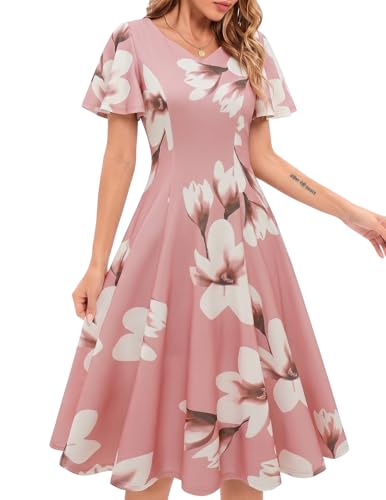




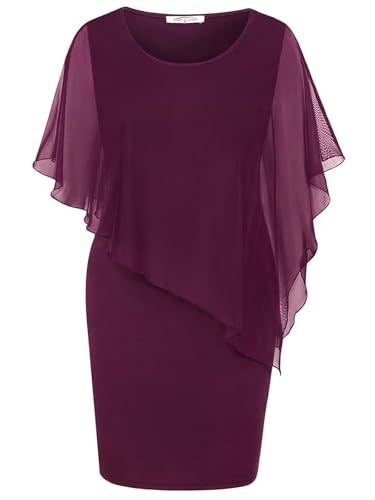


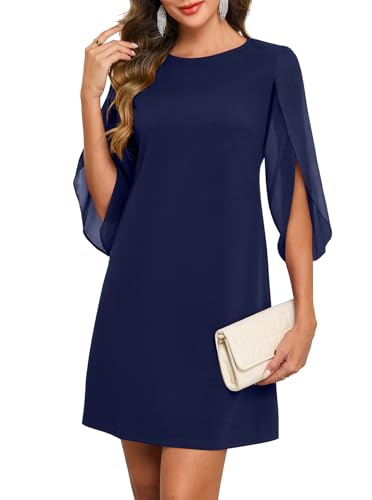


Knee Length Wedding Dresses: Frequently Asked Questions
Where exactly should the hem sit?
Just above the knee is the most forgiving, since the thigh narrows toward it. On the kneecap is the least flattering, because that is the widest bony point. Just below is risky, since the calf widens immediately there.
What if it cannot land above the knee?
Take it down past the calf's widest point to mid-calf rather than stopping in between. A hem an inch or two below the knee sits at the start of the calf's widening and shortens the leg visually.
What dress length should I look for?
For a hem just above the knee, roughly 36 to 38 inches shoulder to hem at 5'2", 38 to 40 at 5'5", and 40 to 42 at 5'8". Heel height shifts this by about an inch, less than people expect.
Why do so many have sleeves?
Nearly half do, the highest share of any bridal collection here. These dresses are worn at civil ceremonies, registry offices and daytime weddings, and sleeves are what make a short white dress read appropriate rather than party.
Where does this length work best?
Civil and courthouse ceremonies, second weddings, vow renewals, destination weddings where it packs into a carry-on, and as a reception change. Less well at cathedral or formal evening ceremonies.
Which shoes work?
A pointed toe extends the leg line and a nude shoe creates the longest unbroken line. Avoid ankle straps, which cut the leg visually at exactly the wrong point. Block heels are more stable on civic building steps.
How do I make it read as bridal?
Lace is the strongest signal, which is part of why it dominates here. A short or birdcage veil settles the question and is proportionate to the length. A defined waist reads more bridal than a shift.
What if I do not want it to look bridal?
The opposite applies: plain fabric rather than lace, no veil, and a colored shoe. This is a common preference for second weddings and courthouse ceremonies.
Which fabric should I avoid?
Satin at this length is the least forgiving, since a short hem draws attention downward and a shiny fabric shows every seam. Crepe holds a clean line and suits the daytime feel better.
The Hardest Hem to Place
Knee length sounds precise and is not, because the knee itself spans several inches and the leg changes shape around it.
Just above the knee, ending on the lower thigh, is the most forgiving position. The thigh narrows toward the knee, so the hem lands where the leg is getting slimmer.
On the kneecap is the least flattering position on most people. The kneecap is the widest bony point of the leg and a hem stopping exactly there draws the eye to it.
Just below the knee is the risky one, because the calf begins to widen immediately below the knee. A hem landing an inch or two down sits at the start of that widening and makes the leg look shorter and heavier than it is.
Mid-calf, past the widest point, works again and reads as midi rather than knee length.
The practical rule: if the hem cannot land above the kneecap, take it down past the calf's widest point rather than stopping in between.
Finding Where It Will Land on You
Listings give a total dress length from shoulder to hem, and that number against your own height predicts the outcome better than the size label does.
As a rough guide, for a hem sitting just above the knee: someone around 5'2" needs roughly 36 to 38 inches, 5'5" around 38 to 40, and 5'8" around 40 to 42.
Heel height shifts this by an inch or so, but not as much as people expect, since the hem moves with the body rather than the floor.
Where no measurement is given, reviews mentioning the reviewer's height are the most reliable substitute, and this category attracts them because the question matters here more than at other lengths.
Why the Sleeves
Nearly half these listings have sleeves, well above what floor-length bridal collections carry, and the reason is the occasion.
A knee-length wedding dress is most often worn at a civil ceremony, a registry office, a courthouse, or a small daytime wedding. These are frequently held in office-adjacent buildings, often in the morning, sometimes with a meal afterwards in a restaurant.
That setting calls for something closer to elevated daywear than to evening bridal, and sleeves are what make a short white dress read appropriate rather than party.
Around one dress in seven is sleeveless and a similar share has short sleeves, so the full range is available if the ceremony is warmer or less formal.
Where It Works
Civil and courthouse ceremonies, where a full gown is disproportionate to a fifteen-minute service in a small room.
Second weddings and vow renewals, where many people prefer something less declarative than a floor-length gown.
Destination weddings, because a knee-length dress packs into a carry-on and needs no steaming on arrival.
Rehearsal dinners and receptions, as a change after a longer ceremony dress.
Where it works less well: cathedral and formal evening ceremonies, where the length reads as underdressed rather than as a choice.
Shoes Matter More Here
At floor length the shoe is barely visible. At knee length it is fully on show and becomes part of the outfit rather than an afterthought.
A pointed toe extends the leg line, which helps at a length that shortens it.
A nude or skin-tone shoe creates the longest unbroken line. A contrasting shoe cuts the leg visually at the ankle.
Ankle straps do the same thing, so a plain court or a shoe with a single vamp strap is the safer choice at this length.
Block heels are more stable on the uneven paving and steps that come with older civic buildings, and the difference is worth more than the extra inch a stiletto gives.
Fabric
Lace, at around one dress in five, is the most common and the clearest bridal signal at a length that could otherwise read as any white dress.
Crepe holds a clean line and suits the tailored, daytime feel this length works best in.
Satin at knee length is the least forgiving combination, since a short hem draws attention downward and a shiny fabric shows every seam.
Sequin, at around one dress in ten, reads evening rather than daytime and suits a reception change better than a morning ceremony.
Making It Read Bridal
At floor length nobody questions whether a white dress is a wedding dress. At knee length they might.
Lace is the strongest single signal, which is part of why it dominates this collection.
A short veil, a birdcage veil, or a hair comb settles the question immediately and is proportionate to the length in a way a cathedral veil is not.
A structured bodice or a defined waist reads more bridal than a shift, which reads as a white dress.
If you would rather it did not read bridal at all, which is a common preference for a second wedding or a courthouse ceremony, the opposite applies: plain fabric, no veil, and a colored shoe.
Sizing
Take bust, underbust, waist, hip and, most importantly, height without shoes, since height decides where a fixed hem lands.
Bridal houses and everyday occasion labels both sell into this length, and they number their sizes differently: the bridal ones typically two sizes tighter, the occasion ones close to what you wear day to day.
Hemming a knee-length dress is straightforward on a plain edge and expensive where the hem is lace-edged or scalloped, since the finish is the design. The US size chart covers conversions.
Related Collections
For floor length in a narrow cut, see sheath wedding dresses. For a slightly longer hem, browse tea length dresses. For short white beyond bridal, see short white formal dresses.