
Buy satin wedding dresses
Satin is a weave rather than a fiber, which is the single most useful thing to know before buying one. The same word covers fabrics that behave completely differently depending on what they are made from and how heavy they are.Just under seven in ten listings here are satin and just over half are maxi length. Around one dress in five is backless and a similar share is sleeveless, both combinations that satin shows more clearly than any other fabric would.Lace appears in around one dress in five. For matte alternatives, see minimalist wedding dresses.




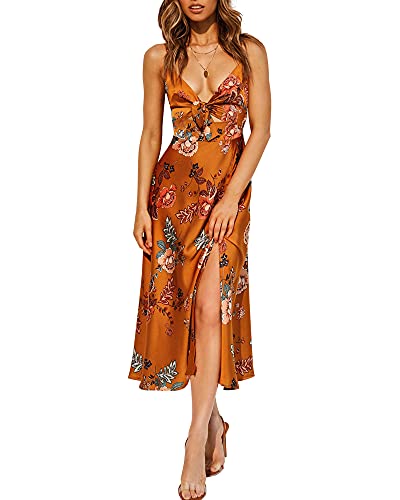
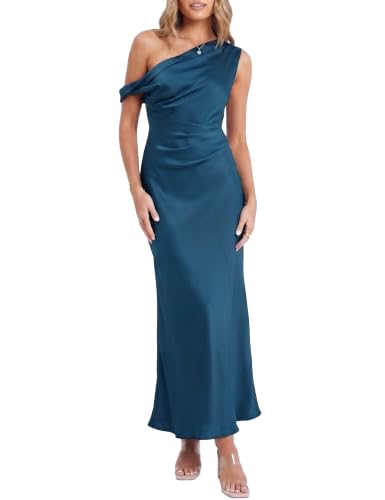
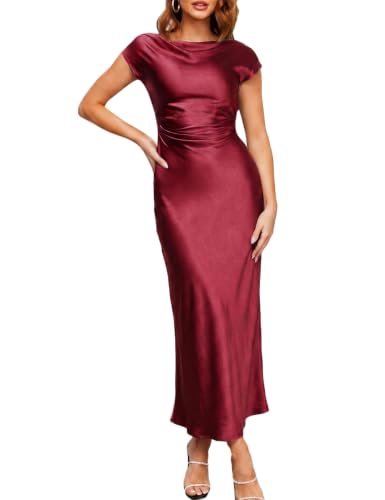


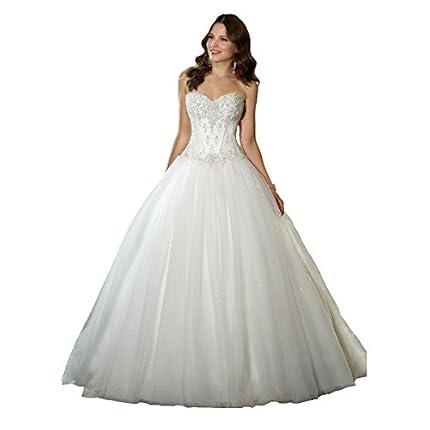


Satin Wedding Dresses: Frequently Asked Questions
Is satin a fabric or a weave?
A weave. It describes threads woven with long floats on the surface that catch light, which produces the sheen. It says nothing about fiber, so silk satin and polyester satin behave completely differently.
How do I tell silk satin from polyester?
Listings rarely say. In the photograph, a hard bright highlight along every fold suggests polyester; a softer graduated one suggests silk or a heavier blend. Silk reads soft and expensive, polyester reads glossy.
What is the difference between duchess and charmeuse?
Duchess is heavy and holds architectural shapes, standing away from the body. Charmeuse is light and fluid and follows the body closely. Crepe-back satin has satin on one face and matte crepe on the other, so it works either way.
Does satin show everything?
Yes. A smooth reflective surface makes any seam under tension, shapewear edge, bra line or underwear outline visible. Seamless shorts, a lined dress, and buying to fit rather than altering are the practical responses.
Will it crease?
Where it folds, and the creases show because the surface reflects light unevenly once disturbed. Heavy satin creases least, charmeuse most. Crepe-back satin worn crepe side out avoids it almost completely.
Can I iron satin?
Steam rather than iron. A hot iron directly on satin can flatten the weave and leave a permanent shiny patch that is worse than the crease it was meant to remove.
How does satin photograph?
Beautifully in natural light, with graduated highlights along every fold. Under direct flash it can blow out to a flat white patch where the highlight falls, which is worth mentioning to your photographer.
Which silhouette works best?
Anything with a long unbroken fall of fabric, which is where the weave excels. Heavy gathering or ruching creates competing highlight lines and reads busy rather than luxurious.
Can satin be altered?
Possible but it leaves marks. A taken-in seam often shows a faint line where the original stitching sat, because needle holes disturb the weave permanently. Order the right size rather than planning major work.
Satin Is a Weave, Not a Fiber
This is where most disappointment with satin comes from, and it is easy to avoid once you know it.
Satin describes how threads are woven: with long floats on the surface that catch light, which is what produces the sheen. It says nothing about what those threads are made of.
Silk satin drapes heavily, has a deep low sheen, and warms to the body. Polyester satin has a brighter, harder shine, holds a stiffer shape, and does not breathe. Rayon and acetate sit between them.
Most bridal satin under a certain price is polyester, and that is not a problem in itself. It is only a problem if you expected silk, because the two photograph quite differently: silk reads soft and expensive, polyester reads glossy.
Listings rarely name the fiber. Where they do not, the shine in the photograph tells you: a hard bright highlight along every fold suggests polyester, a softer graduated one suggests silk or a heavier blend.
Weight Decides the Rest
After fiber, weight is what separates a satin dress that hangs beautifully from one that does not.
Heavy satin, sometimes called duchess or mikado, holds architectural shapes. It stands away from the body, keeps a structured skirt full without petticoats, and is the fabric behind most formal bridal gowns.
Charmeuse is light and fluid with a high shine on one side and a matte back. It follows the body closely and is the fabric behind slip dresses.
Crepe-back satin is satin on one face and crepe on the other, so it can be used either way. The crepe side is matte and forgiving, which makes this the most versatile of the three.
A dress described only as satin could be any of these. The photograph shows which: if the skirt stands out from the body, it is heavy; if it pools and follows, it is light.
What Satin Shows
Being direct about this, because it is the most common complaint.
A smooth reflective surface makes any disruption visible. A seam under tension, a shapewear edge, a bra line, the outline of underwear, a pull at the hip: all of it reads against satin where a textured fabric would hide it.
With backless styles at around one dress in five here and sleeveless at a similar share, there is also less fabric to distribute tension across.
The practical responses: buy to fit rather than planning to alter, wear seamless shapewear shorts rather than briefs, choose a lined dress, and if your dress is charmeuse rather than heavy satin, expect it to show more.
Lace over satin, at around one dress in five here, solves most of this by breaking up the surface.
Creasing, Honestly
Satin creases where it folds and those creases are visible because the surface reflects light unevenly once disturbed.
Sitting through a ceremony, a car journey and a meal puts creases across the lap and at the hip. They relax somewhat when you stand, but not entirely.
Heavy satin creases least. Charmeuse creases most. Crepe-back satin used crepe side out avoids the problem almost completely.
For transport, hang rather than fold, and hang as early as possible. Steam rather than iron: a hot iron directly on satin can flatten the weave and leave a permanent shiny patch that is worse than the crease.
How It Photographs
Satin is the most photogenic bridal fabric and the most demanding of good light.
In natural light it produces graduated highlights along every fold, which is why satin gowns look sculptural in outdoor photographs.
Under direct flash it can blow out to a flat white patch where the highlight falls, losing detail entirely. This is worth mentioning to a photographer rather than discovering afterwards.
In low reception lighting it reads darker and richer than in daylight, so an ivory satin dress can look almost champagne in evening photographs.
Which Silhouettes Suit It
Just over half this collection is maxi length, which is where satin works best: a long unbroken fall of fabric is what the weave was made for.
Slip and column cuts in charmeuse are the contemporary use and the least forgiving of fit.
A-line in heavy satin holds its shape without petticoats and is the most practical formal option.
Ball gown in heavy satin is the traditional bridal silhouette and the heaviest to wear.
What to be careful with: heavy gathering or ruching in satin, which creates competing highlight lines and reads busy rather than luxurious.
Sizing and Alterations
Satin has no stretch. Whatever the tape says is what you need.
Take bust, underbust, waist and hip, measuring the hip at your fullest point rather than the standard measuring position.
Alterations are possible but leave marks: a taken-in seam in satin often shows a faint line where the original stitching sat, because the needle holes disturb the weave permanently.
That makes satin the fabric where ordering the right size matters most. Order to your largest measurement, accept a small adjustment, and avoid dresses that would need major work. The US size chart covers conversions.
Related Collections
For matte fabrics, see minimalist wedding dresses. For textured alternatives, browse tulle wedding dresses. For open backs in satin, see low back wedding dresses.