
One shoulder wedding dress
A one shoulder neckline creates a diagonal line across the body, and that single line does most of the work. Just over half the listings here name it explicitly and a similar share are floor length.Around a quarter have a slit and just over one in ten use ruching, both of which interact with the diagonal in ways worth understanding before choosing.Lace appears in around a quarter and chiffon in just over a fifth. Prom styles account for just over half, so filtering matters. For symmetrical alternatives, see sweetheart neckline wedding dresses.








One Shoulder Wedding Dresses: Frequently Asked Questions
Should the slit be on the same side as the bare shoulder?
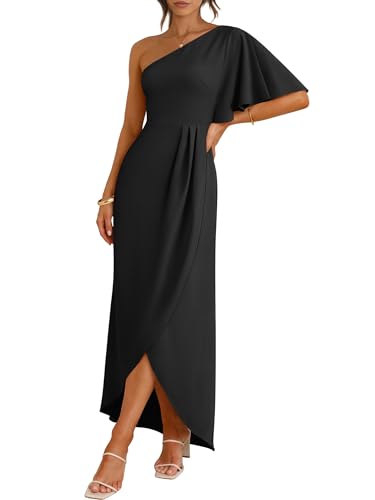
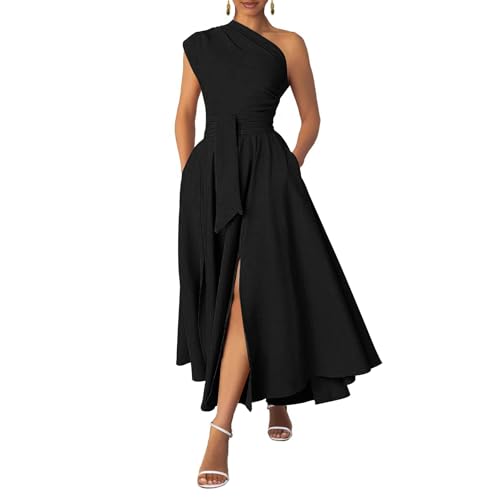
Usually yes. A slit on the same side continues the diagonal downward and reads as one long line. On the opposite side it creates an X across the body, which is a deliberate look rather than a default.
Does it matter which shoulder is covered?
Practically, yes. If the strap is on the same side as the way you part your hair and the arm holding your bouquet, the design disappears. Check which side a listing shows before ordering.
Does the strap provide support?
Some. It carries weight and stops the bodice rotating, which a strapless one cannot do, but it does not replace boning, an inner grip band or built-in cups. Underbust is still the measurement that matters most.
How does a loose bodice fail?
Asymmetrically. It drops on the bare side first, which is more visible than a strapless bodice sliding evenly.
What bra can I wear?
Built-in cups or adhesive cups. A standard strapless bra sits under one strap and not the other, which creates a visible lump on the covered side. Check from both sides in a mirror.
Which strap style is most wearable?
A plain strap or a wide band, which let the diagonal be the detail. A single full sleeve is the most dramatic and the hardest to wear, since it makes asymmetry the whole dress.
Which skirt suits the neckline?
A column keeps the eye on the neckline. A-line adds width at the hem and steadies the asymmetry. Ball gown creates the strongest contrast and is the least subtle version.
Should ruching run a particular way?
Toward the covered shoulder, so the gathering reinforces the diagonal rather than crossing it. Ruching running the other way creates a competing angle.
Can the strap position be altered?
Not without recutting the neckline. The bodice can be taken in at the side seams, but shoulder-to-bust fit needs to be right from the start.
One Diagonal, Not Three
The one shoulder neckline works because it introduces asymmetry into a garment that is otherwise symmetrical. That contrast is the whole effect.
Which means competing diagonals cancel it out. A one shoulder bodice with a slit on the opposite side, ruching running the other way, and an asymmetric hem produces four different angles arguing with each other.
The rule that makes this style work: let the shoulder be the only asymmetry, or align everything else with it.
A slit on the same side as the bare shoulder continues the line downward and reads as one long diagonal. A slit on the opposite side creates an X across the body, which some people want deliberately and most do not.
Ruching, at just over one dress in ten here, should run toward the covered shoulder rather than away from it, so the gathering reinforces the line rather than crossing it.
Which Shoulder
Rarely considered and it makes a practical difference.
Most one shoulder dresses cover the left shoulder and leave the right bare, but not all, and listings do not always show both sides.
Things that matter: which side you part your hair, since hair worn to one side either covers the strap or falls over the bare shoulder; which arm you will hold a bouquet with, since a bouquet held against the bare side competes with the neckline; and where you will stand relative to the camera at the ceremony.
None of this is critical, but if the strap is on the same side as your hair and your bouquet, the design disappears entirely.
The Strap Does Real Work
A one shoulder bodice is a strapless bodice with a single strap, which means the support question is nearly the same but slightly better.
The strap carries some weight and stops the bodice rotating, which a fully strapless one cannot do. It does not replace internal structure.
Look for boning through the bodice, an inner grip band along the top edge, built-in cups, and a full lining. Underbust is the measurement that matters most, more than bust, since that is where the bodice grips.
The specific failure with one shoulder is asymmetric: if the bodice is loose, it drops on the bare side first, which is more visible than a strapless bodice dropping evenly.
Undergarments
Harder than with a strapless dress, because a standard strapless bra sits under one strap and not the other, which creates a visible lump on the covered side.
Built-in cups are the most reliable answer and worth filtering for.
Adhesive cups work and remove the band entirely, which suits this neckline better than most.
A convertible bra with one strap can be arranged to sit under the covered shoulder, but the band still shows at the back if the dress is open there.
Whatever you choose, check it from both sides in a mirror. Asymmetric necklines hide problems on one side and expose them on the other.
Sleeve and Strap Variations
The covered shoulder is treated in several ways and each reads differently.
A plain strap is the simplest and lets the diagonal be the only detail.
A wide band covering most of the shoulder reads more substantial and more formal.
A ruffle or flounce over the shoulder adds volume at the top and balances a fuller skirt.
A full sleeve on one side only is the most dramatic version and the most difficult to wear, since it makes the asymmetry the entire dress rather than a detail.
Around one dress in ten here has a sleeve of some kind, so most of this collection uses a strap or band.
Silhouettes That Suit It
The diagonal at the top works with almost any skirt, but some pairings are cleaner.
A column or sheath keeps the eye on the neckline, since nothing below competes.
A-line balances a one shoulder bodice by adding width at the hem, which steadies the asymmetry.
Ball gown, at around one dress in eight, creates a strong contrast between a bare shoulder and a large skirt. Dramatic and the least subtle version.
Mermaid, at around one in twelve, adds a second strong line through the hip and needs the slit and the shoulder to agree with each other.
Filtering the Prom Styles
Just over half this collection is prom wear, which is high, and one shoulder is a common prom neckline.
The markers: prom versions come in color, often with a corset back, a cut-out at the waist, or a very high slit. Bridal versions are white, ivory or champagne with a conventional closure.
Around a third are bridesmaid styles, which sit between the two and are often the most wearable option if you want the neckline without the prom detailing.
Sizing and Alterations
Take bust, underbust, waist and hip, and for mermaid cuts add thigh.
One shoulder bodices can be taken in at the side seams, but the strap position cannot be moved without recutting the neckline, so shoulder-to-bust fit needs to be right from the start.
Order to your largest measurement and have the bodice brought in.
Bridal numbering typically runs about two sizes below everyday clothing. The US size chart covers conversions.
Related Collections
For symmetrical necklines, see sweetheart neckline wedding dresses. For coverage, browse illusion neckline wedding dresses. For strapless, see strapless wedding dresses.