
Modern wedding dresses
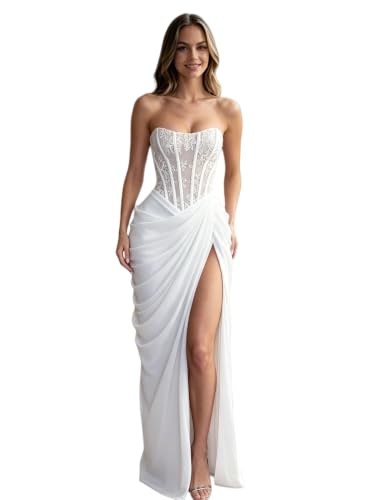
What separates a modern wedding dress from a traditional one is mostly subtraction. Less structure, fewer layers, less applied decoration, and a cleaner line. The clearest single marker in this collection is the slit: more than a third of these gowns have one, which is a proportion that would have been unusual in bridal a decade ago.Nearly all listings here are wedding dresses proper, with just over six in ten described as gowns and around half floor length. Lace still leads at roughly four in ten, followed by satin at a quarter and tulle at a fifth. A-line and ball gown silhouettes each account for around a fifth, and a fifth have long sleeves.Just under a fifth are plus size. For bridal with coverage, see wedding dresses with sleeves.
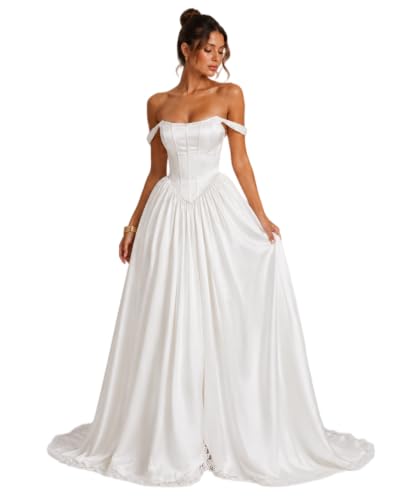


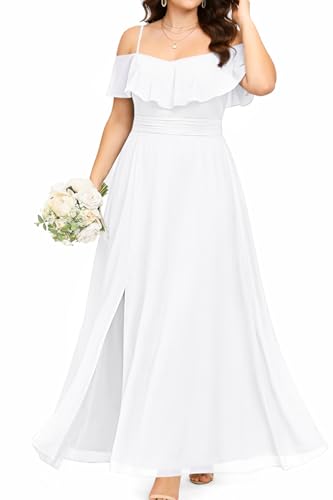
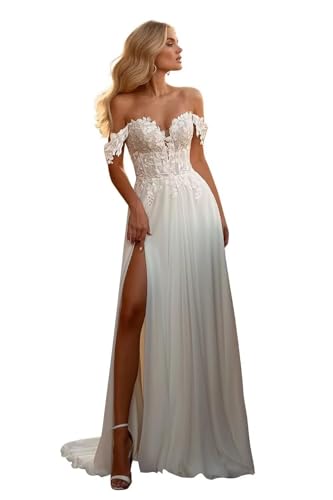





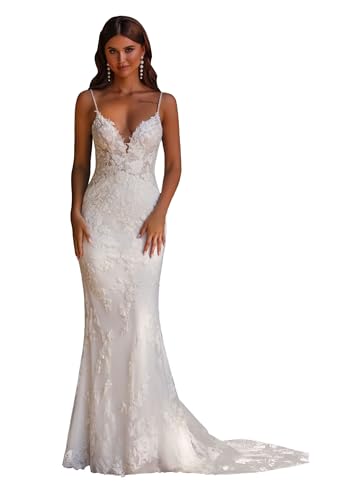

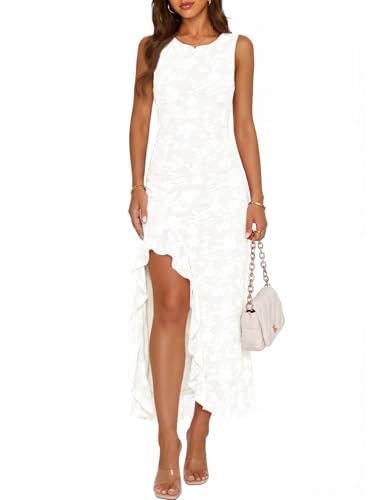

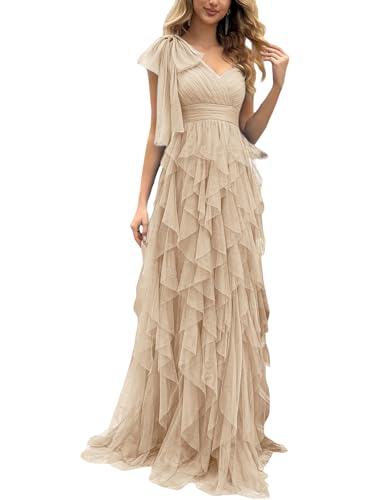


TIRAS V Neck Ruched Ruffle Bridesmaid Dresses Pink Long for Women A-Line Empire Waist Chiffon Formal Dress for Wedding Party 12
Original price was: $55.99.$41.99Current price is: $41.99.
POMUYOO Women’s A Line Satin Wedding Dresses for Bride Long Cowl Neck Formal Evening Ball Gown with Slit White Size 6
Original price was: $54.99.$49.99Current price is: $49.99.Modern Wedding Dresses: Frequently Asked Questions
What makes a wedding dress modern?
Mostly subtraction: less internal structure, fewer layers, less applied decoration, and a cleaner line. Contemporary design also favors visible construction such as exposed seaming, and movement features such as slits and separates.
Why do so many modern bridal gowns have slits?
More than a third here do. A slit allows normal movement across a full day, introduces a visible line into a large expanse of white that would otherwise photograph flat, and signals contemporary design without any other departure from tradition.
Is a slit appropriate for a religious ceremony?
It depends on the venue and the slit height, which varies widely between listings that look similar in thumbnails. A slit suited to a beach or civil ceremony may not suit a religious one, so check the measurement rather than the photograph.
How is lace used differently in modern bridal?
Rather than covering the gown, modern designs place lace in one area, on the bodice, along a sleeve or as a hem border, and leave the rest plain. Around four in ten listings here use lace in some form.
Which fabric is most associated with minimalist bridal?
Satin, at roughly a quarter of this collection. A plain satin column or slip gown with no applied decoration is the purest expression of the modern approach, and also the least forgiving of fit.
Why does the back matter so much?
Because the ceremony is spent facing away from the guests. Open backs, illusion panels and exposed buttoning are used deliberately, and a gown plain at the front but detailed at the back is a recognizably contemporary choice.
Is modern bridal harder to fit?
Generally yes. With less structure and less decoration, there is nothing to disguise a fit issue. A heavily beaded traditional gown hides a slightly loose bodice; a plain satin column does not.
Do these gowns have trains?
Around one in six, which is lower than in traditional bridal, and where present the train tends to be shorter. Check whether a bustle point is included, since adding bustle loops later is an alteration cost.
Does bridal sizing run small?
Yes, often by two sizes or more compared with standard clothing. For column and slip styles, take your hip measurement at the fullest point rather than the standard hip line, since these cuts follow the body closely.
What Makes a Wedding Dress Modern
The word gets applied loosely, but in practice contemporary bridal design is recognizable by a consistent set of choices.
Structural simplicity. Fewer internal layers, lighter boning, and often no crinoline. The dress relies on the cut of the fabric rather than on an internal cage to hold its shape.
Clean surfaces. Where traditional bridal covers a gown in applied lace, beading and applique, modern design leaves large areas of fabric plain and concentrates detail in one place.
Visible construction. Exposed seaming, corset boning shown as a design feature, and structural lines treated as decoration rather than hidden.
Movement. Slits, high-low hems and separates, all of which prioritize how the dress moves over how it looks standing still.
Restrained silhouettes. Slip dresses, columns and soft A-lines alongside the traditional ball gown.
The Slit
More than a third of the gowns in this collection have a slit, and it is the design feature that most reliably identifies a modern bridal gown.
It serves three purposes at once. It allows normal movement in a floor-length gown, which matters across a full day. It introduces a visible line into a large expanse of ivory or white, which otherwise photographs as a flat shape in the same way dark colors do. And it signals contemporary design without requiring any other departure from tradition.
Slit height varies widely between listings that look similar in thumbnails, and it is the detail most worth checking against the ceremony venue. A slit that is entirely appropriate at a beach or civil ceremony may not suit a religious one.
Fabric and Where the Detail Sits
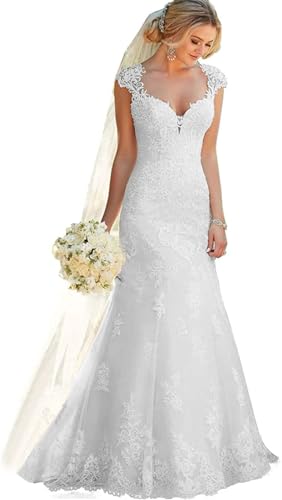
Lace appears in around four in ten listings, but its use differs from traditional bridal. Rather than covering the gown, modern designs place lace in one area, on the bodice, along a sleeve or as a hem border, and leave the rest plain.
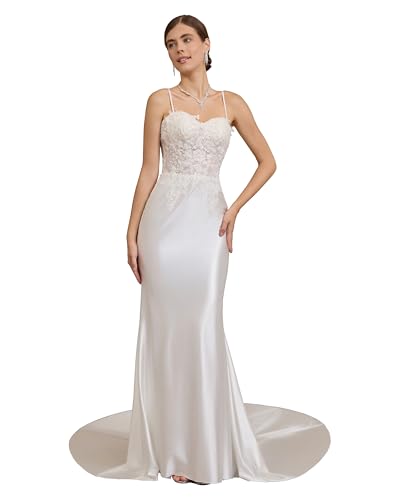
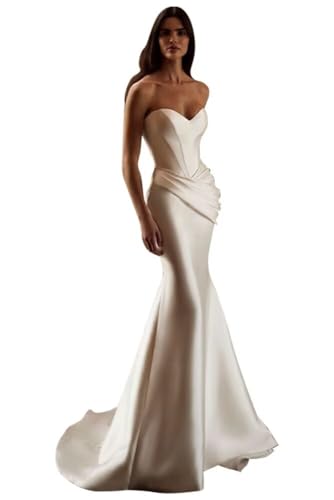
Satin, at roughly a quarter of the collection, is the fabric most associated with contemporary minimalist bridal. A plain satin column or slip gown with no applied decoration is the purest expression of the modern approach, and it is also the least forgiving: satin shows every seam and every underlying line.
Tulle features in around a fifth of listings, usually as a skirt layer rather than as an overlay across the whole gown. Chiffon appears less often and suits outdoor and destination weddings.
Silhouettes
A-line is the most common at around a fifth of the collection. It is the most forgiving and the easiest to wear all day.
Ball gown styles account for a similar share, which shows that modern design has not abandoned volume; it has changed how volume is achieved, with lighter layers rather than heavy structure.
Mermaid appears in around one gown in six. In contemporary design it is usually cut with a lower flare point than traditional versions.
Column and slip styles are the most distinctly modern shapes and rely almost entirely on fabric quality and fit, since there is nothing else to look at.
Necklines and Backs
V-neck is the most common neckline at roughly a quarter of listings, with one-shoulder and off-shoulder cuts each appearing in around one gown in nine.
The back matters more in modern bridal than in traditional design, because the ceremony is spent facing away from the guests. Open backs, illusion panels and exposed buttoning are all used deliberately, and a gown that is plain at the front and detailed at the back is a recognizably contemporary choice.
If the back is the feature, check how the dress fastens, since an open back limits the undergarment options considerably and may require a built-in bra.
Trains
Around one gown in six here has a train, which is lower than in traditional bridal.
Where a modern gown does have one, it tends to be shorter and often sweeping rather than cathedral length. Check whether a bustle point is included, since a train without one becomes difficult to manage during the reception and adding bustle loops is an alteration cost.
Fit and Sizing
Just under a fifth of listings here are plus size.
Modern bridal is generally less forgiving of fit than traditional bridal, precisely because there is less structure and less decoration to disguise a fit issue. A heavily beaded traditional gown hides a slightly loose bodice; a plain satin column does not.
Bridal sizing runs smaller than standard clothing sizing, often by two sizes or more. Take bust, waist and hip and compare against the specific listing's chart rather than a general guide. For column and slip styles, also take your hip measurement at the fullest point rather than at the standard hip line, since these cuts follow the body closely.
Our US size chart covers conversions.
Ordering
Order early enough for a return, a replacement and alterations. Bridal is the category where a first order fitting perfectly is least likely, and modern gowns in plain fabrics need more accurate alteration than decorated ones because there is nowhere for a correction to hide.
Check what is included: some listings show a veil, belt or overskirt that is sold separately. Read customer photographs rather than studio images, particularly for white and ivory, which are difficult to represent accurately and vary considerably between listings described with the same word.
Related Collections
For coverage options, see wedding dresses with sleeves. The wider bridal dresses section covers traditional cuts alongside these. For the mothers of the couple, see mother of the bride dresses.