
Jacket dresses for weddings
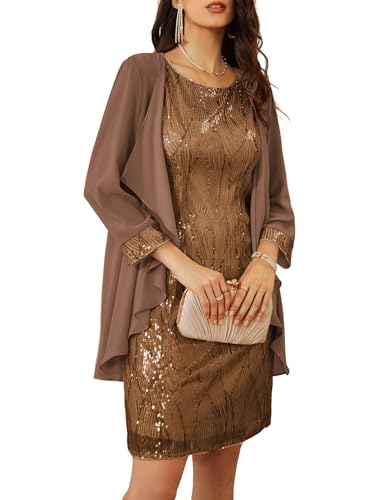
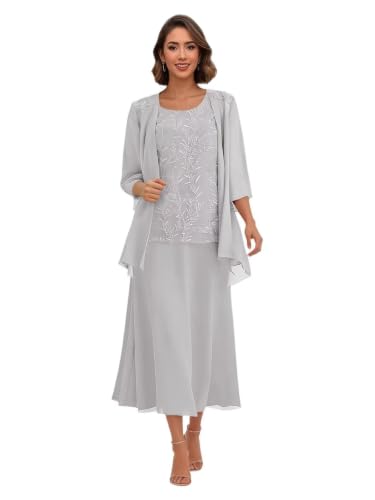
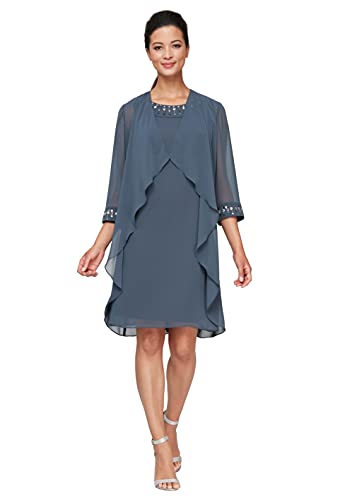
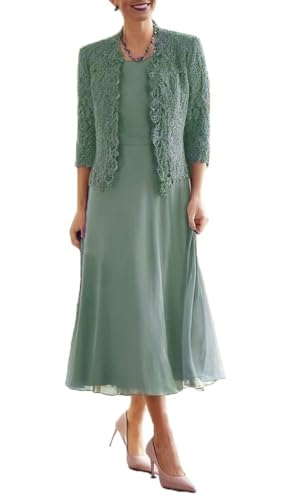
Three quarters of the listings here include a jacket and around six in ten are described in mother-of-the-bride terms, which makes this one of the most focused collections on the site.Lace appears in just over four in ten and chiffon in just under four in ten, with sequin at a quarter and beading at around one in six. Tea length accounts for around one dress in five.Around four in ten mention wedding guests. The brands here, including GRACE KARIN, R&M Richards and S.L. Fashions, are established occasion houses. For trousers instead, see mother of the bride pant suits.







Jacket Dresses for Weddings: Frequently Asked Questions
Does the jacket always come off?
No, and this is the thing to verify. Some are true two-pieces with a finished dress underneath, some have the jacket built in, and some have an unfinished shell underneath that was never meant to be seen alone.
How do I tell from a listing?
If the photographs only ever show the dress with the jacket on, and never without, assume the underneath is not finished.
What are the jacket types?
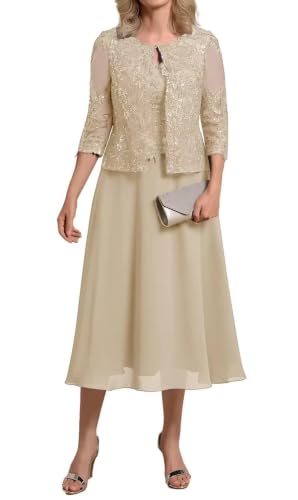
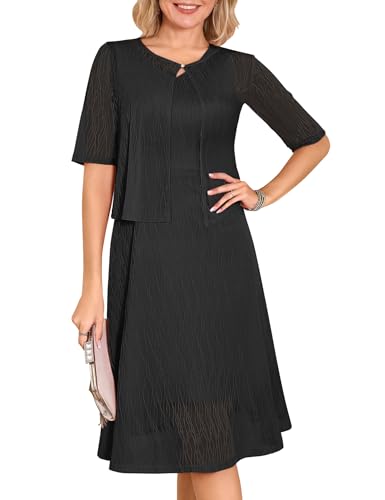
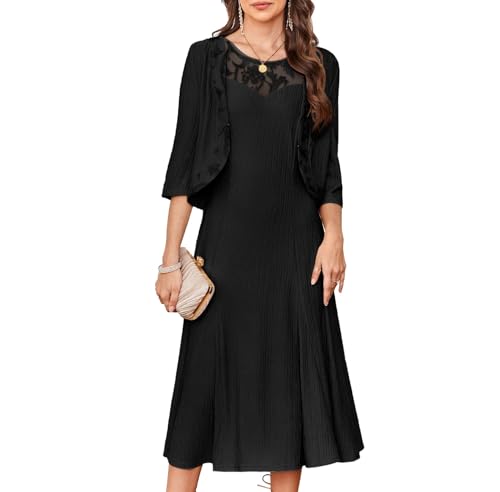
A bolero ends at or above the waist and changes the dress least. A matching hip-length jacket is the most formal. A duster reaching mid-thigh reads most contemporary. A capelet covers the shoulders without sleeves.
Will a lace or chiffon jacket keep me warm?
No. Sheer jackets give visual coverage rather than warmth, which suits a coverage requirement and is no help in a cold church. A lined or beaded jacket is warmer.
Which sleeve length works best?
Three-quarter, ending below the elbow, because it does not end at the widest part of the upper arm. Short jacket sleeves ending mid-bicep draw a line exactly there.
Where should the jacket end?
The jacket hem and dress hem create two horizontal lines that divide you. A bolero ending above the natural waist lengthens the lower half; a jacket ending at the widest part of the hip does the opposite.
Should the jacket match the dress?
Matching reads as one outfit and is the safer choice. A contrasting jacket reads as two pieces deliberately combined, which is stronger but harder to get right. Avoid pairing a matte dress with a shiny jacket.
Which colors work for the mother of the bride?
Navy, silver, champagne, dusty rose and deep green are the most requested. Avoid white, ivory and cream, and anything close to the bridesmaid color.
Which measurement matters most?
Upper arm, since a fitted jacket sleeve cannot be let out. Jacket shoulders also cannot be altered economically, while everything else can.
The Problem a Jacket Dress Solves
It is a specific one, and it explains why this style is so strongly associated with mothers of the bride.
A wedding day runs from a morning ceremony to a late reception, often across indoor and outdoor settings with very different temperatures. Ceremonies frequently expect arm coverage; receptions do not.
A jacket dress gives you two outfits in one garment. Covered and formal for the ceremony and the photographs, then lighter for dinner and dancing.
It also solves the arm coverage question without committing to a sleeved dress, which for many people is the deciding factor.
Check Whether the Jacket Comes Off
This is the single most important thing to verify and listings frequently do not say.
A true two-piece has a finished dress underneath. The jacket removes and the dress is complete: proper straps or sleeves, a finished neckline, a lined bodice.
A jacket-effect dress has the jacket attached, sewn or built into the design. It cannot be removed, and the dress reads the same all day.
A dress with an unfinished underlayer is the one to watch for. The jacket removes, but what is underneath is a plain sleeveless shell that was never meant to be seen on its own: unlined, with visible seams or a raw neckline.
The photograph tells you. If a listing only ever shows the dress with the jacket on, and never without, assume the underneath is not finished.
Jacket Types
Several quite different things share the name, and each reads differently.
Bolero is short, ending at or above the waist. The lightest option and the one that changes the dress least.
A matching jacket in the same fabric, usually hip length, reads as a deliberate suit-like outfit and is the most formal.
A duster or long jacket reaching mid-thigh or below creates a long vertical line and is the most contemporary of the four.
A capelet or cape covers the shoulders and upper arms without sleeves, which suits anyone who finds fitted sleeves uncomfortable.
Sheer lace and chiffon jackets, which this collection has plenty of given the fabric mix, give visual coverage rather than warmth. That is fine for a coverage requirement and no help at all in a cold church.
Sleeve Length on the Jacket
Around one listing in six has long sleeves on the jacket, and sleeve length does more work here than on a dress.
Three-quarter sleeves ending below the elbow are the most common in occasion wear and the most flattering for most people, because they do not end at the widest part of the upper arm.
Full-length sleeves give complete coverage and the most warmth.
Short jacket sleeves ending mid-bicep are the ones to consider carefully, since they draw a line across the widest part of the arm.
Fabric Pairings
Lace at just over four in ten and chiffon at just under four in ten dominate, and the combination is the standard construction: a chiffon dress with a lace jacket, or a lace bodice with a chiffon jacket.
Beaded jackets, at around one dress in six, add weight at the shoulders. Over a long day that weight is noticeable, and a beaded jacket is warmer than it looks.
Sequin, at a quarter, reads evening rather than daytime and suits a later ceremony.
The pairing to check: a matte dress with a shiny jacket, or the reverse, can read as two separate garments rather than one outfit. Matching fabric or matching finish holds together better.
Length
Tea length accounts for around one dress in five here, which is the traditional mother-of-the-bride length and works at almost any ceremony.
Around a quarter are floor length, which reads most formal and suits an evening wedding.
The proportion note that matters: the jacket hem and the dress hem create two horizontal lines, and where the jacket ends relative to your waist and hip decides how the outfit divides you. A bolero ending above the natural waist lengthens the lower half; a jacket ending at the widest part of the hip does the opposite.
Color and Coordination
For the mother of the bride, convention is to check with the bride on color, since both mothers usually coordinate rather than match.
Navy, silver, champagne, dusty rose and deep green are the most requested shades in this category.
What to avoid: white, ivory and cream, for obvious reasons, and anything close to the bridesmaid color, which reads as an attempt to join the party.
A dress and jacket in the same color reads as one outfit. A contrasting jacket reads as two pieces deliberately combined, which is a stronger look but harder to get right.
Sizing
The jacket and dress are sized together, which means the jacket has to fit your shoulders and arms while the dress fits your bust, waist and hip.
Take bust, underbust, waist, hip and upper arm. Upper arm is the measurement most likely to cause a return here, since a fitted jacket sleeve cannot be let out.
Occasion houses such as GRACE KARIN and R&M Richards run reasonably close to standard US sizing, which makes this collection more predictable than most.
Jacket shoulders cannot be altered economically. Everything else can. The US size chart covers regular and plus conversions.
Related Collections
For trousers, see mother of the bride pant suits. For the full range, browse mother of the bride dresses. For guests, see wedding guest dresses.