
Casual Sundresses
Casual Sundresses should be defined by visible construction, not by a loose style tag. The useful range here is light warm-weather casual dresses with an open upper-body construction such as tank straps, spaghetti straps, sleeveless bodices, square or scoop necklines, smocking, or airy skirt shapes intended for sunny-season wear. For U.S. everyday shopping, verify front, side, and back views, the exact seller size chart, fabric, lining, closure, and current return terms before choosing a dress by appearance alone.
Do not treat every summer dress as a sundress. Shirt dresses, T-shirt dresses, long-sleeve summer dresses, and heavier warm-weather styles may belong in the broader summer collection without matching the open sundress construction. Common materials include cotton lawn, poplin, gauze, linen blends, rayon or viscose, lightweight jersey, seersucker, eyelet with lining, and airy woven blends, but material does not confirm the cut. The most important fit checks are strap length, armhole depth, bust coverage, back height, smocking recovery, waist placement, lining opacity, and hem movement. A sundress should stay secure in ordinary movement even when the bodice is open and lightweight; looseness is not a substitute for stable straps and adequate bust coverage.
Related shopping paths include casual summer dresses, casual halter dresses, casual maxi dresses, and casual cotton dresses. These collections let shoppers move between nearby constructions, lengths, seasons, and the broader casual-dress range without treating different silhouettes as interchangeable.



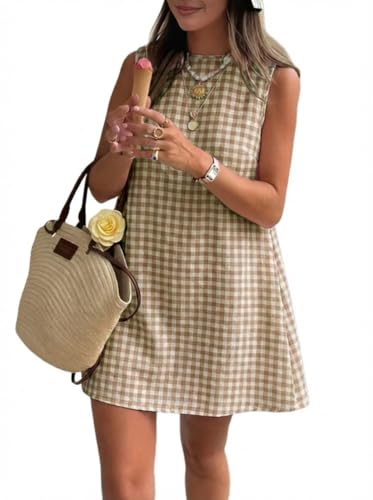


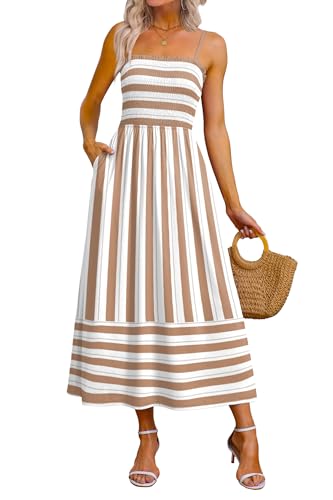


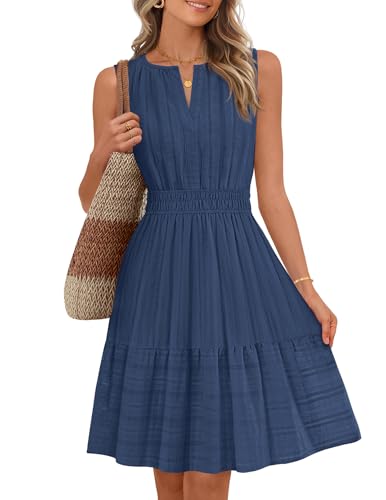


Duppoly Spaghetti Strap Dresses for Women Casual Sundress for Women Beach A Line Summer Dress for Women Midi Ruched Swing pleated Sexy Sleeveless Sundresses Floral DarkGreen M
Original price was: $24.99.$16.98Current price is: $16.98.


Frequently Asked Questions About Casual Sundresses
What qualifies as casual sundresses?
The dress should match the actual construction: light warm-weather casual dresses with an open upper-body construction such as tank straps, spaghetti straps, sleeveless bodices, square or scoop necklines, smocking, or airy skirt shapes intended for sunny-season wear. A seller title alone is not enough.
Which measurements matter most?
Measure bust, waist, hips, shoulders, torso, and preferred dress length, then add construction-specific checks for strap length, armhole depth, bust coverage, back height, smocking recovery, waist placement, lining opacity, and hem movement.
How should I test the fit before removing tags?
Test raising both arms, sitting, walking in wind, carrying a shoulder bag, reaching forward, climbing stairs, and wearing a light layer without straps sliding or the neckline gaping. The defining feature should stay in position without painful tension or repeated adjustment.
Do I need special undergarments?
Strap placement and back height often determine whether a standard bra works. Check armholes and back views before assuming a strapless or adhesive option is necessary.
Can this type of dress be altered?
Often, but shaped necklines, wrap fronts, ties, smocking, asymmetric hems, border details, and layered skirts can make changes more complex. Get a tailoring estimate before the return window closes.
Which fabric details matter?
Common options include cotton lawn, poplin, gauze, linen blends, rayon or viscose, lightweight jersey, seersucker, eyelet with lining, and airy woven blends. Compare stretch, drape, weight, opacity, lining, wrinkle behavior, and care because fabric changes how the construction sits and moves.
What should I verify before ordering?
Confirm the exact seller, selected variation, size chart, fabric, lining, closure, front and back construction, garment length, delivery estimate, return eligibility, and care instructions.
Define the Construction Before Comparing Dresses
Casual Sundresses should represent light warm-weather casual dresses with an open upper-body construction such as tank straps, spaghetti straps, sleeveless bodices, square or scoop necklines, smocking, or airy skirt shapes intended for sunny-season wear. Product titles are inconsistent, so confirm the feature in front, side, and back images. Do not treat every summer dress as a sundress. Shirt dresses, T-shirt dresses, long-sleeve summer dresses, and heavier warm-weather styles may belong in the broader summer collection without matching the open sundress construction.
Use "sundress" for open warm-weather construction rather than as a synonym for every summer dress. A tightly defined construction page is more useful when it tells a shopper where the design can fail in fit, movement, coverage, or care rather than simply repeating the style name.
Understand Where the Dress Gets Its Support
Support may come from shoulder seams, straps, elastic, waist ties, boning, cups, a back zipper, smocking, lining, or the fabric itself. Decorative draping is not the same as structural support. Check what keeps the bodice in position when the wearer moves, especially when the neckline or hem is the feature that defines the style.
A sundress should stay secure in ordinary movement even when the bodice is open and lightweight; looseness is not a substitute for stable straps and adequate bust coverage. Test closures and ties several times while tags remain attached. Gaping, twisting, rolling edges, uneven tension, or a neckline that migrates during movement can indicate a pattern or size mismatch rather than a styling problem.
Take Measurements That Match the Design
Measure bust, natural waist, full hip, shoulder width, torso length, and the dress length you prefer while wearing the underlayers you expect to use. Add upper-arm circumference for sleeves and high-bust or under-bust measurements when the bodice is fitted. Compare those numbers with the exact seller's chart. US size labels are not standardized enough to replace measurements, especially across marketplace sellers and imported brands.
For this construction, add focused checks for strap length, armhole depth, bust coverage, back height, smocking recovery, waist placement, lining opacity, and hem movement. When measurements cross sizes, prioritize the least flexible area. Confirm what a tailor can reasonably adjust before choosing a size that strains the defining feature.
Perform a Construction-Specific Movement Test
Do more than stand in front of a mirror. Test raising both arms, sitting, walking in wind, carrying a shoulder bag, reaching forward, climbing stairs, and wearing a light layer without straps sliding or the neckline gaping. Repeat the test after ten to fifteen minutes because fabric can settle and elastic or ties can shift. The dress should return to its intended position without repeated pulling or retightening.
Also test stairs, vehicle entry, restroom access, a shoulder bag, and sitting at a table. Casual clothing is exposed to frequent movement, so a design that works only in a posed photo is not a reliable everyday option.
Fabric Changes How the Construction Behaves
Common options include cotton lawn, poplin, gauze, linen blends, rayon or viscose, lightweight jersey, seersucker, eyelet with lining, and airy woven blends. Stretch, drape, surface friction, and weight all affect the defining feature. A slippery satin tie behaves differently from a cotton poplin tie; a fluid rayon skirt moves differently from a stiff woven skirt; and a dense knit can support a neckline that would collapse in a thin jersey.
Check whether the fabric grows with wear, clings with static, wrinkles at pressure points, or becomes transparent when stretched. Construction and material have to work together. A good silhouette in the wrong fabric can twist, sag, gape, or feel restrictive.
Plan Bras and Underlayers Before Removing Tags
Strap placement and back height often determine whether a standard bra works. Check armholes and back views before assuming a strapless or adhesive option is necessary. Try the complete underlayer setup with the dress and inspect it from front, side, and back. Check bra straps, bands, cups, shapewear edges, camisoles, and any adhesive solution under both daylight and indoor lighting.
Fashion tape can stabilize a well-fitting edge, but it should not be the main structure holding an unsuitable dress in place. If the bodice cannot stay secure through ordinary movement without extensive taping, reconsider the size or design.
Use Length, Slits, and Hem Shape as Fit Variables
Hem length is not only an aesthetic decision. Check stride, stairs, curbs, chair legs, wind, and the footwear you expect to wear. A long back hem may catch under a heel, while a short front hem can rise more than expected when seated. Slits should be checked while walking and sitting, not only while standing.
If alterations are likely, examine whether the hem has lace, ruffles, pleats, border prints, curved shaping, or multiple layers. Those details can make shortening more complex and can change the balance of the original silhouette.
Style the Feature Without Fighting It
Sandals, sneakers, espadrilles, flat slides, a lightweight shirt, denim jacket, or cardigan can extend the dress beyond a beach-only look. Choose outer layers and bags that do not crush, pull, or hide the construction you bought the dress for. A jacket, cardigan, crossbody strap, or backpack can change how a neckline, tie, or hem sits.
For repeat casual wear, build at least two realistic outfits from pieces already owned. If the dress works only with one specific shoe or bra, it may be less versatile than a simpler option even when the product photo is appealing.
Tailoring Complexity Depends on the Defining Detail
Plain side seams and simple hems are often easier to alter than wrapped fronts, shaped necklines, smocking, asymmetric hems, pleated layers, lace borders, or built-in cups. Ask a tailor whether an adjustment will change the line that makes the dress recognizable.
Get a tailoring estimate before the return window closes. If the shoulder, bust, waist, hip, and hem all need major work, replacing the dress usually produces a cleaner result than rebuilding an unsuitable size.
Read the Exact Variation, Not the Product-Card Headline
Before checkout, verify the exact seller, selected color or print, fabric composition, lining, closure, garment measurements, estimated delivery, and return eligibility. Marketplace titles can bundle several variations under one product card, and the photos may not represent the exact size or color selected. Save the variation details at checkout so an exchange or replacement can be compared against the original order.
Reviews are most useful when the reviewer gives body measurements, purchased size, fabric or color variation, height, and the specific fit issue they noticed. A five-star review for another seller or another fabric does not prove that the selected variation has the same stretch, opacity, lining, or proportions. Give more weight to repeated construction observations than to vague comments such as 'runs small' or 'looks cute.'
Compare Related Casual-Dress Constructions
Related shopping paths include casual summer dresses, casual halter dresses, casual maxi dresses, and casual cotton dresses. Choose a neighboring collection when its defining feature better matches the body, underlayer, climate, or movement need. Similar styling language does not make two constructions equivalent.
Use "sundress" for open warm-weather construction rather than as a synonym for every summer dress. The visible construction should make the difference clear even when seller titles use several overlapping style terms.
How to Shortlist Casual Sundresses
Start with the defining construction, then filter by strap length, armhole depth, bust coverage, back height, smocking recovery, waist placement, lining opacity, and hem movement, fabric, length, lining, underlayer compatibility, size range, care, budget, delivery, and returns. Keep front, side, and back images open while comparing finalists. Do not rank a dress highly until it passes the movement test: raising both arms, sitting, walking in wind, carrying a shoulder bag, reaching forward, climbing stairs, and wearing a light layer without straps sliding or the neckline gaping.
Keep the final option when the design stays in position, the fabric supports the intended shape, the underlayer plan is realistic, and daily movement does not create gaping, pulling, dragging, or constant adjustment. That is what makes casual sundresses practical rather than merely photogenic.