
Casual White Maxi Dresses
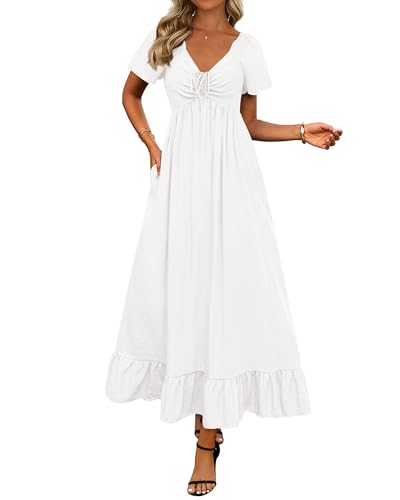
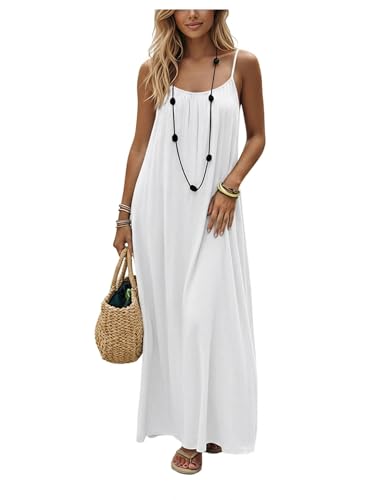
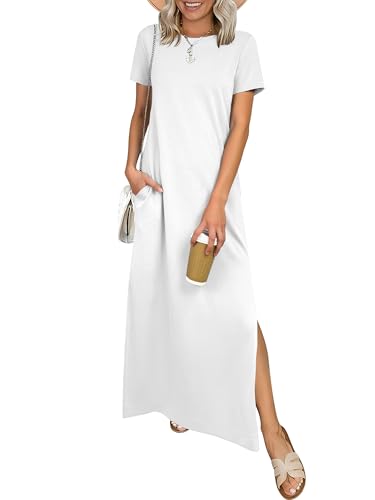
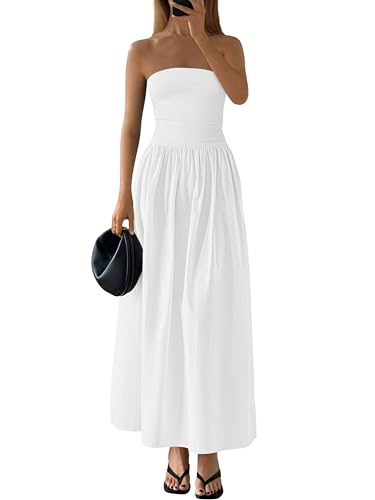
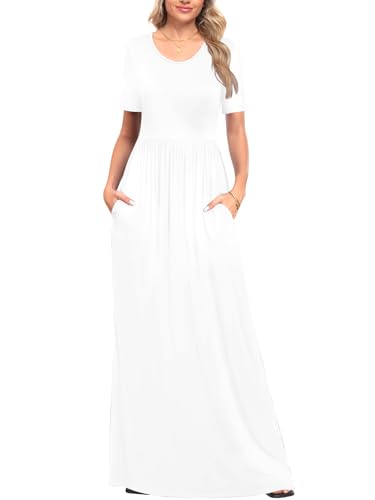
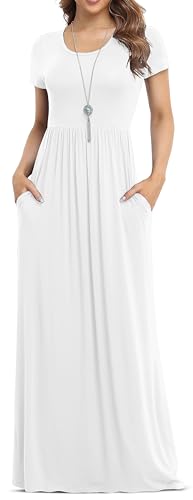
Casual White Maxi Dresses are best defined by measurable construction rather than a loose seller tag. This category centers on casual white or soft-white dresses with an ankle-to-floor-length maxi skirt and everyday construction rather than bridal or formal-gown structure. For a U.S. shopper, verify the exact front, side, and back design, seller-specific size chart, fabric, lining, closure, delivery estimate, and return terms before ordering.
Do not confuse this intent with short or midi white casual dresses, ivory formal gowns, bridal dresses, white cocktail dresses, and long dresses that do not reach maxi length on the wearer. Relevant fabrics include cotton poplin, jersey, linen blends, rayon or viscose, eyelet with lining, crochet with a slip, gauze, and lightweight crepe, but the fabric name alone does not confirm the cut. The most important fit checks are bodice opacity, lining length, pocket visibility, waist placement, skirt sweep, slit height, hem transparency, and floor clearance. A qualifying dress must satisfy all three parts: casual construction, a white or soft-white visual read, and true maxi length on the wearer.
Related shopping paths include casual white dresses, casual maxi dresses for women, long casual dresses, women’s casual summer dresses. These pages help shoppers move by length, neckline, sleeve, season, or formality without treating adjacent constructions as interchangeable.




Frequently Asked Questions About Casual White Maxi Dresses
What qualifies as casual white maxi dresses?
The dress should match the actual construction: casual white or soft-white dresses with an ankle-to-floor-length maxi skirt and everyday construction rather than bridal or formal-gown structure. A seller title alone is not enough.
Which measurements matter most?
Measure bust, waist, hips, shoulders, torso, and dress length, plus category-specific variables such as bodice opacity, lining length, pocket visibility, waist placement, skirt sweep, slit height, hem transparency, and floor clearance.
How should I test the fit before deciding to keep it?
With tags attached, test walking in daylight, sitting, climbing stairs, taking a long stride, bending, getting into a car, and checking whether the hem drags or the skirt becomes transparent in motion. The dress should return to position without repeated adjustment.
Do I need special undergarments?
That depends on the neckline, back, lining, and support structure. Check whether the lining reaches far enough down the skirt, whether pocket bags show, and whether a slip or shorts are visible through the shell in bright light. Test the intended setup before the return deadline.
Can this type of dress be altered?
Often, but alteration difficulty depends on the feature. Maxi hemming can involve multiple layers, eyelet borders, scallops, tiers, or crochet edges that are more complicated than a plain straight hem. Ask a tailor before the return window closes when more than one major area needs work.
How do I compare this with a nearby dress category?
Use the defining construction first. This category should stay separate from short or midi white casual dresses, ivory formal gowns, bridal dresses, white cocktail dresses, and long dresses that do not reach maxi length on the wearer, then color, fabric, and price can be compared.
What should I verify before ordering?
Confirm the exact seller, selected variation, size chart, fabric, lining, closure, front and back construction, delivery estimate, return eligibility, and care instructions.
Define the Construction Before Using the Category Label
Casual White Maxi Dresses should represent casual white or soft-white dresses with an ankle-to-floor-length maxi skirt and everyday construction rather than bridal or formal-gown structure. Product titles are often inconsistent, so classification needs front, side, and back views plus the material and closure description. Styles that are really short or midi white casual dresses, ivory formal gowns, bridal dresses, white cocktail dresses, and long dresses that do not reach maxi length on the wearer should remain separate even when a seller uses overlapping marketing terms.
A qualifying dress must satisfy all three parts: casual construction, a white or soft-white visual read, and true maxi length on the wearer. A clearly defined collection makes comparison easier because the shopper knows which physical feature must be present before color, print, or price becomes relevant.
Construction Details Determine Stability
Within casual white maxi dresses, stability can come from shoulder seams, straps, elastic, boning, cups, waist seams, zippers, buttons, smocking, ties, or internal lining. Decorative fabric should not be mistaken for support. Inspect how the garment holds the bust and torso before assuming that a neckline, sleeve, or long skirt will stay in place through several hours of wear.
Test closures several times while tags remain attached. A zipper that bows, a shoulder seam that pulls, a neckline that rolls, or a waist seam that rotates can indicate a size or pattern mismatch. One local issue may be alterable, but several simultaneous problems often mean the base size or cut is wrong. For Casual White Maxi Dresses, apply this check directly to bodice opacity, lining length, pocket visibility, waist placement, skirt sweep, slit height, hem transparency, and floor clearance.
Take Measurements That Match This Design
Standard bust, waist, hips, shoulders, torso length, and preferred dress length remain important, but this category adds specific variables: bodice opacity, lining length, pocket visibility, waist placement, skirt sweep, slit height, hem transparency, and floor clearance. Measure while wearing the planned bra or base layer and use the seller chart for the exact variation. U.S. numerical and alpha sizes are not universal across brands or marketplaces.
When measurements fall between sizes, identify the least flexible area. Non-stretch bodices, fitted upper arms, rigid waist seams, narrow hips, and structured shoulders usually leave less room for error than a loose skirt. Finished garment measurements can reveal whether the pattern includes enough ease for normal movement. In this collection, the garment still needs to match casual white or soft-white dresses with an ankle-to-floor-length maxi skirt and everyday construction rather than bridal or formal-gown structure.
Perform a Real Movement Test
Do more than stand in front of a mirror. Test walking in daylight, sitting, climbing stairs, taking a long stride, bending, getting into a car, and checking whether the hem drags or the skirt becomes transparent in motion. Repeat the test after ten to fifteen minutes because fabric can settle, elastic can begin to press, and necklines or sleeves can shift as body temperature rises. The dress should return to position without repeated pulling or adjustment.
White maxi skirts combine the opacity risk of pale fabric with the movement and dirt exposure of a long hem, so both need to be tested together. A construction that looks correct only when the wearer stands still is not a successful casual fit.
Fabric Changes How the Construction Behaves
Common options include cotton poplin, jersey, linen blends, rayon or viscose, eyelet with lining, crochet with a slip, gauze, and lightweight crepe. Stretch knits can accommodate movement but may reveal seam tension. Poplin and twill hold shape but need enough ease. Chiffon and crepe can drape smoothly but depend on lining and seam quality. Sweater knits may grow with wear, while satin-like fabrics reveal pulling and wrinkles through reflected light.
Compare fiber content, lining, stretch direction, thickness, and recovery rather than buying from the silhouette photo alone. Fabric also changes alteration difficulty, heat retention, snag risk, opacity, and the way the dress layers under a jacket or coat. That keeps Casual White Maxi Dresses distinct from short or midi white casual dresses, ivory formal gowns, bridal dresses, white cocktail dresses, and long dresses that do not reach maxi length on the wearer.
Check Length, Coverage, and Proportion
Measure shoulder-to-hem or waist-to-hem and compare with planned shoes. A maxi that brushes the floor in product photography may need hemming for everyday sidewalks, stairs, and travel. Measure the same points on a dress you already like, then compare with the listing. Height alone does not predict where a waist, slit, neckline, or hem will land because torso and leg proportions vary.
Check the dress while seated as well as standing. Hem and slit behavior often changes in a chair, and fitted sleeves or necklines can move when the arms come forward. A useful casual dress maintains intended coverage without requiring a fixed posture. For Casual White Maxi Dresses, apply this check directly to bodice opacity, lining length, pocket visibility, waist placement, skirt sweep, slit height, hem transparency, and floor clearance.
Plan Bras, Slips, and Base Layers Early
Check whether the lining reaches far enough down the skirt, whether pocket bags show, and whether a slip or shorts are visible through the shell in bright light. Built-in cups help only when they match the wearer’s bust position and width. Fashion tape can supplement a stable garment, but it should not be the primary engineering keeping a poorly fitted bodice in place.
Try the complete underlayer setup before the return deadline. Check whether bra straps, shapewear edges, slip hems, or cups show in daylight and flash. For pale colors or semi-sheer panels, verify that the lining and undergarment tone do not create visible contrast. In this collection, the garment still needs to match casual white or soft-white dresses with an ankle-to-floor-length maxi skirt and everyday construction rather than bridal or formal-gown structure.
Match the Dress to Season and Daily Use
Light cotton, linen blends, gauze, and viscose suit warm weather, while layered eyelet or knit versions can extend into spring and early fall depending on lining and airflow. The practical choice depends on fabric weight, airflow, sleeve or shoulder coverage, lining, and how long the dress will be worn. A feature that feels useful for a cool arrival can become uncomfortable in a heated restaurant or crowded indoor event.
For travel or commuting, add a wrinkle test. Sit for fifteen minutes, stand, and see how the fabric recovers. Also check whether the dress works with the coat, shoes, and bag you expect to use. Daily usefulness comes from the whole wearing system, not one isolated silhouette. That keeps Casual White Maxi Dresses distinct from short or midi white casual dresses, ivory formal gowns, bridal dresses, white cocktail dresses, and long dresses that do not reach maxi length on the wearer.
Coordinate Styling Without Hiding the Defining Feature
Use shoes and bags that tolerate the environments where a white floor-length hem will travel; grass, pavement, and restaurant floors can mark pale hems quickly. Choose shoes, bags, belts, and outer layers that preserve the proportion and function of the dress. Heavy accessories can pull a delicate neckline out of position, while a long coat or cardigan can interfere with a full skirt or asymmetric shoulder.
Use repeat-wear styling as a purchase test. If the dress works with two existing pairs of shoes and at least one outer layer, it is more likely to earn regular use. If every outfit requires new accessories or constant adjustment, the dress may be less practical than the product photo suggests. For Casual White Maxi Dresses, apply this check directly to bodice opacity, lining length, pocket visibility, waist placement, skirt sweep, slit height, hem transparency, and floor clearance.
Read Care and Alteration Risk Before Checkout
Maxi hemming can involve multiple layers, eyelet borders, scallops, tiers, or crochet edges that are more complicated than a plain straight hem. Plain hems and simple side seams are often easier to change than pleats, bias cuts, fitted sleeves, smocking, beaded edges, lace motifs, or layered skirts. Ask a tailor what can be adjusted without distorting the feature that defines the category.
Care matters too. A casual dress that requires frequent dry cleaning or difficult reshaping may not suit a weekly rotation. Check whether the fabric can shrink, pill, stretch out, fade, or snag, and follow the actual care label rather than assuming a familiar fabric name always behaves the same way. In this collection, the garment still needs to match casual white or soft-white dresses with an ankle-to-floor-length maxi skirt and everyday construction rather than bridal or formal-gown structure.
Read Marketplace Listings at Variation Level
Save the exact seller, style, color, fabric, size, estimated delivery, and return terms at checkout. Marketplace listings can change seller or construction under the same title. If a replacement is needed later, verify the exact variation again rather than assuming that the product card still represents the same garment. That keeps Casual White Maxi Dresses distinct from short or midi white casual dresses, ivory formal gowns, bridal dresses, white cocktail dresses, and long dresses that do not reach maxi length on the wearer.
Reviews are most useful when they include height, body measurements, purchased size, fabric, and the precise fit issue. A review for another variation should not be treated as proof that the selected version has identical lining, stretch, sleeve length, or proportions. For Casual White Maxi Dresses, apply this check directly to bodice opacity, lining length, pocket visibility, waist placement, skirt sweep, slit height, hem transparency, and floor clearance.
Compare Nearby Categories by the Feature That Matters Most
Related shopping paths include casual white dresses, casual maxi dresses for women, long casual dresses, women’s casual summer dresses. Use them to compare real alternatives rather than several pages that all lead to the same dress. If the defining feature in this category is non-negotiable, verify it first. If another requirement such as length, season, or formality matters more, move to the collection built around that requirement.
A qualifying dress must satisfy all three parts: casual construction, a white or soft-white visual read, and true maxi length on the wearer. Clear boundaries keep the final shortlist focused on garments that actually deliver the construction the shopper came to find.
How to Shortlist Casual White Maxi Dresses
Start with the defining construction, then compare seller-specific sizing, fabric, lining, support, coverage, delivery, returns, care, and alteration risk. Review front, side, back, and close-up images before judging a dress from the hero photo. Keep bodice opacity, lining length, pocket visibility, waist placement, skirt sweep, slit height, hem transparency, and floor clearance on the checklist.
Keep the final option only when it passes walking in daylight, sitting, climbing stairs, taking a long stride, bending, getting into a car, and checking whether the hem drags or the skirt becomes transparent in motion. The strongest casual white maxi dresses preserve the intended design while allowing the wearer to move through the day without pressure, slipping, twisting, dragging, or constant readjustment.