
Long Sleeve Flower Girl Dresses
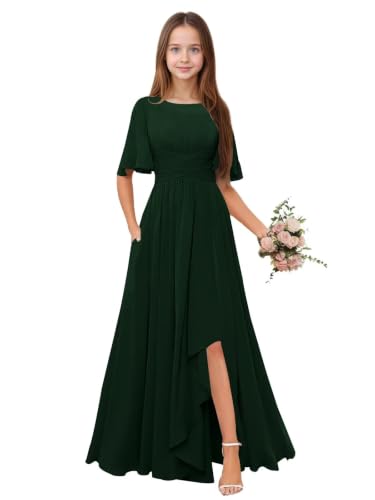
Six in ten listings here have long sleeves and around seven in ten have sleeves of some kind, which makes this the collection to use when coverage is required rather than optional.Lace dominates at over four in ten, usually as the sleeve itself. Two thirds are long and around a quarter are ball gown silhouettes. Tulle appears in around one listing in five.Around one in seven is described in toddler terms, so the age range here skews younger than in the general flower girl collection. For sleeveless styles, see flower girl gowns.





Long Sleeve Flower Girl Dresses: Frequently Asked Questions
Do sleeves keep a child warm?
Not necessarily. Most sleeves in this collection are sheer lace, which provides almost no insulation. For a cold venue, a soft long-sleeve top underneath, thick tights and a cardigan do far more than the dress itself.
Will a lace sleeve be itchy?
It can be, and this is the most common complaint in this category. Fine or corded lace against the inner arm scratches where the arm bends. Look for a lined sleeve, or a soft mesh base with lace applied on top rather than lace alone.
How do I check the sleeve fits?
When the dress arrives, have her raise both arms above her head. If the whole bodice lifts with them, or if she immediately pulls at the sleeve, choose differently. A binding sleeve becomes uncomfortable within minutes.
Does a cap sleeve satisfy a coverage requirement?
No. Cap and short sleeves cover the shoulder only, and religious venues expecting upper arms covered will not consider that sufficient. Around one in ten listings here are cap or short sleeve despite the category.
Which sleeve suits a religious ceremony in warm weather?
A sheer lace or illusion mesh sleeve. It satisfies the coverage expectation visually without adding warmth, which is exactly what is needed when the requirement is about modesty rather than temperature.
Should I choose long sleeves and a full skirt?
Better to choose one. A ball gown skirt plus long sleeves is the most restrictive combination in children's formal wear, and around a quarter of this collection is ball gown cut.
How should I size a sleeved dress?
By measurement, adding sleeve length from shoulder to wrist to the usual chest and shoulder-to-hem. Arm width cannot be altered, so if her arms are fuller for her height, size for the sleeve and have the body taken in.
Should the hem reach the floor?
Ankle length is better. Two thirds of this collection is long, and a hem touching the floor gets stepped on. Ankle length clears the ground and photographs almost identically.
Which fabric is most comfortable?
Knit and jersey, though they are less common here. They are also the warmest option for a winter wedding. Among the lace styles, soft backed lace is comfortable where stiff unbacked lace is not.
Why Sleeves, and When They Are Required
Three situations account for most searches in this category, and they call for different things.
A religious ceremony with coverage expectations. Many churches, temples and mosques expect shoulders and upper arms covered, and this applies to children as well as adults. A sleeved dress removes the need for a cover-up that a child will take off and lose.
A winter or autumn wedding. Venues are cold, ceremonies are long, and a child standing still in an unheated church in a sleeveless dress will be visibly uncomfortable in the photographs.
Parental preference. Some families simply prefer their child covered, and a sleeved dress avoids the conversation entirely.
Knowing which applies changes what to look for. For coverage requirements, a sheer illusion sleeve satisfies the expectation without warmth. For cold, it does not, and a lined or knit sleeve is needed.
Sleeve Types and What Each Provides
Lace or illusion mesh sleeve. The most common here, given how heavily lace features. Sheer, decorative, and provides visual coverage rather than warmth. Suits religious ceremonies in mild weather.
Lined long sleeve. Solid fabric, provides actual warmth. The choice for winter weddings.
Puff and bishop sleeve. Voluminous from shoulder to a gathered wrist. Nothing sits close to the arm, which makes these the easiest sleeves for a child to wear, and they are common in children's occasion wear at present.
Cap and short sleeve. Covers the shoulder only. Around one in ten listings here, and worth knowing that this does not satisfy an upper-arm coverage requirement.
Check the photographs rather than the title, since listings describe all of these as long sleeve inconsistently.
The Comfort Problem With Sleeves
Sleeves introduce two issues that sleeveless dresses do not, and both are worth checking before the day rather than discovering during it.
Itch. Lace directly against a child's inner arm is the single most common complaint in this category. Fine or corded lace can be scratchy where the arm bends, and a child will pull at it constantly. Look for a lined sleeve, or a soft mesh base with lace applied on top rather than lace alone.
Restriction. A close-fitting sleeve limits arm movement, which matters more for a child than for an adult because she will be lifted, hugged and carried. A sleeve that binds when her arms go up will be uncomfortable within minutes.
The test is simple and worth doing when the dress arrives: put it on and have her raise both arms above her head. If the whole bodice lifts with them, or if she immediately pulls at the sleeve, choose differently.
Warmth: What Actually Helps
A common misunderstanding is that a long sleeve keeps a child warm. A sheer lace sleeve provides almost no insulation, and most of the sleeves in this collection are lace.
For a genuinely cold venue, layering does more than the dress does. A soft long-sleeve cotton or thermal top underneath a lace-sleeved dress is invisible under the lace and considerably warmer. Thick tights make more difference than any sleeve. A cardigan or faux fur shrug for the ceremony can come off for photographs.
If the ceremony is outdoors in cold weather, plan the layers rather than relying on the dress, and accept that she may need to keep a coat on for parts of it.
Length
Two thirds of this collection is long, and the same consideration applies as with any children's formal wear: a hem that touches the floor gets stepped on.
Ankle length, clearing the ground by an inch or two, is the practical choice and photographs almost identically. If you order floor length, hem it to clear the ground in the shoes she will wear.
Around a quarter are ball gown cuts, which are wide as well as long. A full skirt plus long sleeves is the most restrictive combination in children's formal wear, so it is worth choosing one or the other rather than both for a young child.
Sizing
Around one in seven listings here is described in toddler terms, and the age range skews younger than in other flower girl collections.
Order by measurement rather than age. Chest and shoulder-to-hem are the two that matter most, and for a sleeved dress add sleeve length from shoulder to wrist.
Arm width is the fit point that cannot be altered on a children's dress any more than on an adult's, since sleeves are cut with minimal seam allowance. If her arms are on the fuller side for her height, size for the sleeve and have the body taken in.
Where the wedding is months away, size up. Children grow unpredictably and a dress that fits at the point of ordering may not by the day.
Fabric
Lace at over four in ten listings is the defining fabric here, and the quality varies widely. Soft, backed lace is comfortable; stiff unbacked lace is not.
Tulle at around a fifth appears in skirts rather than sleeves. As with any children's formal wear, a lined skirt or a cotton slip underneath prevents the scratching complaint.
Satin appears throughout as a lining and bodice fabric. It shows marks readily, which at a wedding involving food and other children is worth weighing.
Knit and jersey styles, though less common here, are the most comfortable option for a child and the warmest for a winter wedding.
Related Collections
For sleeveless and cap-sleeve styles, see flower girl gowns. For babies and the youngest attendants, browse infant flower girl dresses. For everyday girls' styles, see floral dresses for girls.