
Turquoise Bridesmaid Dresses
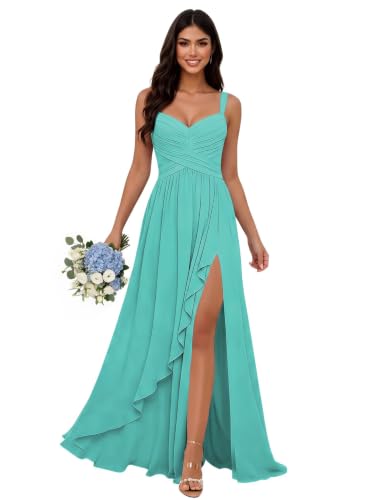
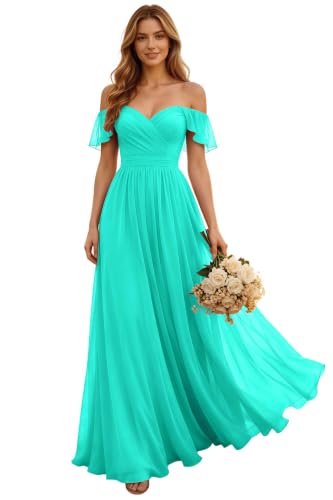
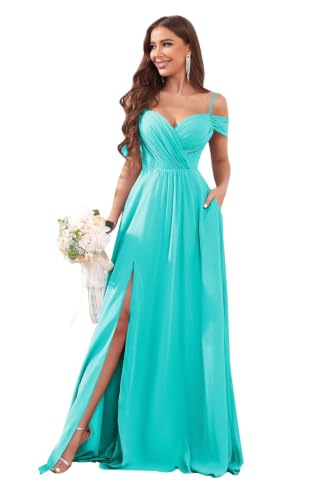
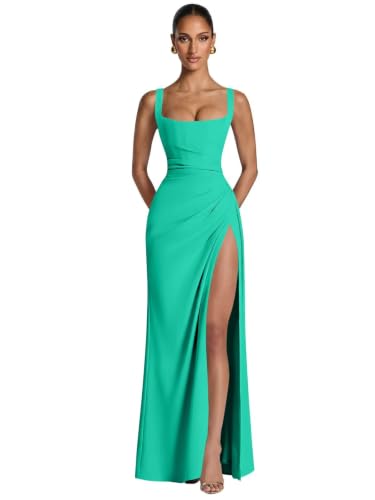
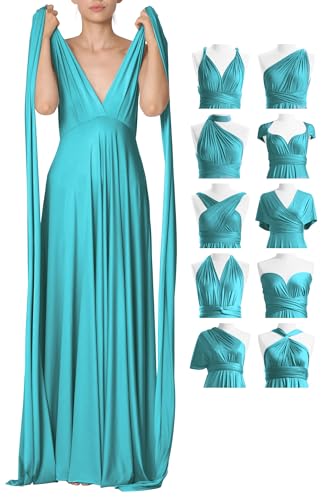
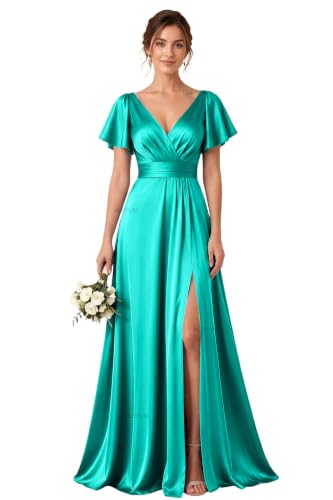
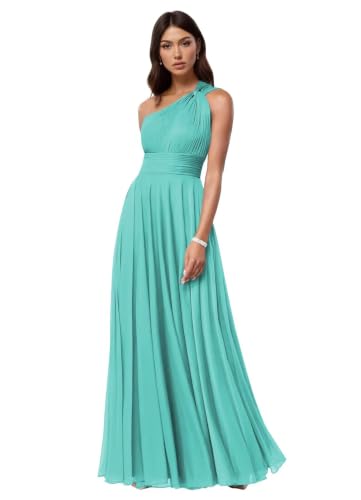
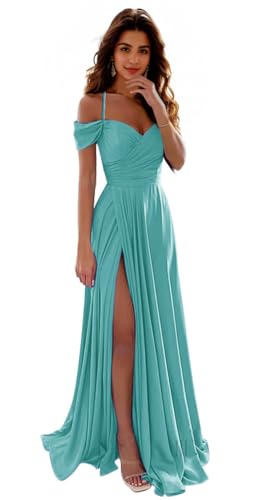
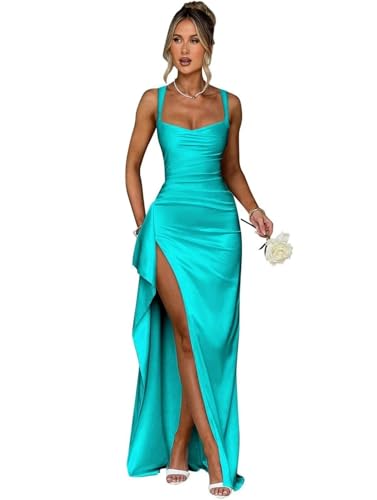
Turquoise sits between blue and green, and that is exactly what makes it difficult to order for a bridal party. Nearly half of this collection is chiffon, and just over half the styles are floor length, with satin and lace making up most of the remainder. A-line is the most common silhouette.The practical problem with turquoise is not choosing it. It is getting four or six dresses to arrive in the same shade, from listings that may describe the color as turquoise, teal, aqua or jade interchangeably. This page covers how to handle that, along with fabric, length and the coordination decisions that follow.Related shades are grouped separately: see aqua bridesmaid dresses, dusty blue, or the full bridesmaid dresses range.
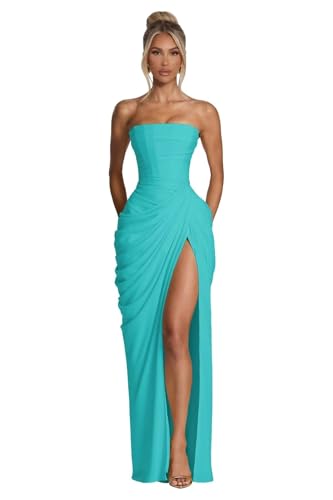

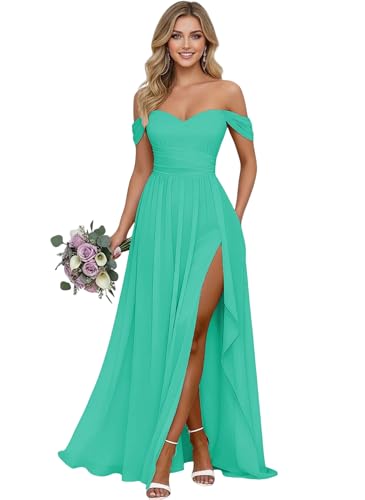
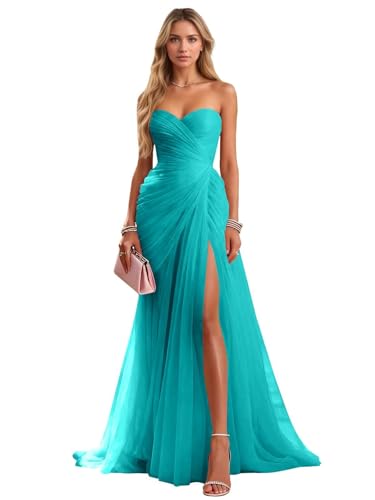
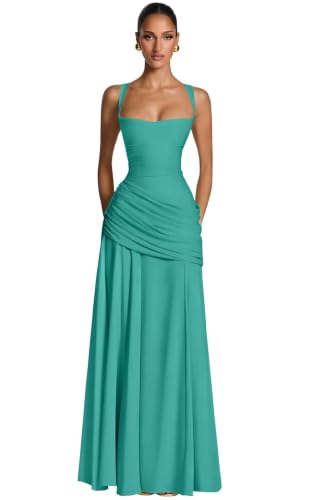





Turquoise Bridesmaid Dresses: Frequently Asked Questions
What is the difference between turquoise, teal and aqua?
Turquoise is a mid-saturation blue-green with clear green presence. Teal is darker and greener. Aqua is lighter and closer to pure blue. Sellers use the terms loosely, so the same dress may be listed under different names on different pages.
How do I stop the dresses arriving in different shades?
Order every dress from a single listing in one order, so they come from the same production run. If you must split the order, buy one first and compare it in daylight before ordering the rest.
Can bridesmaids wear different turquoise dresses?
Yes, and a deliberately mismatched party solves both the dye-variation problem and the sizing problem. Choosing several silhouettes in the same declared shade reads as a design choice rather than an error.
What fabric is most common in turquoise bridesmaid dresses?
Chiffon, which accounts for close to half this collection. Satin is second at roughly one dress in five. The same turquoise looks deeper and more saturated in satin than in chiffon, so mixing fabrics across a party is more visible than dye variation.
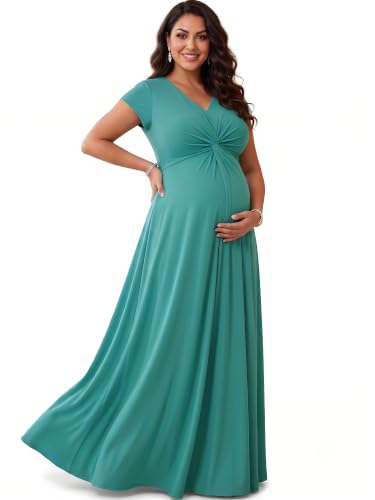
Are plus size turquoise bridesmaid dresses available?
Only a small fraction of this collection is listed as plus size, and petite listings are rarer. If anyone in the party needs extended sizing, check that before committing to a specific listing.
What colors go with turquoise?
Coral, gold, navy and white all work. Coral and turquoise suits beach and summer weddings; navy is more restrained for evening. Gold accessories lift turquoise better than silver. Avoid pairing with pale pastels of similar lightness, which can look faded.
Why does turquoise look different in photographs?
Blue-green shades shift more than most colors under different lighting. Turquoise looks brighter and greener in daylight, deeper and bluer under warm indoor light, and can appear almost navy under tungsten lighting in older venues.
Should I choose long or short?
Just over half this collection is floor length, which reads more formal and photographs well in group shots. Short and midi styles suit beach and garden ceremonies where floor-length hems drag on sand or wet grass.
Is a turquoise gown the same as a turquoise bridesmaid dress?
Usually yes. Sellers use "gown" for floor-length styles with more structure or formality. Since just over half this collection is floor length, most of what is here would be described either way.
How should the maid of honor differ from the bridesmaids?
Normally by one deliberate change within the same palette: a darker shade of turquoise, a different neckline, or a longer hem. Dark turquoise works well because it stays in the palette while reading as distinct in photographs.
How far ahead should I order for a full party?
Three to four months. That allows for a sample order, the main order, one return and replacement, and alteration appointments, which need booking in advance when one fitter is handling several dresses.
Turquoise, Teal and Aqua Are Not Interchangeable
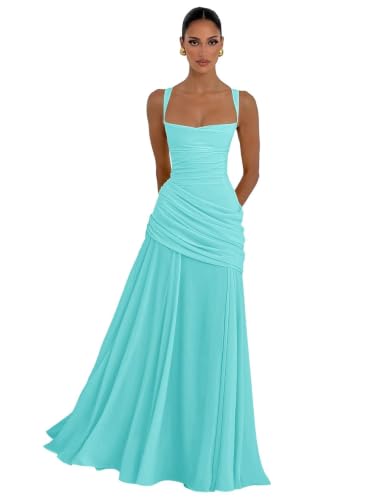
Turquoise is a mid-saturation blue-green with a clear green presence. Teal is darker and pushes further toward green. Aqua is lighter and closer to pure blue. Tiffany blue is lighter again and slightly gray.
Amazon sellers use these terms loosely, and the same dress may be listed as turquoise on one page and teal on another. This matters far more for bridesmaids than for a single dress, because four dresses that are each individually attractive can look mismatched when the wearers stand together.
The practical rule: never order a bridal party's dresses from more than one listing unless you have compared physical fabric in the same light. Color names cannot be trusted across sellers.
Gowns, Maid of Honor Dresses and Darker Shades
A turquoise gown and a turquoise bridesmaid dress are usually the same garment described differently. Sellers use "gown" for floor-length styles with more structure or formality, and floor length accounts for just over half of this collection, so most of what is here qualifies.
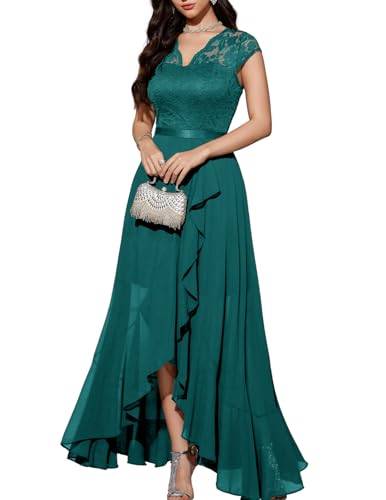
The maid of honor is normally dressed from the same range as the rest of the party, with one difference introduced deliberately: a darker shade of the same color, a different neckline, or a longer hem than the other bridesmaids. Dark turquoise works particularly well for this, since it stays clearly within the palette while reading as distinct in photographs.
Turquoise blue describes the same family shifted slightly toward blue and away from green. If a listing says turquoise blue rather than turquoise, expect it to sit closer to the aqua end of the range.
Ordering Multiple Dresses Without a Color Mismatch
Three approaches work, and they suit different budgets and timelines.
Single listing, single order. Order every dress from one listing at the same time. Items shipped together usually come from the same production run, which minimises dye variation. This is the most reliable route and the reason many brides accept a limited size range rather than splitting orders.
Order one, then decide. Buy a single dress first, check it against your flowers and any other decor in daylight, then order the rest. This adds two to three weeks to the timeline but removes most of the risk.
Deliberately mismatched. Choose several different silhouettes in the same declared shade and accept the variation as intentional. This has become common enough that it reads as a design choice rather than an error, and it solves the sizing problem discussed below.
The Size Range Problem
Only a small fraction of this collection is listed as plus size, and petite listings are rarer still. For a single dress that is a limitation. For a bridal party, where six people rarely share a size range, it is a planning constraint.
If anyone in the party needs extended sizing, check that before falling in love with a specific listing. The mismatched approach becomes genuinely useful here: everyone wears turquoise, each person wears something that fits, and nobody is squeezed into a style that does not work for them.
Fabric: What Nearly Half This Collection Is Made Of
Chiffon accounts for close to half these dresses and is the default for good reason. It moves in outdoor light, does not cling in heat, and photographs softly. Turquoise chiffon in particular tends to read slightly lighter in daylight than the product image suggests.
Satin is the second most common fabric here at roughly one dress in five. Satin holds color more intensely and reflects light, so the same turquoise appears deeper and more saturated in satin than in chiffon. If you are mixing fabrics across a party, this difference is more visible than any dye variation.
Lace appears in roughly one style in six, usually as an overlay or bodice panel. Lace over a turquoise lining shifts the perceived shade slightly toward gray, which softens it.
Length and Silhouette
Just over half these dresses are floor length. A-line is the most common cut, followed by mermaid and wrap styles. Short and midi options together make up roughly a third of the collection.
Floor length reads more formal and photographs better in group shots, where a row of long dresses creates a continuous line. Short and midi work better for beach and garden ceremonies where hems drag on sand or grass, and for parties who will be moving between locations.
If the ceremony is outdoors, the practical question is hem clearance rather than formality. A floor-length chiffon hem on wet grass stays wet for the rest of the day.
Necklines Across Different Bodies
One-shoulder and V-neck styles are the most common here, with halter and off-shoulder cuts appearing less often. Around one dress in six has sleeves of some kind.
For a bridal party, neckline is where individual needs vary most. Strapless and one-shoulder styles need specific undergarments, which not everyone owns or wants to buy. If you are choosing one style for everyone, a V-neck or a style with straps accommodates the widest range of people without requiring anyone to shop for foundation garments.
Colors That Sit Well With Turquoise
Turquoise pairs naturally with coral, gold, navy and white. Coral and turquoise is a warm, high-contrast combination that suits beach and summer weddings. Navy and turquoise is more restrained and works in the evening. Gold accessories lift turquoise more effectively than silver, which can make it look colder.
Where turquoise struggles is against pale pastels of similar lightness. Blush and turquoise together can look faded rather than intentional in photographs.
Lighting Changes Turquoise More Than Most Colors
Blue-green shades shift visibly under different light sources. Turquoise appears brighter and greener in daylight, and deeper and bluer under warm indoor lighting. Under the tungsten lighting common in older reception venues, it can look almost navy in photographs.
If the ceremony is outdoors and the reception indoors, expect the dresses to look like two slightly different colors across the day. This is normal and not a fault in the dresses. If it concerns you, ask the photographer how they plan to handle white balance.
Checking What Arrives
Open every dress in daylight, not under household bulbs, and lay them side by side before anyone tries them on. Keep all tags attached until every dress in the party has been compared. If one is visibly off, return it immediately rather than hoping it will look fine on the day.
Confirm the closure type on the listing, since a zip, corset back or lace-up affects how much size adjustment is possible. Corset-back styles accommodate a wider range and are worth prioritising when ordering for several people at once.
Ordering Timeline
Allow three to four months for a full party. That covers ordering a sample, receiving it, ordering the remainder, allowing for one return and replacement, and leaving time for alterations. Alterations for a party often need to be booked in advance, since a single fitter handling six dresses needs scheduling.
Amazon stock and pricing change frequently, and a listing that has the full size range today may not in six weeks. If the size range matters, order earlier rather than later.
Related Collections
For a curated shortlist with styling notes, read our guide to the best turquoise bridesmaid dresses for weddings, or compare hem lengths in long vs short turquoise bridesmaid dresses. For summer ceremonies specifically, see turquoise bridesmaid dresses for beach weddings.
For similar shades, see aqua bridesmaid dresses and dusty blue bridesmaid dresses. For fabric-led browsing, see chiffon bridesmaid dresses. For outdoor ceremonies specifically, beach bridesmaid dresses covers shorter and lighter styles.