
Brown Bridesmaid Dresses
Brown Bridesmaid Dresses should be shopped as a defined color family, not as a single universal swatch. In US bridal retail, the label can cover a broad earth-tone family that can include mocha, cocoa, espresso, cinnamon, coffee, taupe-brown, and reddish brown depending on the seller. Because color names are not standardized across designers or marketplace sellers, compare the exact selected variation, fabric swatch, lining, and customer photographs before asking an entire wedding party to order. The most important differences usually come from warm red, golden, neutral, gray, or nearly black undertones and from how the fabric reflects or absorbs light.
Use this collection to compare color, fabric, silhouette, size range, neckline, sleeves, and delivery timing together. Closely related shopping paths include chocolate bridesmaid dresses, champagne bridesmaid dresses, burgundy bridesmaid dresses, and all bridesmaid dresses. These internal links help separate neighboring color intent instead of treating every deep, neutral, or jewel tone as interchangeable.



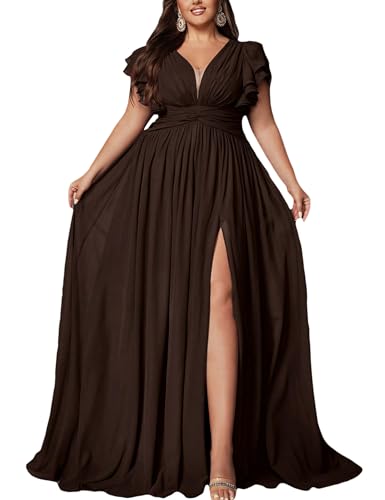


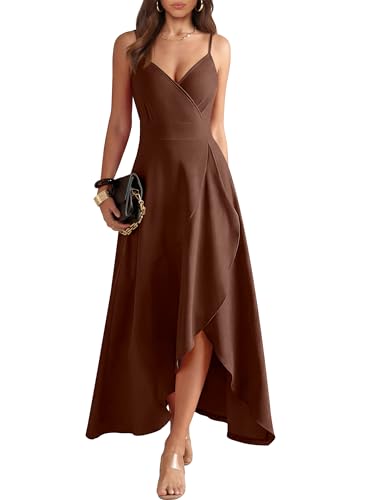
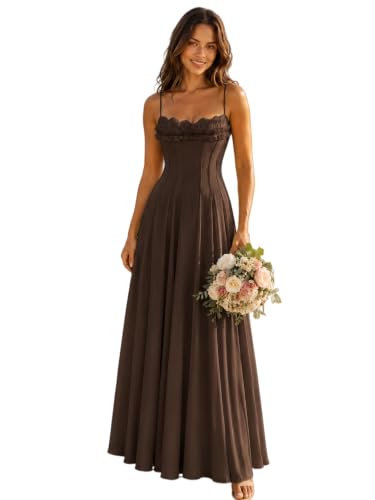
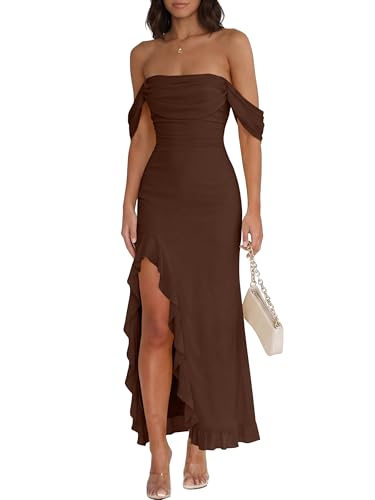
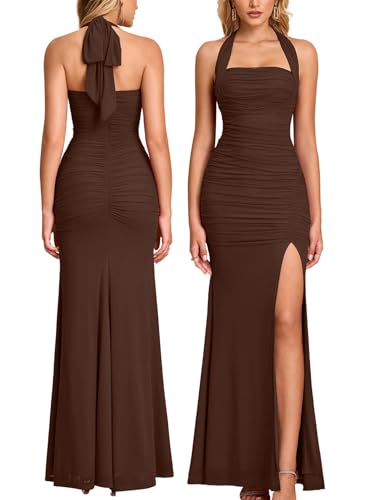
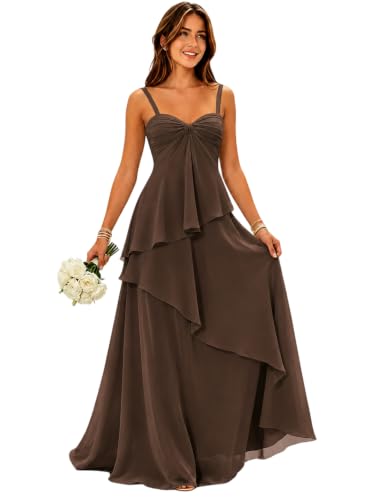
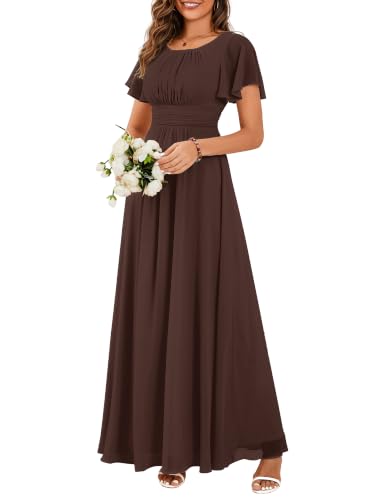


SELFGENIC Brown Bridesmaid Dresses for Wedding Womens Simple Halter A-line Formal Dress Long with Pockets 10
Original price was: $54.99.$49.99Current price is: $49.99.


Frequently Asked Questions About Brown Bridesmaid Dresses
What color should count as brown bridesmaid dresses?
Use the actual seller swatch and received fabric. The category should stay within a broad earth-tone family that can include mocha, cocoa, espresso, cinnamon, coffee, taupe-brown, and reddish brown depending on the seller, while nearby labels such as chocolate brown, taupe, copper, rust, terracotta, bronze, and champagne should only be included when they genuinely match the intended color range.
Will the color look the same in chiffon and satin?
Not necessarily. Chiffon usually looks softer and more matte, while satin creates stronger highlights, so compare physical swatches if the party will mix fabrics.
Should all bridesmaids order at the same time?
Ordering within a similar timeframe can reduce availability and dye-lot risk, especially when exact color matching matters.
Can bridesmaids wear different styles in the same color?
Yes. Keeping the same seller color and fabric while varying necklines or sleeves is one of the simplest ways to create a coordinated mismatched party.
How should the color be tested for wedding photos?
Check a swatch in daylight, warm indoor lighting, and phone flash, ideally beside the bridal gown, flowers, suits, and key decor colors.
What measurements should bridesmaids take?
Use the seller instructions for bust, waist, hips, torso and dress length. Do not rely only on a familiar retail size.
What should be verified before ordering?
Confirm exact color, fabric, lining, seller, size chart, delivery estimate, return policy, included accessories and whether the dress can be altered in time.
What Brown Bridesmaid Dresses Should Mean
This page should center dresses that visibly read as a broad earth-tone family that can include mocha, cocoa, espresso, cinnamon, coffee, taupe-brown, and reddish brown depending on the seller. Nearby labels such as chocolate brown, taupe, copper, rust, terracotta, bronze, and champagne may overlap, but the exact seller swatch should decide classification rather than a keyword-heavy title. Keeping the color boundary clear improves shopping relevance and prevents a bridal party from ordering dresses that look coordinated online but unrelated in person.
The broad Brown Bridesmaid Dresses category should remain wider than the narrower Chocolate Bridesmaid Dresses collection. Chocolate should describe a deeper cocoa-like brown rather than every tan, taupe, rust, or copper dress.
Undertones Matter More Than the Color Name
Two listings can both use the same category phrase and still differ because one leans into warm red, golden, neutral, gray, or nearly black undertones. Undertone becomes especially noticeable beside skin, white or ivory bridal fabric, flowers, table linens, and suits. Order or request a physical swatch whenever the color is central to the wedding design, and compare it in neutral daylight before approving the group order.
Avoid universal claims that one shade “flatters every skin tone.” A better approach is to let each bridesmaid evaluate the actual swatch near her face and then choose a neckline, sleeve, or makeup direction that feels comfortable while the group keeps the agreed wedding palette.
How Fabric Changes the Shade
matte chiffon softens brown into an airy earth tone; satin makes chocolate and espresso look richer and more reflective; velvet absorbs light and can push the same color toward coffee or near-black; mesh and tulle can appear lighter because the lining shows through
If the bride wants mismatched silhouettes in one color, using the same fabric is the simplest way to reduce visible shade drift. If mixed fabrics are intentional, compare swatches side by side and decide whether tonal variation is part of the design rather than discovering the difference after alterations are complete.
Wedding Palettes That Work With This Color
Useful palette directions include ivory and greenery for an organic neutral palette; blush and champagne for a softer romantic direction; burgundy and copper for a warm autumnal mix; black and gold for a more formal evening wedding. Build the palette around the actual dress swatch instead of a generic Pinterest color chip because the dress undertone may pull the entire combination warmer, cooler, darker, or more muted.
For bouquets and ceremony flowers, options such as cream roses, white ranunculus, blush garden roses, dried grasses, rust orchids, olive foliage, and eucalyptus can create contrast without forcing every decorative item to match the bridesmaid dresses exactly. Repeating the dress color in one or two floral accents is usually enough to make group photographs feel intentional.
Jewelry, Shoes, and Other Accessories
For metal finishes, gold and bronze emphasize warmth, while pearl, crystal, or restrained silver can cool a brown palette that is already very red or orange. Check the dress hardware, beadwork, zipper, and any belt or buckle before choosing jewelry so the accessory finish does not fight a visible garment detail.
Shoes do not need to be identical unless the wedding party wants that look. Nude, metallic, black, or tonal shoes can all work depending on hem length and formality, but heel height should be finalized before floor-length dresses are hemmed.
Season, Venue, and Dress Code
fall and winter are obvious matches, but lightweight chiffon, sleeveless cuts, and pale mocha shades can also work at spring garden, desert, vineyard, and summer evening weddings
Venue conditions matter more than seasonal color rules. Outdoor grass affects narrow heels and long chiffon hems; beach wind exposes lining and slit behavior; air-conditioned ballrooms can make sleeves useful; warm receptions can make velvet or heavily lined satin uncomfortable. Match fabric weight and construction to the actual wedding schedule.
Mismatched Bridesmaid Dresses Without Color Chaos
A tonal brown party can intentionally range from mocha through chocolate and espresso, but the bride should decide whether the goal is true matching or a controlled gradient before anyone orders.
A practical system is to lock two variables and relax one. For example, keep the exact color and fabric while allowing different necklines, or keep a narrow tonal palette and floor length while allowing two approved fabrics. Give every bridesmaid the same written color instructions and links so no one substitutes a nearby shade at the last minute.
Photography and Lighting Tests
Brown can lose separation from dark wood, brick, or nighttime backgrounds, so photograph swatches beside the venue palette and planned florals instead of judging the dress color on a white product page.
Photograph the swatch or sample near a window, under warm indoor bulbs, and with phone flash. Those three tests reveal whether the color shifts, whether the lining becomes visible, and whether satin, sequins, or mesh create highlights that will affect the final wedding photographs.
Fit, Size Charts, and Bridal-Party Measurements
Brown Bridesmaid Dresses still need to fit as individual dresses. Each bridesmaid should measure bust, waist, hips, torso length, and preferred hollow-to-hem or shoulder-to-hem length according to the seller instructions. Do not assume that a familiar street size, bridesmaid size, or plus-size label will transfer between brands.
When the party includes different heights and body proportions, choose a collection with enough neckline, sleeve, and silhouette variety to preserve the color plan without forcing everyone into the same cut. Review whether straps are adjustable, cups are removable, boning is present, and the back closure allows practical alterations.
Ordering, Swatches, and Dye-Lot Risk
Order swatches before the full party when the retailer offers them. For marketplace products, save screenshots of the exact seller, color selection, size chart, material description, delivery estimate, and return terms because visually similar product cards may lead to different sellers or constructions.
If exact matching matters, place group orders close together and avoid assuming that a later reorder will be identical. Dye lots, supplier changes, screen photography, and separate production runs can create differences even when the color name stays the same.
Alterations, Hemming, and Fabric Matching
Alterations should be planned after the brown bridesmaid dresses arrive and pass the color check. A simple chiffon hem or strap adjustment is usually easier than changing a beaded neckline, sequin side seam, corseted bodice, bias-cut satin skirt, or layered tulle hem. Bring final shoes and planned undergarments to fittings.
Adding panels, straps, sleeves, or modesty pieces can be difficult when replacement fabric must match a specific shade. Ask a tailor whether existing seam allowance can solve the fit issue before buying extra material that may not match the original dye lot.
How to Shortlist Brown Bridesmaid Dresses
First eliminate dresses that do not truly match the intended color family. Then compare fabric, neckline, sleeve option, silhouette, size availability, price, delivery, return window, and alteration risk. A bridesmaid dress that photographs beautifully but arrives too late or cannot be altered is not a strong wedding-party choice.
Use the Brown Bridesmaid Dresses category as a color-led shopping path, then move into the related collections when the desired undertone or construction belongs elsewhere. The final goal is a bridal party that looks coordinated in the actual venue light and remains comfortable through the ceremony, photographs, dinner, and dancing.