
Long chiffon bridesmaid dresses
This is the most consistent bridesmaid collection on the site: more than eight in ten listings are chiffon and a similar share are floor length. If you have decided on long chiffon, almost everything here fits the brief without further filtering.Around a third have a slit, lace appears in roughly one dress in five, and just under three in ten have sleeves. Around one in seven is plus size.For other fabrics at the same length, see long bridesmaid dresses.
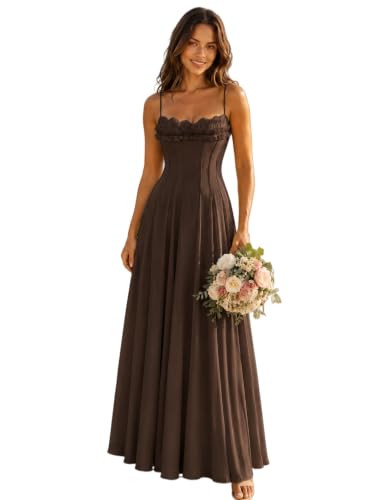
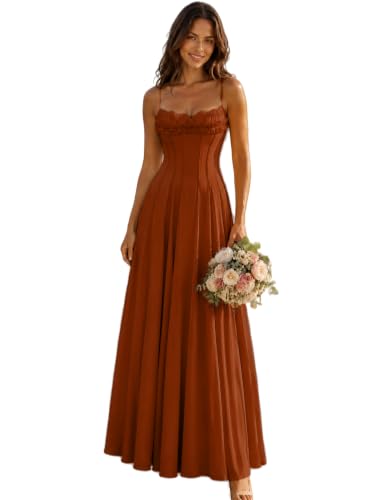
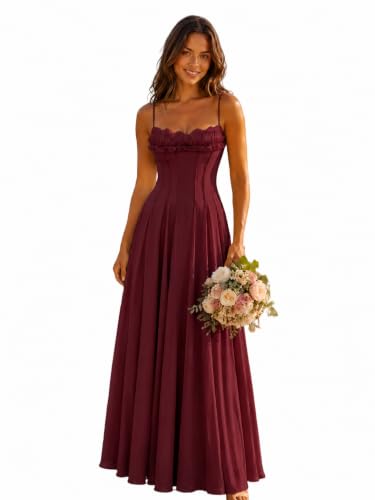
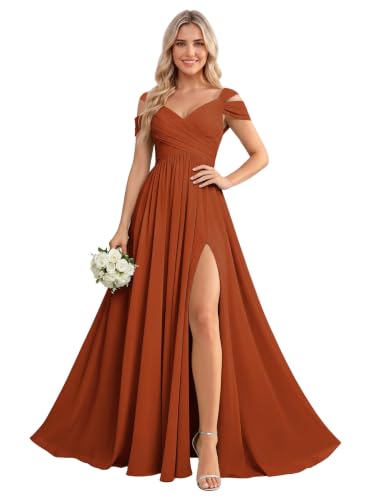
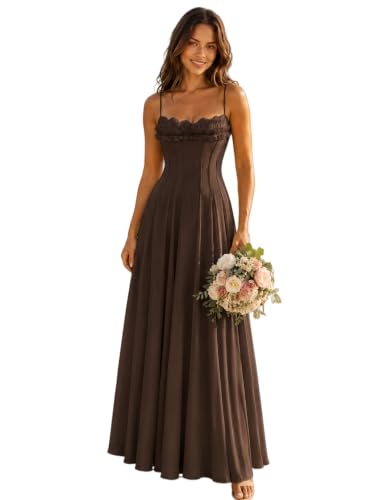
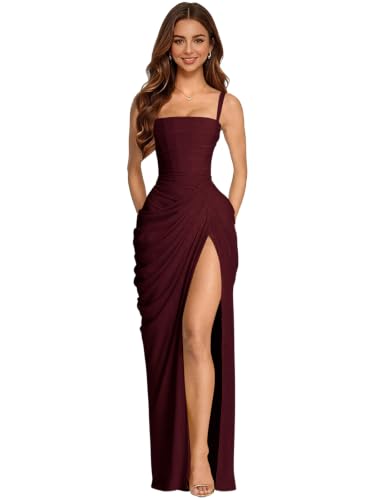



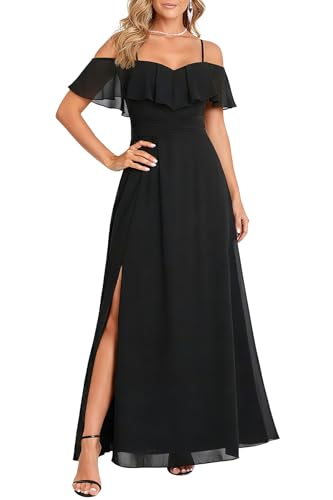


Long Chiffon Bridesmaid Dresses: Frequently Asked Questions
Why is chiffon so common for bridesmaids?
It drapes rather than clings, so one cut works acceptably on several body shapes; it breathes better than any other common formal fabric; and it is cut with float rather than tension, so a slightly loose dress still hangs correctly.
Are all chiffons the same?
No. Single-layer is lightest and most likely to be sheer. Double-layer has more body and photographs with more depth of color. Crinkle chiffon has a textured surface and reads more casual. Keep the whole party in one weight.
Will the dress be see-through?
Unlined single-layer chiffon often is, particularly in pale shades and direct sunlight. Look for the word lined in the description rather than judging from studio photographs, which are lit to minimize transparency.
Why do so many have slits?
Around a third do. Chiffon already moves, and a slit lets that movement show. Without one, a floor-length chiffon skirt reads as a column rather than as flowing.
Is a slit risky for an outdoor ceremony?
A slit in light chiffon can open further in wind than the same slit in satin, so a lower slit is the safer choice outdoors. Agree the height across the party before choosing.
Which silhouette suits a mixed group?
A-line and empire cuts, which fit at the bust and flow from there, accommodating a wide range of waist and hip measurements without alteration.
Does chiffon change the color?
Yes. It diffuses light through its layers, so the same dye reads lighter and less saturated than in satin. Strong colors are tempered usefully; pale shades can wash out in bright sun.
Are plus sizes available?
Around one listing in seven. Check the full size range covers everyone before showing the style to the party rather than after.
How should the dresses be transported?
Hung in a garment bag rather than folded, and hung immediately on arrival. Chiffon creases in a suitcase and does not always release those creases with steam alone.
Why Chiffon Became the Bridesmaid Default
Chiffon dominates bridesmaid wear for reasons that have little to do with how it looks in a photograph and everything to do with how it behaves across a group.
It drapes rather than clings, which means one cut works acceptably on several different body shapes. A satin dress fits well or badly; a chiffon dress of the same size fits acceptably across a wider range.
It also breathes. A bridal party stands for long stretches, often outdoors, frequently in summer. Chiffon is the lightest of the common formal fabrics and the only one that moves in air rather than trapping heat against the body.
And it forgives. Chiffon is usually cut with float rather than tension, so a dress that is slightly loose still hangs correctly, which matters when you are ordering for people whose measurements you may not have precisely.
Chiffon Is Not One Fabric
Listings use the word for several weights that behave differently, and the difference shows when six dresses stand together.
Single-layer chiffon is the lightest and the most likely to be sheer. It needs a full lining, and an unlined chiffon skirt at floor length is usually more transparent than the studio image suggests.
Double-layer chiffon has more body, hangs straighter, and photographs with more depth of color.
Crinkle or textured chiffon has a slightly crushed surface that catches light unevenly. It reads more casual and suits outdoor weddings.
The practical rule: keep the whole party in one weight. Two people in single-layer and four in double-layer will not read as matching even in an identical shade, because the two hang and reflect light differently.
The Slit
Around a third of these dresses have a slit, which is high for a bridesmaid collection.
At floor length in a light fabric, a slit does something specific: chiffon already moves, and the slit lets that movement show. A floor-length chiffon skirt without a slit reads as a column; with one, it reads as flowing.
For a party, agree the height before choosing rather than after. Slit height varies between listings that look alike in thumbnails, and a slit acceptable at an evening reception may not suit a church ceremony.
There is also a practical point specific to chiffon: a slit in a light fabric can open further in wind than the same slit in satin. For an outdoor ceremony, a lower slit is the safer choice.
Lining and Opacity
This is the single most common complaint with chiffon bridesmaid dresses and the easiest thing to check before ordering.
Look for the word lined in the listing description, not just in the photographs. Studio images are lit to minimize transparency; customer photographs taken in daylight show the truth.
Pale shades are the risk. A blush, champagne or pale blue chiffon that looks solid indoors can be visibly sheer in direct sun, which is exactly the lighting most outdoor ceremonies happen in.
Where a dress is unlined, a nude slip solves it, but at floor length the slip has to be the right length too, so it is worth checking before ordering rather than improvising.
Silhouettes in This Collection
A-line appears in around one dress in eight and is the most forgiving cut across different body shapes, which makes it the practical choice for a group.
Empire waists, common in chiffon because the fabric suits a raised seam, create a long line from bust to hem and accommodate a wide range of waist and hip measurements without alteration.
V-neck is the most common neckline at around one dress in six. For a whole party, a neckline with straps accommodates the widest range of people without anyone needing to buy specific foundation garments.
Around three in ten listings have sleeves, which is useful if the ceremony has coverage expectations or if anyone in the party prefers arm coverage.
Color in Chiffon
Chiffon diffuses light through its layers, which softens whatever shade is underneath. The same dye reads lighter and less saturated in chiffon than in satin.
That works in your favor with strong colors, which chiffon tempers into something wearable across a group. It works against you with pale shades, which can wash out to near-white in bright sun.
If you are matching chiffon to a satin accent elsewhere in the wedding, expect a visible difference between the two even from the same dye lot.
Ordering for a Party
Order every dress from a single listing in one order where possible, so they come from the same production run and the color matches across the group.
Around one in seven listings here is plus size. Check the full size range covers everyone before the style goes to the party rather than after.
Floor length is cut to a single length, so a party spanning several heights will need individual hemming. Budget for it and book the fittings together. Our US size chart covers conversions.
Care and the Day Itself
Chiffon creases in a suitcase and does not always release those creases with steam alone. If the dresses travel, hang them in a garment bag rather than folding, and hang them immediately on arrival.
It also snags. Jewelry, chair backs, rough surfaces and other people's sequins all catch light chiffon, and a pull cannot be repaired invisibly. It is worth mentioning to the party.
Related Collections
For other fabrics at floor length, see long bridesmaid dresses. For specific shades, browse turquoise or coral bridesmaid dresses. For outdoor venues, see beach bridesmaid dresses.