
Off-the-Shoulder Bridesmaid Dresses
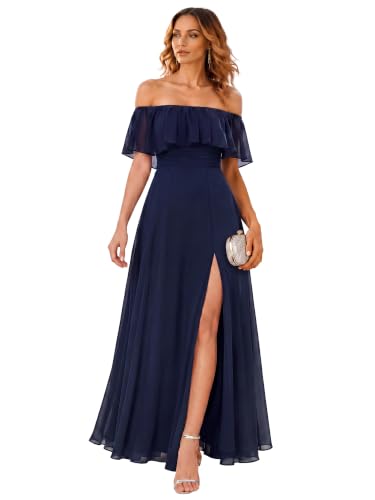
Off-the-Shoulder Bridesmaid Dresses are best defined by construction, not by a loose seller tag. This category centers on bridesmaid dresses with a neckline or band intentionally sitting below both shoulders, exposing the shoulder line while the bodice remains structurally supported elsewhere. For US wedding-party shopping, verify the exact front, side, and back design, seller-specific size chart, lining, closure, current delivery estimate, and return terms before ordering.
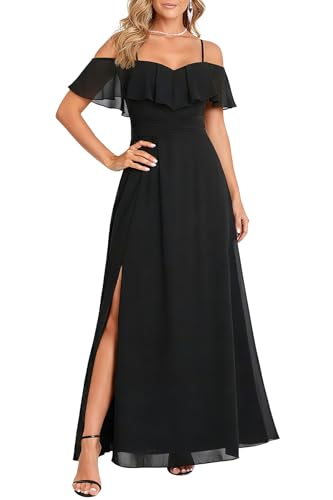
Do not confuse this intent with cold-shoulder cutouts, strapless dresses, one-shoulder necklines, wide scoop necks, and cap sleeves that merely sit near the shoulder edge. Relevant fabrics include satin, chiffon, crepe, stretch jersey, tulle, lace, and structured corset fabrics, but the fabric name alone does not confirm the cut or coverage. The most important fit checks include upper-bust fit, band tension, bust support, torso length, back closure, arm mobility, and whether the neckline rolls or climbs during movement. An off-the-shoulder neckline must be tested in motion because a visually correct standing fit can become restrictive or unstable during a wedding.
Related shopping paths include one-shoulder bridesmaid dresses, bridesmaid dresses with sleeves, chiffon bridesmaid dresses, and bridesmaid dresses. These links let shoppers compare a neighboring construction, a broader bridesmaid collection, or a fabric/coverage path without forcing different design intents onto one page.
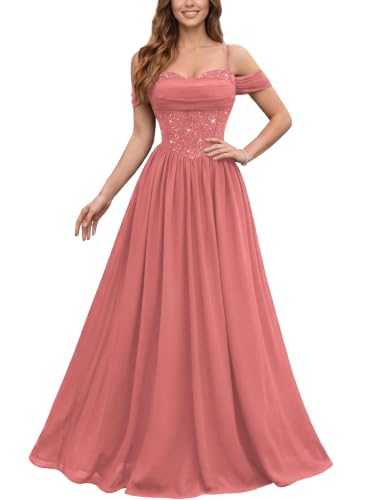
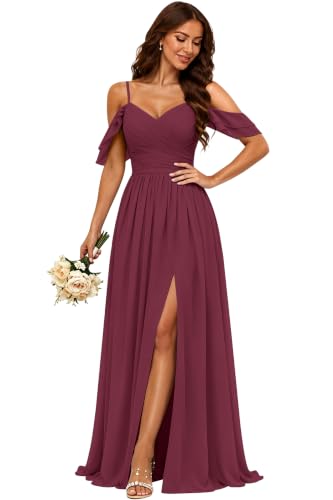
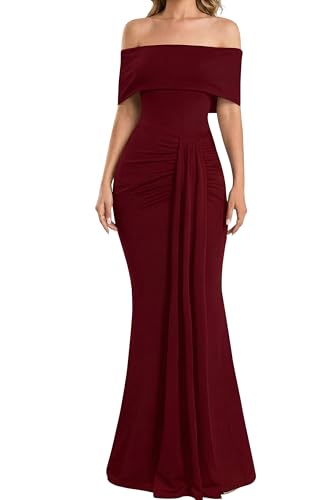
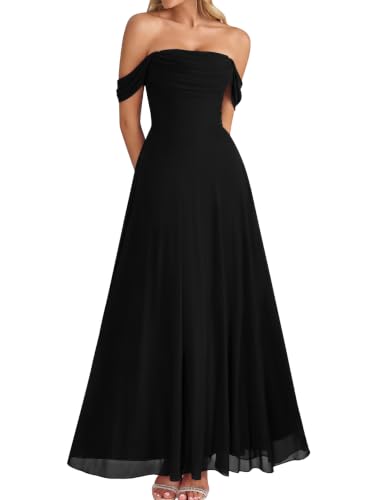





Frequently Asked Questions About Off-the-Shoulder Bridesmaid Dresses
What qualifies as off-the-shoulder bridesmaid dresses?
The dress should match the actual construction: bridesmaid dresses with a neckline or band intentionally sitting below both shoulders, exposing the shoulder line while the bodice remains structurally supported elsewhere. A seller title alone is not enough.
Which measurements matter most?
Measure bust, waist, hips, shoulders, torso, and dress length, plus category-specific variables such as upper-bust fit, band tension, bust support, torso length, back closure, arm mobility, and whether the neckline rolls or climbs during movement.
How should I test the fit before alterations?
With tags attached, test raising the arms, hugging, sitting, dancing, reaching for a phone, and wearing a coat without the shoulder band cutting into the arms or shifting upward. The dress should return to position without repeated adjustment.
Do I need special undergarments?
That depends on the neckline, back, lining, cups, and support structure. Test the intended bra, cups, tape, or base layer with the exact dress before the return deadline.
Can this type of bridesmaid dress be altered?
Often, but sleeves, asymmetrical construction, lace, illusion mesh, corsetry, pleating, beading, and layered skirts can make changes more expensive or limit what can be moved.
Can bridesmaids wear different silhouettes in the same wedding?
Yes. A bridal party can coordinate through color, fabric family, and length while allowing different cuts for support, mobility, and coverage preferences.
What should I verify before ordering?
Confirm the exact seller, selected variation, size chart, fabric, lining, closure, front and back construction, delivery estimate, return eligibility, and alteration timeline.
Define the Construction Before Using the Category Label
Off-the-Shoulder Bridesmaid Dresses should represent bridesmaid dresses with a neckline or band intentionally sitting below both shoulders, exposing the shoulder line while the bodice remains structurally supported elsewhere. Product titles are often inconsistent, so classification needs front, side, and back views plus the material and closure description. Styles that are really cold-shoulder cutouts, strapless dresses, one-shoulder necklines, wide scoop necks, and cap sleeves that merely sit near the shoulder edge belong in their own collections even when a seller uses overlapping marketing terms.
An off-the-shoulder neckline must be tested in motion because a visually correct standing fit can become restrictive or unstable during a wedding. A tightly defined collection is more useful for shoppers comparing silhouettes and also reduces internal SEO cannibalization. The page should answer what makes this construction different, where it can fail in fit, and what a bridesmaid must verify before committing to alterations.
Construction Details Determine Support
Within off-the-shoulder bridesmaid dresses, support can come from boning, cups, straps, sleeve seams, elastic, waist seams, zippers, lace-up backs, or internal lining. Decorative fabric should not be mistaken for structural support. Inspect how the garment holds the bust and torso before assuming that a neckline, sleeve, or fitted outer layer will stay in position during a long ceremony and reception.
Test closures several times at home while tags remain attached. A zipper that bows, a shoulder seam that pulls, a neckline that rolls, or a back that gaps can indicate a size or pattern mismatch. Minor tailoring may correct a local issue, but several simultaneous problems often mean the base size or pattern block is wrong. A realistic test should include raising the arms, hugging, sitting, dancing, reaching for a phone, and wearing a coat without the shoulder band cutting into the arms or shifting upward.
Take Measurements That Match This Design
Standard bust, waist, hips, shoulders, torso length, and preferred dress length remain important, but this category adds specific fit variables: upper-bust fit, band tension, bust support, torso length, back closure, arm mobility, and whether the neckline rolls or climbs during movement. Measure while wearing the planned bra or base layer and use the seller's current chart for the exact variation. Alpha sizes and US numerical sizes are not universal across brands or marketplaces.
When measurements fall between sizes, identify the least flexible area. Structured bodices, non-stretch lace, fitted sleeves, and narrow hip sections usually leave less room for error than a chiffon skirt. Ask a tailor whether the larger areas can be reduced before choosing a smaller size that strains the garment's most rigid point. An off-the-shoulder neckline must be tested in motion because a visually correct standing fit can become restrictive or unstable during a wedding
Perform a Wedding-Day Movement Test
Do more than stand in front of a mirror. Test raising the arms, hugging, sitting, dancing, reaching for a phone, and wearing a coat without the shoulder band cutting into the arms or shifting upward. Repeat the test after ten to fifteen minutes because fabric can settle, elastic can start to press, and a neckline or sleeve may shift as body temperature rises. The correct dress should return to position without repeated pulling or adjustment.
Also test stairs, vehicle entry, restroom access, and bouquet carrying. Weddings combine long periods of sitting with bursts of walking, hugging, photographs, and dancing. A construction that looks polished in a product pose but restricts ordinary movement creates a fit problem, not a styling challenge. Do not merge this with cold-shoulder cutouts, strapless dresses, one-shoulder necklines, wide scoop necks, and cap sleeves that merely sit near the shoulder edge.
Fabric Choice Changes How the Design Behaves
Common options include satin, chiffon, crepe, stretch jersey, tulle, lace, and structured corset fabrics. Stretch mesh and jersey can accommodate movement but may reveal seam tension; satin highlights wrinkles and pulling; chiffon needs stable lining; lace can scratch or restrict stretch; crepe can skim the body while still requiring enough hip and shoulder ease. Compare fabric content and lining rather than buying from the silhouette photograph alone.
If the bridal party mixes fabrics, confirm that the same color remains coordinated across surfaces. A matte chiffon and glossy satin can differ noticeably under flash. Fabric also changes alteration difficulty, heat retention, snag risk, and how neatly the style layers under a wrap, jacket, or coat. A realistic test should include raising the arms, hugging, sitting, dancing, reaching for a phone, and wearing a coat without the shoulder band cutting into the arms or shifting upward.
Plan Bras, Cups, Tape, and Base Layers Early
The best underlayer depends on the neckline, back, sleeve, and bodice structure. Built-in cups are useful only when they sit at the correct height and width. Adhesive cups or fashion tape can supplement a stable dress, but they should not be the primary engineering keeping a poorly fitted bodice in place. Material behavior differs across satin, chiffon, crepe, stretch jersey, tulle, lace, and structured corset fabrics.
Try the complete underlayer setup before the return deadline. Check whether bra bands, straps, shapewear edges, or cups show through the outer fabric in daylight and flash. For pale colors or sheer panels, also verify that the lining and undergarment tone do not create visible contrast. An off-the-shoulder neckline must be tested in motion because a visually correct standing fit can become restrictive or unstable during a wedding
Coordinate Different Body Types Without Forcing One Cut
A bridal party can preserve a coherent look through color, length, and fabric while allowing different silhouettes. That is especially useful when neckline stability and arm mobility affects people differently. One bridesmaid may need more bust support, another more shoulder mobility, and another a different sleeve or hem proportion. Consistency does not require identical discomfort.
Set the non-negotiables before shopping: approved color, length range, fabric family, coverage level, and any ceremony requirements. Then let each person compare seller measurements and movement. A controlled mix usually photographs more intentionally than several people constantly adjusting an identical cut that fits only one body type well. Do not merge this with cold-shoulder cutouts, strapless dresses, one-shoulder necklines, wide scoop necks, and cap sleeves that merely sit near the shoulder edge.
Check Ceremony, Venue, Weather, and Dress-Code Requirements
Venue rules can affect neckline, back, slit, sleeve, and hem choices. Religious ceremonies, formal clubs, outdoor venues, hot summer spaces, and cold-weather arrivals may impose different practical needs. Read written requirements when they exist rather than assuming that the category label itself guarantees acceptable coverage. Pay particular attention to upper-bust fit, band tension, bust support, torso length, back closure, arm mobility, and whether the neckline rolls or climbs during movement.
Weather matters too. Sleeves, velvet, heavy satin, or dense lining can become warm indoors; bare shoulders may need a coordinated wrap during an outdoor ceremony; short hems respond differently to wind than long skirts. Match the garment to the actual wedding schedule rather than a generic seasonal rule. A realistic test should include raising the arms, hugging, sitting, dancing, reaching for a phone, and wearing a coat without the shoulder band cutting into the arms or shifting upward.
Order as a Group Without Losing Variation Control
Save the exact seller, style, color, fabric, size, estimated delivery, and return terms for each bridesmaid. Marketplace listings can change seller or construction under the same title. When multiple people order independently, centralize the details so a substituted fabric, altered neckline, or new delivery date is noticed before the wedding timeline becomes tight. Material behavior differs across satin, chiffon, crepe, stretch jersey, tulle, lace, and structured corset fabrics.
Order early enough for one failed choice, exchange, alterations, steaming, shoes, and a complete movement rehearsal. If color uniformity matters, approve swatches and order within a similar period when practical. If mixed styles are intentional, verify the planned differences rather than allowing accidental ones. An off-the-shoulder neckline must be tested in motion because a visually correct standing fit can become restrictive or unstable during a wedding
Tailoring Complexity Depends on the Feature
Simple side-seam adjustments or plain hems may be straightforward, while structured bodices, asymmetrical necklines, lace motifs, illusion mesh, sleeves, beading, pleating, and multiple skirt layers can require more labor. Ask a tailor what can be changed without distorting the feature that defines off-the-shoulder bridesmaid dresses.
Get a tailoring estimate before the return window closes. Bring final shoes and underlayers to fittings. If a dress needs major changes at the shoulder, bust, waist, hip, and hem simultaneously, replacing the dress may produce a cleaner result than rebuilding an unsuitable size. Do not merge this with cold-shoulder cutouts, strapless dresses, one-shoulder necklines, wide scoop necks, and cap sleeves that merely sit near the shoulder edge.
Use Internal Links to Separate Adjacent Search Intent
Related shopping paths include one-shoulder bridesmaid dresses, bridesmaid dresses with sleeves, chiffon bridesmaid dresses, and bridesmaid dresses. These destinations should help a shopper compare real alternatives rather than repeat the same product set under different keyword labels. Construction-led internal linking is particularly useful because shoppers often begin with one neckline or sleeve idea and change direction after considering support, movement, and coverage.
Keep each page focused on its defining feature. An off-the-shoulder neckline must be tested in motion because a visually correct standing fit can become restrictive or unstable during a wedding. If two category URLs consistently display the same products and explain the same construction, consolidate signals instead of stretching copy to manufacture a difference that shoppers cannot see.
Audit Inventory for Construction Accuracy
The live category displayed 57 visible results during the August 13, 2026 verification. Sample products across the first and later result pages, not only the first row. Confirm that the selected product variation actually shows the defining feature from front and back. Remove unrelated gowns that qualify only because of a broad marketplace keyword.
Taxonomy quality directly affects commercial SEO. Long content cannot make a category useful when the grid contradicts the heading. Product tags, canonical URL, breadcrumbs, internal links, schema, and copy should all point to the same construction-led intent. An off-the-shoulder neckline must be tested in motion because a visually correct standing fit can become restrictive or unstable during a wedding
How to Shortlist Off-the-Shoulder Bridesmaid Dresses
Start with the wedding's required color, length, coverage, and budget, then compare neckline stability and arm mobility, seller-specific sizing, fabric, support, lining, delivery, returns, and alteration risk. Review front, side, back, and close-up images before judging a dress from the hero photo.
Keep the final option only when it passes raising the arms, hugging, sitting, dancing, reaching for a phone, and wearing a coat without the shoulder band cutting into the arms or shifting upward. The strongest off-the-shoulder bridesmaid dresses should preserve the intended design while allowing a bridesmaid to move through the entire wedding without pain, exposure surprises, twisting, or constant readjustment.